
5 Weird Reasons Your Teeth Hurt
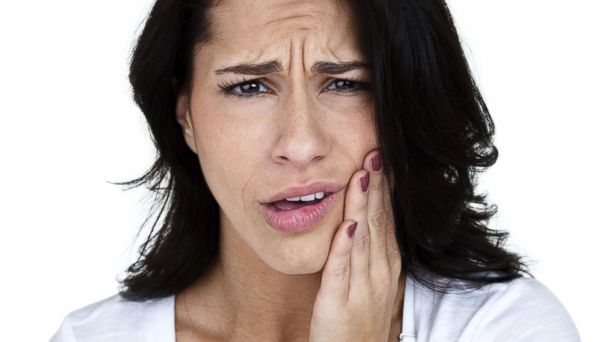 Exercise is great for your body (and mind!), but could it be hurting
your teeth? Maybe, suggests a study in the Scandinavian Journal of
Medicine & Science in Sports. The researchers found that triathletes
who did endurance training had a greater risk for tooth erosion (a loss
of enamel due to acid on the teeth) compared to people who didn’t
exercise. And the longer they worked out each week, the more likely they
were to have multiple cavities. Dentists suspect it might have
something to do with saliva—or a lack thereof.
“Saliva is more than 90% water, so you breathe it out through your
mouth,” says Gigi Meinecke, DMD, a spokesperson for the Academy of
General Dentistry. “Any time your mouth is dry, you put yourself at risk
for cavities because bacteria thrive vigorously in that environment.”
That could be a problem if you often do long, intense sweat sessions
where you breathe heavily and don’t hydrate enough or don’t replenish
fluids lost afterward.
But even if you don’t work out like crazy, there could be other
surprising problems plaguing your mouth. Here are five more reasons your
teeth might hurt:
1) Your have a sinus flare-up
If you have an ache in your teeth during a bad cold or around hay fever
season, it could be related to your sinuses. “The sinus floor sits right
on top of the roof of your teeth,” Meinecke says. “If the sinuses are
full, people usually come in with pain in their upper teeth behind the
eye.” Another common way to tell: the pain isn’t limited to just one
tooth. If it’s your sinuses, several in the area will be sensitive. Your
best bet in this case is to clear up the infection, so you should see a
doctor.
2) Your gums are receding
Some people with sensitive teeth have gum recession that’s caused the
enamel at the gum line to wear away. “It’s like it doesn’t have a coat,
so it’s exposed to all the elements,” Meinecke says. The pain doesn’t
linger, but will pop up every time the tooth hits hot or cold foods,
even a fork or spoon. Most dentists recommend brushing with a sensitive
toothpaste, like Sensodyne, but you need to use it exclusively. The
toothpaste can help strengthen enamel over time, but you’ll disrupt the
process if you stop using it, Meinecke says. (So take it with you when
you travel, too.)
3) You have an abscess
That kernel of popcorn that got stuck in your teeth at the movies could
come back to haunt you. An abscess is a tooth infection in a pocket
filled with food or debris. Proper flossing can help keep abscesses at
bay, but not everyone does it regularly. Sometimes patients come in with
bits of food that have been sitting between their teeth, Meinecke says.
That could lead to serious inflammation, with swelling, pus, and pain
that lasts hours. The sooner you get one treated the better, as an
untreated abscess can lead to gum disease. Here’s our friendly reminder:
floss daily.
4) You grind your teeth at night
Most nighttime grinders don’t even realize they’re doing it. “People who
grind suddenly bite down and get a lightning bolt of pain,” Meinecke
says. Teeth grinding is also associated with symptoms like headaches,
pain in the facial muscles, and a stiff jaw, according to the National
Institutes of Health. It can even lead to broken teeth, Meinecke says.
While some patients may be instructed to wear night guards, those aren’t
always effective. “People can wake up next to it and not even know it
was pulled out,” she says. In that case, Botox might be a good option.
(Really.) It can stop the muscle that moves your jaw from generating the
same amount of force, Meinecke says. Many dentists are trained to
administer Botox, which should be given every 3-4 months.
5) Your filling fell out
5) Your filling fell out
A cavity filling can fall out if too much force is applied to the area,
or the material breaks down, she says. Decay around or under a filling
can also cause breakage. Some patients may not even feel something
missing until they bite down. “Food can get pushed into the area as they
chew,” Meinecke says. “The space can start packing food where the
filling left a void and cause pressure.” The area could also be
sensitive to temperature until it’s fixed. Be sure to see your dentist
right away to patch it up.


