Showing posts with label toothbrush. Show all posts

Monday, November 7, 2016

Dental Sealants Prevent Cavities and More Kids Need Them, CDC Says

There's a quick and easy way to prevent 80 percent of cavities, but most kids don't get it, federal health officials said Tuesday. The treatment, dental sealants, works well, but only 60 percent of kids who need sealants get them, the Centers for Disease Control and Prevention says.
                       
    
Dentist inspecting boys mouth before treatment. Universal Images Group / UIG via Getty Images

One good solution: doing it at school. But states often lack the funding to pay for such programs, and often bureaucratic requirements about having dentists on site can hold them up, also, the CDC said.

"Many children with untreated cavities will have difficulty eating, speaking, and learning," said CDC director Dr. Tom Frieden.

"Dental sealants can be an effective and inexpensive way to prevent cavities, yet only one in three low-income children currently receive them. School-based sealant programs are an effective way to get sealants to children."
The CDC says that 20 percent of kids and teenagers have untreated dental decay by the time they are 19. Kids with constant toothaches cannot eat properly and have trouble paying attention at school.

Related: Do Kids Need Dental Sealants?

Even though they are endorsed by the CDC and the American Dental Association, only 43 percent of 6- to 11-year-old children have a dental sealant, federal surveys show.

"Low-income children were 20 percent less likely to have sealants than higher-income children," the CDC's Susan Griffin and colleagues wrote in a report released Tuesday.                    

"School-age children without sealants have almost three times more cavities than children with sealants," the CDC added.

"Applying sealants in school-based programs to the nearly 7 million low-income children who don't have them could save up to $300 million in dental treatment costs."

That's because a filling costs more. In addition, once a tooth has been drilled to put in a filling, it's never as stable again.
But many states struggle to pay for such programs, the CDC team found.

"Federal funding of state oral health programs is largely com­petitive and varies widely by state," they wrote. "Many state and local school-based sealant programs cover part of their expenses by Medicaid billing."

And Medicaid, the joint state-federal health insurance plan for children and low-income people, is already badly stretched in most states.
One big expense is paying a dentist to oversee the program, the CDC found. One solution: Allow lower-paid professionals to administer sealant programs. At least one state has already done so.

"For example, in South Carolina, school-based sealant programs managed and staffed by dental hygienists deliver sealants in approximately 40 percent of high-need schools," Griffin and colleagues wrote.

"CDC currently provides funding to 21 state public health departments to coordinate and implement school-based and school-linked sealant programs that target low-income children and those who live in rural settings," the agency added.

It said the federal government plans to do more. It will classify pediatric dental services as an essential health benefit to be covered by dental insurance as part of the Affordable Care Act, for instance, and match state Medicaid and CHIP costs for sealants.
The sealants are plastic-based coatings that get into the cracks and crannies of molar teeth, stopping food and bacteria from starting the chemical reaction that leads to cavities.
 Studies show they are safe and stop tooth decay, even when they are layered over an existing pre-cavity.

"Studies on sealant effectiveness indicate that sealants delivered in clinical or school settings prevent about 81 percent of decay at two years after placement, 50 percent at four years, and can continue to be effective for up to nine years through adolescence," the CDC said.

 The American Dental Association (ADA) agrees, and says many people don't know that dental insurance often pays for them.

"Dental sealants are one-third the cost of a filling, so their use can save patients, families, and states money," the Pew Charitable Trusts, an independent, public service-oriented nonprofit, says in a statement. "Sealant programs based in schools are an optimal way to reach children — especially low-income children who have trouble accessing dental care."
 One worry that parents may have is about BPA, a chemical found in the sealants that is increasingly linked with health risks. The ADA says the benefits of sealants far outweigh any perceived risk.

"The potential amount of BPA patients could be exposed to when receiving sealants is minuscule, and it's less than the amount a person receives from breathing air or handling a receipt," the ADA says.

By: Maggie Fox, NBC News
http://www.nbcnews.com/health/kids-health/dental-sealants-prevent-cavities-more-kids-need-them-cdc-says-n668266

If you have questions or would like to schedule an appointment, please contact Omni Dental Group at one of our three office locations listed below:

North Austin on Hymeadow Drive: (512) 250-5012
Central Austin on Jollyville Road: (512) 346-8424
South Austin on William Cannon: (512) 445-5811

Wednesday, September 7, 2016

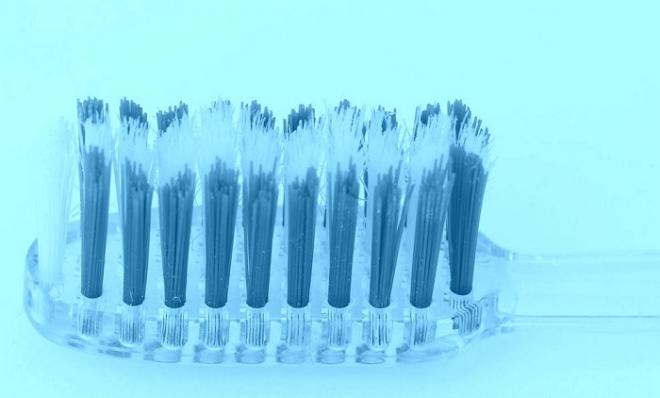
How Often Should You Change Your Toothbrush?


Every time we pass them along our teeth, we trust that our toothbrushes are handling business and getting rid of disease-causing plaque, which is full of bacteria. But if you're using an old toothbrush you’re not doing your mouth any favors. You see, while many of us know how important it is to take care of our teeth, we aren’t as diligent when it comes to taking care of our toothbrushes.

Toothbrushing plays an essential role in personal oral hygiene. However, if you’re brushing your teeth as often as you’re supposed to — twice a day, in the morning and right before bed — then the bristles on your toothbrush are becoming frayed and worn with each use faster than you realize. This isn’t a good thing since worn-out brushes won’t efficiently clean teeth and become less effective at fighting off decay.

“As your bristles start to fray, they are not actually getting in between your teeth. You may not be as efficient at brushing your teeth,” Dr. Jonathan Abenaim, dentist and clinical instructor at New York University, told Medical Daily. “There may be bacteria or a few particles left behind if you don’t have the right toothbrush.”

A frayed toothbrush can be an inconvenience, but the solution is simple: replace it. The American Dental Association recommends that consumers replace toothbrushes approximately every three to four months, or possibly sooner if you’ve been sick. It’s also important to note that you’re not just throwing away your toothbrush, but millions of bacteria.

One study from the University of Manchester in England found that the average toothbrush contains at least 10 million bacteria — including E. coli and Staph. When you think about it, this makes sense since at any given time there are about 100 to 200 oral bacteria species living in your mouth, most of which end up on a toothbrush after a single brushing. In fact, a new toothbrush can become contaminated with bacteria, viruses, and fungi (living in the mouth or from the external environment) after just 30 seconds of use. What’s more, these germs don’t just stay on the toothbrush, they can also be transmitted to other toothbrushes in the household, increasing the risk of infection with each use.

In other words, swapping out your toothbrush every three to four months is just as important as brushing twice a day and flossing when it comes to maintaining your oral health.


By: Jaleesa Baulkman
http://www.medicaldaily.com/how-often-should-you-change-your-toothbrush-bacteria-dental-care-385771

If you have questions or would like to schedule an appointment, please contact Omni Dental Group at one of our three office locations listed below:
North Austin on Hymeadow Drive: (512) 250-5012
Central Austin on Jollyville Road: (512) 346-8424
South Austin on William Cannon: (512) 445-5811

Friday, August 22, 2014

Should You Get A Tongue-Scraper?

A tongue scraper is an oral hygiene product that removes bacteria, food debris, fungi, toxins, and dead cells from the surface of the tongue.

When we sleep, our digestive system remains awake, removing toxins from our body by depositing them onto the surface of our tongue. If we do not scrape away these toxins, they get reabsorbed by the body and can lead to respiratory difficulties, digestive problems, and a compromised immune system.

Dental research has concluded that a tongue scraper is more effective at removing toxins and bacteria from the tongue than a toothbrush. Although brushing and flossing will loosen and move debris around, they do not actually remove the bacteria. Almost half of our oral bacteria live on and in the deep crevices of our tongue; the scraping action of a tongue scraper collects these toxic tongue coatings (which can range in color from clear, white, yellow, or green) and removes them from the body. However, still remain strict on continuing with the rest of your dental care routine, The bacteria that causes tartar to build up still remains your teeth and under your gums. Left untreated, this can lead to gum disease, receding gums, and loose teeth that can ultimately fall out.

What is a tongue scraper?
It is a long, thin, flat piece of metal that is bent in a "U" shape 

How to use a tongue-scraper
You should use a tongue-scraper on a regular basis, in the morning and on an empty stomach. 
1. Stand in front of a mirror
2. Hold the two ends of the scraper in both hands
3. Stick out your tongue
4. Place the scraper as far back on your tongue as possible
5. With firm but gentle pressure, scrape the surface of your tongue in one long stroke
6. Rinse the scraper and repeat until your tongue feels clean and is free of coating (usually 5 to 10 times) 

Why do I need one?
1. Lessen halitosis
Bad breath can have a negative impact on a person's life, relationships, and self-esteem. Given that most bad breath comes from the bacteria at the back of the tongue (an area that's difficult to reach with a toothbrush), clinical studies have shown that tongue scraping significantly reduces and removes oral bacteria from the crevices of all areas on the tongue.

2. Experience the flavors of your food
Proper digestion begins with taste and salivation. If you do not take steps to remove toxic mucus on the tongue, your taste buds can become blocked. This may lead to false cravings or an inability to recognize the taste of food. Removing build-up from the surface of your tongue will open up its pores and better expose your taste buds, allow for greater enjoyment of food flavors, and help your body digest and assimilate food.

3. Boost your immunity
The tongue is part of the first line of defense in your immune system. Scraping your tongue prevents toxins from being reabsorbed into your body and boosts overall immune function.

4. Improve your dental health
This oral hygiene product promotes general tooth and gum health and removes bacteria and toxins responsible for periodontal problems, plaque build-up, tooth decay, loss of teeth, gum infections, and gum recession.

5. Improve your digestive health
Given that digestion begins with taste, it is important to remove any toxins that may obstruct optimal functioning. Scraping also activates saliva production and promotes agni (the body's digestive fire) to help with digestion throughout the day.

Where do I buy one?
Tongue scrapers and inexpensive and can be found at most health food stores as well as online. Choose a stainless steel scraper because they are easier to clean. Another dental tip, the side of a metal spoon can also be effective.

http://www.mindbodygreen.com/0-12028/5-reasons-why-everyone-needs-a-tongue-scraper.html


Tuesday, July 29, 2014

Seal the Deal: Everything You Need To Know About Sealants

What are dental sealants?  

Dental sealants represent one of the greatest advances in modern dentistry. Unfortunately, too many children do not receive the protective benefits of dental sealants. Dental sealants are clear protective coatings that are easily applied; they cover the tooth surface, preventing bacteria and food particles from settling into the pits and fissures (grooves) of the teeth. It is a thin coat of plastic that is painted on the surface of teeth, usually the premolars and molars in order to prevent caries.

Decay on back teeth, premolars, and molars usually begins in the grooves and fissures that normally exist on the biting surfaces of the back teeth.  Dental sealants, available since the 1960s, are clear plastic coatings that can be placed on the biting and grinding surfaces of posterior teeth.  These sealants prevent the formation of decay on the treated surfaces.  Sealants can even be placed of teeth with small areas of decay known as incipient carious lesions.  The sealants will stop the customary progress of tooth destruction.  

Effectiveness
It can remain on the tooth from 3 to more than 20 years, depending on the tooth, type of sealant used, and the eating habits of the patient.  It can only be placed on teeth that have not been previously restored.
It is well known that the use of fluoride increases the resistance of enamel to decay. Unfortunately, the pits and fissures of the teeth do not benefit from the effects of fluoride as greatly as smooth enamel surfaces do. Scientific studies have proved that properly placed dental sealants are 100% effective in protecting development of cavities in sealed tooth surfaces. 

Why sealants are necessary
The narrow width and uneven depth of pits and fissures make them ideal places for the accumulation of food and acid-producing bacteria. Saliva, which helps to remove food particles from other areas of the mouth, cannot clean deep pits and fissures. Pits and fissures on the teeth are so tiny that even a single toothbrush bristle is too large to enter for cleaning purposes. Another difficulty associated with deep pits and fissures is that the enamel that lies at the base of the fissures is thinner than the enamel around the rest of the tooth. This means that not only can deep narrow fissures make it more likely that tooth decay will occur, but any decay that does form will penetrate through the thin enamel and progress more quickly into the pulp.

We, at this office, are dedicated to the prevention of oral disease.  It is clear that if the initial decay is prevented from beginning or is small enough to use a sealant, there is a great savings in time, money, discomfort, and tooth structure.  Decayed teeth must have the decay removed by drilling, then they must be filled.  This drill and fill may have to be done several times over the patient's lifetime as the filling ages and needs replacement.  We strongly suggest that patients who have teeth that can be successfully protected with a sealant material consider having this procedure performed as soon as possible.


How sealants work
The sealant acts as a physical barrier that prevents decay. Small food particles and plaque (bacteria) cannot penetrate through or around a sealant. As long as the sealant remains intact, the tooth is protected. However, if part of the sealant or bond is broken, the sealant protection is lost. 

A study completed in 1991 found that one application of sealant reduced biting surface decay 52% over a 15-year period.  Another study, completed in 1990, showed that decay on biting surfaces could be reduced 95% over 10 years if 2% to 4% of the sealants were routinely repaired each year.  We expect sealants to last many years. After a sealant is applied it can last up to ten years, however regular check-ups are recommended since they can chip or wear off. Replacing or repairing sealants, as needed, on an ongoing basis will give the best protection. 

A sealant is not meant as a substitute for proper brushing and flossing habits. The effectiveness of the sealant is reduced if oral self-care is neglected. Also, cavities can still form on untreated surfaces. Therefore, a topical fluoride treatment remains an essential and necessary preventative aid.

Application of sealants
The sealant is placed on the tooth through a chemical/mechanical bonding procedure.  There is not drilling or local anesthesia required for the sealant application procedure.  It is entirely painless.

Problems with sealants
On occasion, teeth with very small initial carious lesions may be inadvertently sealed, or some bacteria may remain beneath the sealant. It was one believed that if this were to occur, decay would develop under the sealant. However, numerous studies have shown that this does not occur. Bacteria cannot survive beneath a properly placed sealant because the carbohydrates that they need to survive cannot reach them. Studies have shown that the number of bacteria in small, existing carious lesions that had been sealed actually decreased dramatically over time. The most important factor is that the sealant must be properly placed.

When sealants are used
Sealants are used primarily on children, but in certain circumstances, adults also can benefit from their use. Children and teenagers are the best candidates for sealants. Children are prone to caries from age 6-14 and applying a sealant as soon as a child’s permanent molars and premolars erupt can be a great way to protect your child from tooth decay. Some maxillary central and lateral incisors may have deep pits that could be protected by sealants. Sealants are indicated for teeth with deep pits and fissures, preferably in recently erupted teeth (i.e., within previous 4 years). Sealants should be used as part of a prevention program that includes the use of fluorides, dietary considerations, plaque control, and regular dental examinations.

We especially advise that children have the sealant applied to their teeth as soon as the teeth break through the gum and the biting surfaces of the teeth are no longer covered with gum tissue.  If the teeth cannot be totally isolated from the moisture in the mouth during the bonding process, it is likely that the sealant will not remain on the tooth for as long a period of time as expected.  The sealant is most often applied to permanent teeth, but sometimes a situation arises in which it would be beneficial to have the sealant applied to a primary tooth.

In both 1984 and 1994, sealants have been recommended by the U.S. Public Health Services and Surgeon General of the United States, among others. We know that sealants are one of the most important treatments available for prevention of dental decay.

If you have any questions about sealants, please feel free to ask us.

Thursday, July 17, 2014

A Beginner's Basics to Braces

How can orthodontics help you?
If your teeth are in poor alignment, you could be facing a functional or cosmetic problem. Orthodontics (braces) can eliminate that problem for you. One of the first things people notice about you is your smile and how your teeth look. You don't have to be a dentist to notice poorly positioned, crooked teeth. In today's culture, crooked teeth are not regarded as attractive or desirable. Most people, when asked, say that they would like to have straight teeth. Straight, white teeth are the cosmetic dental improvements patients most request.

Braces may also be suggested to correct a specific dental problem that only affects one or several teeth. This is not a cosmetic tooth repositioning, but rather a functional tooth movement. Occasionally, in order to properly finish an orthodontic case, the orthodontist may ask the dentist to adjust the enamel of some teeth or bond a resin to some teeth to improve the occlusion (bite alignment) or to enhance cosmetics. This will be discussed with you as soon as it becomes apparent.

When should you see an orthodontist?
The need for orthodontics is best discovered when you are young. A dentist will have a good indication of whether or not your teeth will be straight when he sees you as a child 6 to 8 years of age. Most treatment would not begin until a patient is 8 years old, although in some cases, orthodontics can be started earlier.

It is easier to direct the movement of teeth in a child. Early tooth guidance is a very important phase of orthodontic care, which can take place even though all the permanent teeth are not yet in place. Certain problems are much easier to correct at this stage of a "mixed dentition" of baby and permanent teeth. An average case can last from 18 to 24 months.

While orthodontic therapy is admittedly easier in the child patient, you are never too old to begin orthodontics. The number of adults seeking orthodontic treatment has risen dramatically during the past decade. As long as you have healthy bone support for your teeth, you can have orthodontic therapy. Most adult cases take 18 to 24 months to complete.
What are retainers?
Once braces are removed, it is usually necessary to wear a retainer. After your braces come off, your orthodontist will make a mold of your mouth and produce a set of retainers. This retainer will maintain the new tooth alignment until the teeth have had a chance to become firmly set in their new positions. This retainer may be either removable or fixed in place. Aside from a permanent bonded retainer, there are two other types that most people get.

A Hawley Retainer is made of acrylic and metal. The acrylic goes behind your teeth and up against your upper palate; the metal is in front of your teeth. This is the most reliable refinements that still need to be done to your teeth.

Orthodontic Toothbrush
An Essix Retainer is clear plastic and looks like an Invisalign aligner tray. Many people want this type of retainer, but it has its disadvantages. Many orthodontists feel that because it covers the biting surface of your teeth, they do not "settle" properly after treatment. For this reason, sometimes orthodontists give a patient both types of retainers: an Essix Retainer to wear during the day when they are people-facing, and a Hawley Retainer to wear at night when they are home sleeping.

No matter what type of retainer you get, the most important thing is to wear it exactly as the orthodontist tells you. Most people need to wear their retainers 24/7 for at least 6 months, then switch to wearing it only at night when sleeping. 

How do I keep clean teeth with braces on?
While orthodontic treatment is in the active phase, that is, while the braces are on your teeth, you must be very diligent about keeping your teeth clean. This will be more difficult than and somewhat different from cleaning your teeth without braces. You will be instructed in the use of any cleaning aids needed. These may include dental floss threaders, orthodontic toothbrushes, an oral irrigator to flush out debris, proper brushing habits, fluoride mouth-rinses, and periodontal aids. You must follow your proper oral self-care routine each night to prevent decay, decalcification of the teeth, and gum disease. You also should not use a whitening toothpaste when you have braces. It could cause you to have "two tone" teeth after the brackets are removed. Another thing to remember is that although a device like a Waterpik is great for gum stimulation and dislodging food, it is not a substitute for flossing. You still need to floss daily.