Monday, October 6, 2014

Dental Emergencies

Regular dental care helps prevent inconvenient dental emergencies. However, dental emergencies can and do occur. Listed here are some of the more common dental emergencies and what you can do until you can get to our office. A good rule of thumb: if it hurts, do NOT wait to make an appointment. We will be happy to see you as soon as possible.

Toothache/Sensitive Teeth
A toothache or a sensitive tooth can be caused by several different types of problems. At times, it is a sign of a dying nerve inside the tooth. Over-the-counter pain relief medication can temporarily relieve the pain. Contact us for an appointment as soon as you notice the problem. Slight pain, if left untreated, can progress into facial or oral swelling and severe pain. Commonly, tooth pain can be eliminated with endodontic treatment (root canal therapy).

A sensitive tooth may be due to exposed root, a leaking or defective filling, decay, a bite-related problem, or a dying nerve. See us as soon as possible for an evaluation. Click here to read our blog post about the 10 biggest causes of sensitive teeth.

Broken Tooth
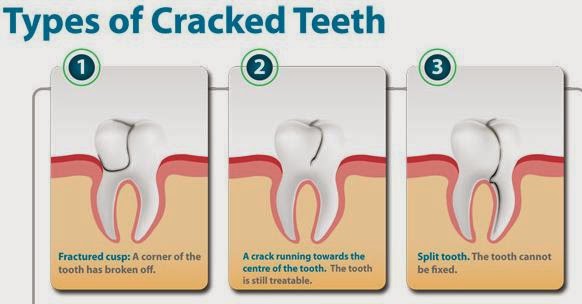
Teeth with large fillings can easily break or fracture. Call us as soon as possible to have the tooth evaluated and restored. If the broken tooth is not treated, more serious problems can develop. Broken teeth may or may not be sensitive to air and temperature changes. Sensitivity and pain are not necessarily an indication of how badly the tooth is damaged.

Tooth Knocked Out
Place the tooth in water or a wet towel or cloth. Do not try to scrub or wash the tooth. Get the tooth and the patient to us immediately. The faster the tooth can be repositioned, the better the odds that the tooth can be saved. Time is crucial.

Object Stuck Between Teeth
Use dental floss to gently remove the object. Do not use sharp or pointed objects to push or pry the object from between your teeth. If the object does not come out easily, come to us for help.

Final or Provisional Crown/Bridge Falls Out
See us as soon as possible to have the crown recemented. If this is not possible, you can use a denture adhesive (Fixodent, for example) that can be purchased without a prescription. Place a small amount in the crown and reseat it. Do not try to force it into place. It should not be difficult to put into place. When you cannot put the crown in correctly, save it, and bring it with you to your appointment. We will do the cementation. The reason the crown came out may make it impossible for the dentist to recement the old crown. That decision will be made during your examination.

Broken Partial or Denture
Bring the partial or denture here for repair. Do not try to glue the plastic yourself. Do not use Crazy Glue or other similar materials.

Orthodontic Problems
If the appliance is loose, take the patient to the orthodontist. If a sharp wire is exposed, cover it with a piece of wax, gum, a small cotton ball - anything to keep the sharp end from poking into the soft tissues.

Swollen Gums
Swollen gums are a sign of an infection. The infection may be caused by a dying nerve inside the tooth or a periodontal (gum) problem. Rinse your mouth with warm salt water. See us as soon as possible. The swelling may or may not be accompanied by pain. Either way, it needs immediate attention.

Contact us to make an appointment
 

Thursday, October 2, 2014

Top 10 Bad Habits That Can Wreck Your Teeth

Little things that you do every day can have a big impact on your teeth. Here is a list of the top 10 bad habits that can wreck your teeth!

1. Continuously sipping on soda or sweet coffee: The sugar from a single sip can sit on your teeth for 20 minutes, and the accumulation of sugar can lead to rampant decay.

What to do: Try giving up the sugary drinks. If you cannot, then try to drink the liquid within a 15- minute time period, then either brush your teeth or drink some water to wash the sugar away.

2. Brushing too hard: Some people think using a hard-bristled toothbrush will scrub more plaque off of their gums, but often they may be damaging the enamel or gums by brushing too hard. 


3. Sucking on cough drops often: Many brands of cough drops contain a lot of sugar, which will sit on your teeth. If you're using cough drops because you have a dry mouth, then your rate of tooth decay may be even worse.

4. Chewing ice and crunching on hard candy: This can fracture your teeth

5. Forgetting to use sunscreen on your lips: Exposure to the sun can cause oral cancer

6. Using your teeth to open anything or crack nuts: Do not use your teeth to open a bottle, a barrette, a bobby pin, or anything else that is hard. It can lead to chipped or fractured teeth.
 
7. Grinding or clenching your teeth: This can be a tough habit to break because many people do this in their sleep. The motion wears down your teeth which can cause problems with your bite and lead to fractures, loose teeth, and pain in your jaw and teeth. Ask you dentist about a night guard or other remedies.

8. Chewing tobacco: Popping a wad of tobacco into your mouth can lead to oral cancer. Why would you even want to risk it?

9. Piercing your tongue: Dentists have seen lots of patients who have accidentally bit their tongue stud or ring and ended up chipping a tooth. The tongue stud or ring could also damage gums. Even more importantly, the piercing creates a wound in the mouth, which is a highly-bacterial environment and could increase the risk of infection. These infections can be life-threatening.

10. Using your teeth to snip thread or a fishing line: The line could slip and cut your gum line 

Bonus: Biting your nails!

CoastDental

Wednesday, October 1, 2014

Replacing Unesthetic Restorations

There are 2 types of life spans:
Everything has a life expectancy, even dental filling materials. Dental materials appear to have two different types of life spans - a functional life span and an esthetic life span. The better the original dental restorative material and the skills of the operator, the longer the restoration will last. Lab-processed materials will generally last longer than direct placement materials.

What is the functional life span?
The functional life span is defined as the length of time a material will last before it fails to function properly. This failure will either (a) weaken the tooth or (b) permit decay or gum disease to begin. For example, when a piece of the filling breaks off (or often in the case of an amalgam [silver metal] filling, it causes a piece of the tooth to break off), the tooth requires a new restoration.

How is the esthetic life span different from the functional life span?

An esthetic life span is somewhat different. In the case of bonded and tooth-colored restorations, it means that the material, while possibly still able to function, has begun to degrade. A filling may have matched the tooth beautifully when placed, but over time, the change in color of the filling material, as well as actually tooth color changes, cause an obvious mismatch between tooth and filling material. Since the restorative material does not have the same properties as tooth enamel, it will wear a little differently. The shape will change over time, too. Luckily, it is a very slow process.

With lab-processed restorations, crowns and bridges, the crown may still be working well, but age and changes in your mouth make it and the surrounding soft tissues look less acceptable that it was when first placed. Again, this happens slowly, over many years.

What other esthetic problems can be fixed? 
Other esthetic problems that can be corrected include notches in fillings or under crowns caused by improper brushing (or decay), recession of the gum tissue that exposes  darker root surfaces around crowns or fillings, porcelain crowns (caps) that no longer match the adjacent teeth, and metal margins of crowns that are visible due to gum recession (and this is quite common).

Why should you consider getting new dental restorations?
When you can see these types of changes, you can be sure that others who look at you when you are speaking or smiling will see them too. If you place a high value on your personal appearance, this is the time to consider having the restorations replaced with newer materials. Newer dental restorative materials look better, last longer, are more color-stable, and more wear-resistant than older-generation bonded materials. You can expect them to look good for many years.

What fillings look the best?
In our opinion, silver metal fillings never look "good." Even at this best, polished and shined, they do not represent a picture of health. As the metal ages, it corrodes, pits, and darkens. Its constant expansion and contraction due to hot and cold foods we eat weakens the tooth. The darkening of a filling can cause a darkening of the tooth itself. After time, the tooth will become permanently dark gray. The wider your smile is (and the more teeth you show when talking and smiling), the more of a problem this can be. The most esthetic filling are tooth-colored.

What happens if I choose to keep my old fillings?
Broken, stained, worn, and visible fillings detract from your appearance. When you look at a tooth (from about 2 feet away) that has been restored, you should not see the filling. While these types of problems are, of course, non life-threatening, consider attending to them before they get worse - and difficult and expensive to correct.

In our office, we place a high value on the appearance of your teeth and how you feel about your smile. We want you to look your best. We use the best materials and techniques available in dentistry today to ensure a healthy smile. We will be happy to evaluate your particular condition and discuss options with you.

If you have any questions about replacing unesthetic restorations, please feel free to call our office to discuss restoration options at 512-250-5012.

Tuesday, September 30, 2014

Dental Phobia

What is dental phobia?
Phobia is a type of anxiety disorder. This is not an unusual situation - many suffer from various types of phobia. Dental phobia means the sufferer will try their best to avoid or act irrationally on anything that requires probing, scraping, filling, or worse, pulling their teeth out. Dental phobia is a person's fear to receive dental care from a dentist. They would rather endure the pain rather than see a dental specialist to reduce, or even cure, the pain.

Is it common?
Dental phobia is famous around the globe. It is roughly estimated that more than 75% of adults in the United States experience dental phobia, ranging from mild to severe.

What is the worst thing you can do?
If you avoid regular dental check-ups, you can have major health problems in your future. Dental problems (decayed/stained teeth, bleeding gums, bad breath, etc.) can contribute to your cardiovascular and mental health.

Why does it occur?
Dental phobia occurs mainly because of the terrifying instruments being used during the check-up. They are sharp and made out of metal. As humans, we have a natural reaction towards sharp things being poked into our mouth. We usually would imagine the sharp tool would hurt us eventually. Mass media also plays a role contributing to this problem. Portrayals of dentists being harsh towards their patients definitely do not help sufferers, as their fear level may increase.

Dental phobia can be divided into 2 groups:

1. Direct experience
The phobia started since they entered the door to the clinic. The experience they get from the clinic's environment could determine their experience inside the dentist's room. Usually, the first visit to the clinic contributes to the phobia, as the sufferers visit when their dental problem has already become severe. For example, a patient with a toothache comes to the dentist when the problem is so severe, that is requires the dentist to pull the tooth out. Thus, from the pain experienced or the treatment received, the patient develops a phobia so strong that he does not revisit a dentist ever again.

2. Indirect experience
It comes from truly horrifying tales related by those who have already been to a dentist and suffered from it. For example, those who when to the dentist for a scaling treatment would have their gums bleeding accidentally. Thus, they would go around exaggerating about this and eventually contributes to someone else's fear. The mass media, such as movies, also contributes to a person's indirect fear of the dentist.

Stepping into this environment against may evoke your dental fear. It is not unusual to see people with pale faces or children revolting in tears waiting anxiously for their turn in the dental chair.

How does a dentist handle a dental-phobic?
Dentists try to gain the patient's trust to treat them by making them feel comfortable and at ease. Breaking the boundary between the patient-dentist relationship and becoming the your friend is a great way that dentists try to make you feel less anxious. It is vital for your dentist to understand your fear.

Your dentist's relationship with you should be based on trust. Knowing that your dentist is giving you the best treatment will help to reassure your nerves. Your dentist will keep reassuring you again and again to make sure that everything is going okay.

What can you do to lessen your anxiety about going to the dentist?
1. Do some research
When looking for a new dentist, take the time to find the right one for you. Visit several dental practices, speak to the staff, and you will know which one makes you feel most at east.

2. Find a friend
Your dentist is not just someone who looks after your teeth. They should also be your friend. Make sure that you feel comfortable around them. Having an informal chat about where you are going on your holiday will make you feel more relaxed.

3. Seek recommendations
When on the hunt for a new dentist, always ask friends, family and work colleagues about a dentist they visit and can recommend. Word of mouth is a great way to find a reliable and experienced dentist.

4. Take a buddy
Take a friend with you to your appointment. The dentist should not mind if they accompany you throughout the check-up or treatment. Knowing that they are there to support you will help you feel more at ease.

5. Signs
You and your dentist should agree on a dentist to signal that you need a break and want them to stop when you are having your treatment. It can be as simple as pointing your finger. This will help you feel more in control.

6. Music
Take a personal stereo or ask the dentist if you can listen to music from your phone during your visit to help you relax. If you are nervous about the sounds of all the instruments in the dental office, check out this website that tells you what sounds each instrument makes! 

7. Communicate
When you visit the dentist, be sure to tell them that you are anxious about your appointment. A good dentist will do everything they can to help you feel at ease and relaxed.

8. Visualize
When in the dentist's chair, try to relax by closing your eyes and imagining yourself in a relaxing environment. This could be at home on the sofa or at your favorite holiday location. This can help remove you from the environment of the dentist, ultimately removing the negative feelings you are experiencing, and helping you feel more at ease.

9. Take a break
When at the dentist, discuss how long treatment will take and ask if it would be possible to have a break half-way through. This will break up the time of the treatment, making it more manageable for you.

10. Build Your Confidence
If you do not feel confident enough to have a full dental treatment, visit your dentist for a general check-up to start off with. This will be short and straight forward and should help you feel more at ease about visiting the dentist again. For your next visit, book a hygienist treatment, which is a straight forward cleaning. Taking baby steps will build your confidence about visiting the dentist.

Why should you try your best to overcome dental anxiety?
Some people are unwilling to pay the price for a beautiful smile because of this problem they have. But you would not want to forgo the excitement of having great food with friends, right? Take baby steps towards the dental clinic and other will help you overcome your phobia. Only you can start making the change for yourself!

http://www.hellomagazine.com/healthandbeauty/2014061119304/howo-to-overcome-your-fear-phobia-of-the-dentist/

http://www.malaysiandigest.com/frontpage/282-main-tile/507417-the-price-to-smile-beautifully.html

Wednesday, September 24, 2014

Black's Classification of Cavities

Class 1
Decay is diagnosed in the pits and fissures of the occlusal surfaces of molars and premolars, the buccal or lingual pits of molars, and the lingual pits of maxillary incisors. 
Restore: Amalgam or composite resins are the restorative material of choice. Selection will depend primarily on where the lesion is and what type of strength is required for the material.

Class 2
Decay is diagnosed in the proximal (mesial or distal) surfaces of premolars and molars. Because this surface area is more difficult to detect visually, a radiograph is also used to locate decay. The design of the preparation/restoration will include the occlusal surface and will involve proximal surfaces. 
Restore: The type of dental material used to restore this classification is silver amalgam (chosen for its strength) or newer composite (tooth-colored) resins designed for posterior teeth (chosen for esthetic appeal). If the tooth has extensive decay, the dentist may choose to restore the tooth with a gold or porcelain inlay, onlay, or crown.

Class 3
Decay is diagnosed in the proximal (mesial or distal) surfaces of incisors and canines. This decay is similar to class 2, except that it involves anterior teeth. It is easier for the dentist to access these surfaces with less tooth structure affected. 
Restore: The type of dental material used to restore this classification consists of composite (tooth-colored) resins (for esthetic appearance).


Class 4
Decay is diagnosed in the proximal (mesial or distal) surfaces of incisors and canines. The difference between class 4 and class 3 decay is that class 4 involves the incisal edge or angle of the tooth. 
Restore: The type of dental material used to restore this classification is composite (tooth-colored) resins (for esthetic appearance). If the tooth has extensive decay, the dentist may choose to restore the tooth with a porcelain crown.


Class 5
Decay is diagnosed in the gingival third of the facial or lingual surface of any tooth. This is also referred to as smooth-surface decay. 
Restore: The type of dental material used to restore this classification depends on which teeth are affected. If decay occurs in posterior teeth, the dentist may choose silver amalgam; if anterior teeth are involved, composite (tooth-colored) resin will most likely be used.

Class 6
Decay is diagnosed on the incisal edges of the anterior teeth and the cusp tips of the posterior teeth. Class 4 decay is caused by abrasion (wear) and defects. 
Restore: The dental material is chosen on the basis of which teeth are involved.

Friday, September 19, 2014

Why Do We Have Morning Breath?


Why Do We Have Morning Breath?


How to treat bad breath:


- Floss: Click here for our blog post on how to properly floss your teeth. Brushing alone will not remove the food particles that can become stuck between your teeth and gums. It is just as important as brushing. Click here for our blog post on common flossing mistakes.

- Rinse: Mouthwash will get rid of the odor, but only temporarily. When you are buying mouthwash to kill the germs that can cause bad breath, look for one that has a seal of approval from the American Dental Association.
  • A quick swish will not do it. If the direction say rinse for 30 seconds, then you must. The mouth rinse has to be in there long enough to kill the bacteria. You are not going to get the full effect if you rinse for 5 to 10 seconds 
http://www.everydayhealth.com/dental-health/why-do-we-have-morning-breath.aspx

Friday, September 5, 2014

At-Home Tooth Whitening Options

Do you have yellow teeth? Do you want your teeth to be whiter? Are you overwhelmed with the selection of whitening products out there?

Selecting one of the many different tooth-whitening systems available today can be very confusing. There are whitening toothpastes, whitening gums, nonprescription whitening kits to be used with trays, whitening strips, whitening gels, professional mouthguard-like tray whitening systems, and professional in-office whitening procedures (with and without light activation). To simplify all of these, we have narrowed the field to three very different and practical options - Crest Professional Strength Whitestrips, custom-made tray home whitening systems, and over-the-counter gels. All have advantages and disadvantages and all have the potential to whiten your teeth. The following discussion should give you a fair overview of each type and help you to make an informed decision about which system is right for you.

At-Home Mouthguard Tray 
At-home mouthguard tray tooth whitening has been around the longest. It is most appropriate for those 18 years of age and older. Impressions are made of your teeth (both upper and lower), stone models are made from the impressions, and a mouthguard is molded that exactly matches your teeth. The whitening solution is supplied to you in syringe containers. You will dispense a slight amount into the mouthguard tray at each tooth and place the tray over your teeth. Only a small amount of whitening material is needed. The trays are worn for about one hour daily. A color change can be noticed in 3 to 5 days, but the complete process can take 2 to 3 weeks, depending on the original color of your teeth.

teeth-whiteningThe teeth will stay white for 12 to 24 months and you can keep the new color longer by "touching up" with a one- or two-day application of bleach once a year. The ideal time to touch up is after having your teeth professionally cleaned. We have touch-up tubes of bleach available for purchasing. This process does not harm the teeth in any way. The disadvantage to this technique is cost. The total cost of the impressions, models, custom mouthguard trays, and the initial supply of bleach is $100-$400.
Crest Professional Strength Whitestrips
Crest Professional Strength Whitestrips are a new whitening option. Clear strips containing the whitening solution are placed over the upper and lower teeth twice a day for 30 minutes a day, for 21 days. The professional kit also contains a toothbrush and whitening toothpaste. The professional version is 42% more effective than the over-the-counter Whitestrips. The Crest Professional Strength Whitestrips is quite affordable at $50 a kit. The disadvantages are that he strips are not custom-made so that they do not cover as many teeth or fit as well or as comfortably as the tray system. The strips work best for teeth in good straight alignment. They may need to be rewhitened at 6-month intervals according to the manufacturer; we have found the whitening to last satisfactorily for a longer time.

Over-The-Counter Gels
New over-the-counter gels are available that can be painted onto the tooth surface. Colgate Simply White, Crest Night Effects, and Go Smile ampules are a few of the products currently available. These clear gel formulas are applied to the teeth twice a day for 2 weeks. The gels will effectively work to whiten your teeth until it is washed away by your saliva. Because there is no way to determine and compare the salivary flow of patients, we cannot determine how effective the brush-on gel will work for you. This method is ideal for teenagers to young adults who may desire only a slight change in color. These over-the-counter gels are the least costly of all the methods but will also produce the least dramatic whitening results.

Any of the described systems can work. The degree of color change will depend on the original color of your teeth and how faithful you are to adhering to the treatment process. The custom trays are the most reliable of the methods, with the color change lasting a long time, but they are the most expensive of the three methods. The Crest Professional Strength Whitestrips can also produce results, but the color change may not last as long and may require more frequent touch ups, but they are inexpensive.