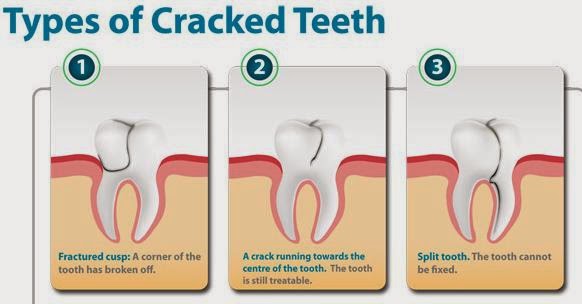
Regular dental care helps prevent inconvenient dental emergencies. However, dental emergencies can and do occur. Listed here are some of the more common dental emergencies and what you can do until you can get to our office. A good rule of thumb: if it hurts, do NOT wait to make an appointment. We will be happy to see you as soon as possible.
Toothache/Sensitive Teeth
A toothache or a sensitive tooth can be caused by several different types of problems. At times, it is a sign of a dying nerve inside the tooth. Over-the-counter pain relief medication can temporarily relieve the pain. Contact us for an appointment as soon as you notice the problem. Slight pain, if left untreated, can progress into facial or oral swelling and severe pain. Commonly, tooth pain can be eliminated with endodontic treatment (root canal therapy).
A sensitive tooth may be due to exposed root, a leaking or defective filling, decay, a bite-related problem, or a dying nerve. See us as soon as possible for an evaluation. Click here to read our blog post about the 10 biggest causes of sensitive teeth.
Broken Tooth
Teeth with large fillings can easily break or fracture. Call us as soon as possible to have the tooth evaluated and restored. If the broken tooth is not treated, more serious problems can develop. Broken teeth may or may not be sensitive to air and temperature changes. Sensitivity and pain are not necessarily an indication of how badly the tooth is damaged.
Tooth Knocked Out
Place the tooth in water or a wet towel or cloth. Do not try to scrub or wash the tooth. Get the tooth and the patient to us immediately. The faster the tooth can be repositioned, the better the odds that the tooth can be saved. Time is crucial.
Object Stuck Between Teeth
Use dental floss to gently remove the object. Do not use sharp or pointed objects to push or pry the object from between your teeth. If the object does not come out easily, come to us for help.
Final or Provisional Crown/Bridge Falls Out
See us as soon as possible to have the crown recemented. If this is not possible, you can use a denture adhesive (Fixodent, for example) that can be purchased without a prescription. Place a small amount in the crown and reseat it. Do not try to force it into place. It should not be difficult to put into place. When you cannot put the crown in correctly, save it, and bring it with you to your appointment. We will do the cementation. The reason the crown came out may make it impossible for the dentist to recement the old crown. That decision will be made during your examination.
Broken Partial or Denture
Bring the partial or denture here for repair. Do not try to glue the plastic yourself. Do not use Crazy Glue or other similar materials.
Orthodontic Problems
If the appliance is loose, take the patient to the orthodontist. If a sharp wire is exposed, cover it with a piece of wax, gum, a small cotton ball - anything to keep the sharp end from poking into the soft tissues.
Swollen Gums
Swollen gums are a sign of an infection. The infection may be caused by a dying nerve inside the tooth or a periodontal (gum) problem. Rinse your mouth with warm salt water. See us as soon as possible. The swelling may or may not be accompanied by pain. Either way, it needs immediate attention.
Contact us to make an appointment
 What is it?
Periodontal (gum) surgery is most often associated with the removal of soft tissue. But there are times when it is necessary to use soft tissue to cover an area that has too little soft tissue remaining.
What causes it?
Exposed roots may be due to the improper brushing, periodontal disease, or genetic structure. Brushing too hard and/or with a hard toothbrush can cause the gingival tissue to disappear. The gingival margin (gumline) changes, and one or more millimeters of root structure can be exposed. Active periodontal disease can cause loss of this soft tissue too.
Why you should care
This exposure can lead to teeth that are very sensitive to temperature changes, root decay, or are quite unsightly. The disfigured soft tissue line can lead to a plaque trap, causing more disease and further problems.
How dentists fix it
Two methods of resolving these problems are free gingival grafts and attached gingival grafts. Both of these are periodontal surgical procedures. In both cases, a local anesthetic will be used to numb the treatment site.
In the case of an attached graft, gingival tissue is taken from the donor site and moved to the area where root coverage is required. The graft tissue is sutured into place, and a dressing is placed over the treated area. The dressing remains in place for several weeks and is then removed. An attached graft is not completely removed from the donor site. The donor site is adjacent to the site that needs root coverage. There is an incision made in the gum tissue, and the tissue is moved sideways, up, or down and sutured into place. Again, a protected dressing is placed to protect the area while healing occurs. Any anticipated postoperative discomfort is resolved with medication. Most discomfort will come from a free graft donor site.
Who performs the procedure?
A periodontist (gum specialist) usually performs these procedures, as well as other types of grafts and root coverage treatments. After the periodontist examines the areas needing treatment, you will have a better idea of what treatment will consist of, what the appearance may be, anticipated healing times, postoperative discomfort, and cost.
How can you prevent it?
Most patients have heard that they should take better care of their teeth - brush and floss the teeth. Some patients brush too hard and in a back-and-forth motion; and some facial, bony structures and biting forces are such that root exposure happens, resulting in longer looking teeth. The grafting procedures mentioned here can restore the proper gingival marginal architecture, prevent root decay, reduce or eliminate thermal sensitivity, and make your smile look great again.
If you have any questions about gingival grafts, please feel free to ask us.