Showing posts with label austin periodontics. Show all posts

Friday, January 27, 2017

Periodontal Disease

Periodontal disease is an infectious process classified according to how much damage has been done to the structures surrounding the teeth, namely the gingiva (gums) and bone. It is an infection in your mouth. It can happen anytime, around your teeth, affecting some or many of your teeth to varying degrees. There are genetic predisposing factors to periodontal disease, and our immune systems play a role in gum health, but it is usually related to how well you are able to keep your teeth clean through proper oral self-care. The better you clean your teeth to remove all the plaque bacteria, the less likely you will be to develop periodontal disease.

Progress of the Disease
The bacteria that cause this disease first cause the gum tissue to become inflamed and pull away from the teeth. As the problem becomes more serious, the bone that supports the teeth also becomes infected and begins to break down and dissolve. The teeth then become loose. Once the bone disappears, it is extremely hard, if not impossible, for new bone to be rebuilt. The damage is permanent and your teeth, the surrounding bone, and your general health will be compromised.
Periodontal disease is classified into several types. The mildest form of this infection will show up in red and swollen gum tissue that bleeds easily. There is seldom any pain involved at this stage. You may also notice that your breath becomes offensive and you feel the need to use mouthwash. Our sense of smell does become immune to the same odor, so we can lose our ability to detect our own offensive, diseased breath. As the disease progresses, the gum tissue becomes more red and swollen, more bleeding can be seen, and the teeth begin to become loose. This tooth mobility is a sign that there is a severe problem. There may still be no pain at this advanced stage. As more and more bone is lost and more teeth become involved in the infection, it becomes harder to treat. At this point, many times, the management of your problem will involve periodontal surgical procedures. If this is the case, you may be referred to a periodontist (gum specialist) for further treatment. Most of the time, periodontal disease starts and continues because of neglect. Brushing and flossing of teeth are not being done effectively on a daily basis. You may have been neglectful in getting your teeth checked and cleaned within the time frame intervals you need. Once we have diagnosed the disease, we will inform you of the problem and suggest treatment. If treatment is not completed, however, the disease will continue to progress. Unfortunately, the disease is quite invisible to most people until severe and possible irreversible damage has occurred.

Solution
If it has been diagnosed in the early stages and has not progressed to bone loss, a proper cleaning (prophylaxis) will solve the problem. Scaling and root planing over multiple appointments may be needed for more advanced cases. In the most advanced cases, periodontal surgery and tooth loss are inevitable. You will receive an estimate of fees for the recommended treatment.
Periodontal disease is a condition that must be treated quickly. We believe that if the infection is aggressively treated in its early stages, conservative periodontal treatment may be possible and effective. Although we do not automatically rule out periodontal surgical intervention, we hope you can either avoid it or reduce the amount you will need.

Successful treatment of your periodontal problem will depend on several factors. But the most important of these is your ability to perform excellent oral self-care—brushing, flossing, and the use of periodontal aids—on a routine, daily basis. Without this, periodontal treatment will fail, and the disease will return. 

Friday, November 4, 2016

Is dental insurance worth the cost?

You need medical insurance, if only to protect against the cost of an accident or illness so expensive that you could be ruined financially. But do you really need dental insurance?
It’s an interesting question, because you can avoid the most likely causes and expenses of dental problems, decay and gum disease, by brushing and flossing your teeth diligently. But some teeth are more prone to problems, and when they have a problem, the costs can mount quickly.

The price of insurance
About 64 percent of Americans have dental insurance. Nearly all of them have coverage through work or a group plan like AARP, Medicaid, Tricare (for military families) and the federal Children’s Health Insurance Program, according to Evelyn Ireland, executive director of the National Association of Dental Plans, in an email interview.
Most dental preferred provider organizations and regular insurance (indemnity) plans have an average deductible of $50 and a maximum yearly benefit of $1,000, Ireland says. Only 2 percent to 4 percent of Americans with dental insurance use up their yearly maximum allowance.
Dental plans offered through a workplace typically are one of three types:
  • Indemnity plan: You choose your provider, and your plan pays a percentage of the fees.
  • PPO: Preferred provider organization plans have groups of practitioners who agree to reduced fees for patients within the network. Your costs are lower with network dentists. You may see out-of-network dentists, but it’ll cost you more.
  • HMO: Health maintenance organizations cut costs by requiring members to use only providers within the network.
Premiums for group dental plans in 2014 (the latest information available) averaged from $19 to $32 a month ($228 to $384 annually), said the NADP.
Is insurance worth it?
The NADP describes these elements of coverage in a typical plan:
  • Preventive care: periodic exams, X-rays and, for some age groups, sealants -- 100 percent.
  • Basic procedures: office visits, extractions, fillings, root canals (sometimes) and periodontal treatment -- 70 percent to 80 percent.
  • Major procedures: crowns, bridges, inlays, dentures and sometimes implants and root canals -- 50 percent or less.
Orthodontics coverage usually can be purchased as a rider, said the NADP. Cosmetic care isn’t covered.
Dental insurance isn’t always worth the cost. It depends on your plan, your needs and the cost of the services available to you.
In deciding if an insurance plan is right for you, weigh:
  • The annual premium
  • The cost of the dental care you need
  • Your policy’s limit on how much it pays out in benefits and whether you can roll over unused benefits from the previous year
  • Policy coverage
“While many dental policies focus on preventive measures by offering two annual visits, you’ll really start seeing the savings with more expensive treatments, like root canals and crowns,” according to Angie’s List.
Help from the Affordable Care Act 
The ACA requires providers to offer dental insurance for children younger than 18. “Although the new act does not require dental coverage for adults, most state marketplaces will also offer dental coverage for adults,” said the American Dental Association. Adult dental coverage may be offered as part of a comprehensive health plan or as stand-alone dental insurance. Here’s more about the ACA and dental coverage:
Dental insurance isn’t the only way to cut dental bills. In fact, 36 percent of Americans have no dental insurance. Here are 10 other ways to cut your costs:

1. Self-pay
It may be less expensive to pay out of pocket than buy a plan. Fees vary by dentist’s office and by geographic region. Here are average costs in the U.S. for several common procedures, from the ADA Health Policy Institute’s 2013 Survey of Dental Fees (the latest data available):
  • Teeth cleaning (prophylaxis) adult: $85
  • White dental filling (one surface, anterior): $149
  • Silver filling (one surface, primary or permanent): $125
  • Porcelain crown fused to noble metal: $1,003
  • Complete series of intra-oral X-rays: $124
2.  Preventive care
In many cases, the best way to save on dentistry is to take excellent care of your teeth and gums, and to teach children healthy dental routines. For example, did you know that fruit juices, carbonated drinks and acidic foods can help wear away your tooth enamel?
The ADA tells you how to brush correctlyhow to floss effectively and offers more information on dental health.
Delta Dental, an insurer, has more tips on preventive care.

3. Cut back to one cleaning a year
Several studies have shown that visiting the dentist twice a year doesn’t deliver notable benefits compared with one exam a year. If you don’t have serious dental issues, you can probably get by with one cleaning annually.
But don’t skip that one annual cleaning and exam. It could save you from costly and serious problems.

4. Discount dental plans
Discount plans charge an annual fee in exchange for discounted services from network providers. Before you buy into a plan, look over its list of covered procedures to see if they’re ones you are likely to use.
PolicyGenius, an independent insurance broker, compared five dental insurance and dental discount plans. Costs vary a lot depending on where you live and because the state insurance marketplaces created under the ACA offer different plans. It’s hard to comparison-shop for dental plans: Companies don’t easily share information on costs and coverage until after you’ve subscribed, PolicyGenius found. Even so, “all five plans we looked at delivered better value than paying cash outright.”
A tip: The cheapest dental plans don’t offer much value, but don’t just go with an expensive plan -- do some careful research. “If you know you’re going to be spending some time in the dentist’s chair soon -- and especially if you require an expensive dental procedure immediately -- the right discount plan could save you hundreds of dollars,” PolicyGenius writes.

5. Request 10 percent off
Some dentists will take 10 percent off the cost of a visit or procedure if you pay at the time of the visit. Some offer a discount for cash.
If your dentist doesn’t provide a discount, ask (politely, of course) if he/she could do so. Or shop around for a dentist, gathering recommendations from friends and then phoning those offices to find out if they offer a discount.

6. Charitable clinics
Look for low-cost or free dental clinics in your community offered by local dentist volunteers.
Find opportunities in your area through America’s Dentists Care Foundation. Another charitable organization with volunteer dental professionals is Dentistry From the Heart, a global nonprofit organization. Or ask your state’s dental association about low-cost care.

7. Dental schools
Dental schools at many colleges and universities around the U.S. often offer free or reduced-cost care. Accredited programs are listed at the ADA website.

8. Federally qualified health centers
Private health centers offering dental services exist in cities and counties across the country. They receive some government funding and charge according to what you can afford. Use the clinic locator at the federal Health Resources and Services Administration website.

9. Consider dental tourism
Dental tourism -- traveling to other countries to get treatment, often at a fraction of the U.S. cost -- is a huge business. Among the top countries that have a thriving dental industry catering to foreigners are Mexico, Thailand, Spain, Turkey, Czech Republic, Costa Rica, Poland, Philippines and Hungary.
“Dental tourism companies and corporate dental chains are increasingly advertising ‘all inclusive’ travel packages that include dental procedures, hotel room reservations, side trips to tourist attractions, and airline tickets to lure international clients,” said an article in the International Journal of Contemporary Dental and Medical Reviews.
Do plenty of research to ensure that you’re getting safe, high-quality care. Some resources:
“The decision to visit another country for dental care should go beyond simply comparing prices or even evaluating the dentists’ expertise. Countries differ in their standards for infection control and safety. The use of fresh gloves, sterile instruments and safe water are not standard practice in all countries. Without these precautions, patients could be infected with diseases such as hepatitis B.”

10. Get out of town
Dentist fees in rural counties typically are lower than in urban areas. Comparison-shop for the procedure you need by phoning offices of ADA member dentists outside your metro area and asking about fees. Here’s how to locate an ADA member dentist.

By: Mariyln Lewis, CBS News
http://www.cbsnews.com/news/is-dental-insurance-worth-the-cost/


If you have questions or would like to schedule an appointment, please contact Omni Dental Group at one of our three office locations listed below:

North Austin on Hymeadow Drive: (512) 250-5012
Central Austin on Jollyville Road: (512) 346-8424
South Austin on William Cannon: (512) 445-5811

Wednesday, October 12, 2016

Nine Things You Should Know About Looking After Your Own Oral Health

The Dental Helpline takes more than 10,000 calls every year from those who have questions or concerns about their mouth and oral health.  The free-to-call helpline, run by the British Dental Health Foundation, has seen a steady upsurge in calls over the last two years and answers questions on a wealth of oral health related issues.
 
In a new three-part series, the charity has taken a look at some of the most frequently asked questions to the Dental Helpline, so that we can learn what it takes to keep our mouth healthy.
In the first part of the series the British Dental Health Foundation address some of the most common questions they get asked about what you can do to look after your own oral health.
There are many aspects to looking after our oral health and it can often be confusing what advice we should listen to and what to ignore. Looking after our mouth doesn't have to be difficult, expensive or time-consuming, in fact it can be very easy.
So to make things a little clearer here is some advice to help you keep your smile healthy:

1) How often should I visit the dentist?

How often you need to visit the dentist depends on your own oral health. You may need to visit at different intervals depending on aspects such as if you have any existing oral health problems, your age and other health issues.
As a rule of thumb you should visit the dentist as often as they recommend so discuss this with your dentist.

2) When is the best time to brush my teeth?

Did you know that there are times when you shouldn't brush your teeth? For example, you should not brush your tooth within an hour of eating or drinking anything acidic.
You should brush your teeth before you go to bed and at least one other time each day with a fluoride toothpaste.

3) What toothbrush should I be using?

Choosing the best toothbrush for you can be a potential minefield, everybody will have their own requirements. Adults should look to use a small to medium-sized brush head with soft to rounded nylon bristles and there are bushes which are specifically designed for children and the elderly.
Electric toothbrushes, those with the oscillating and rotating heads, can also be very effective and are helpful for people with mobility problems.
Your dentist will know exactly what you need and be able to help you make the right decision.

4) Which toothpaste is best for me?

There are many types of toothpaste on the market, choosing the best one for you can sometimes be confusing.
The most important thing is that your toothpaste contains the correct amount of fluoride, 1350 parts per million for children over three and adults,1000 parts per million under three. But you may have other specific needs due to tooth sensitivity, gum health or your age. Your dentist will be able to advise what is best for you based on your individual requirements.

5) How does my diet affect my oral health?

What you eat and drink can have a huge impact upon your oral health.
Sugary and acidic food can cause damage including tooth decay and dental erosion if you don't look after your oral health properly. Try to keep sugary foods or drinks just to mealtimes, limiting the amount of time your mouth is at risk. Each time you have sugar it takes your teeth an hour to recover from the acid attack caused.
A diet that is rich in vitamins, minerals and fresh fruit and vegetables can help to prevent gum disease so make sure you keep an eye on what you are eating.

6) How often should I clean between my teeth?

Ideally you should clean between your teeth at least once a day, only brushing your teeth cleans just two thirds of the tooth surface so you need to do a little extra to make sure you are reaching all of the tooth. Cleaning in between your teeth removes plaque and bits of food from areas a toothbrush simply can't reach.
You can clean between your teeth with an ‘interdental' brush or dental floss. You can also use dental tape which is thicker than floss and many people find easier to use. Your dental team can show you proper interdental cleaning techniques and products to ensure you're doing it effectively.

7) Should I use mouthwash?

Mouthwash offers many benefits to your oral health if used properly; some contain anti-bacterial ingredients which help reduce plaque and prevent gum disease. Some mouthwashes contain fluoride which is important in the helping to prevent tooth decay.
Do not use mouthwash too close to brushing your teeth as it can wash away the fluoride from brushing.
If you find that you have to keep using mouthwash to hide bad breath you should see your dentist. Persistent bad breath can be a sign of unhealthy teeth and gums or of poor general health.

8) How bad is smoking for my oral health?

Most people are very aware that smoking is bad for their health. It can cause huge medical problems and, in some cases, fatal diseases.
However, many people don't realize the full extent to which smoking damages their mouth, gums and teeth.
Smoking can lead to tooth staining, gum disease, tooth loss, and in more severe cases mouth cancer. Smokers lose more teeth than non smokers.
If you are a smoker it is likely that you will have to visit your dentist and hygienists more often to keep a close check on the health of your mouth.

9) Where can I find information about how to look after my oral health?

Your oral health does not stop the moment you step out of the dentist, be sure you understand what you can do every day to make sure you keep your oral health in tip top condition. Your dental team can offer guidance and support from many other services and can refer you if you need extra help.
 
 
If you have questions or would like to schedule an appointment, please contact Omni Dental Group at one of our three office locations listed below:

North Austin on Hymeadow Drive: (512) 250-5012
Central Austin on Jollyville Road: (512) 346-8424
South Austin on William Cannon: (512) 445-5811

Monday, August 29, 2016

Why You Need To Visit A Dentist Now?


I don’t have any reason to visit a dentist, my teeth are perfect and healthy!

That is what everyone says when being asked to visit a dentist. But really, it is not until you start having serious pains in your teeth before you consider visiting a dentist.
Here are four reasons why you should consider visiting a dental care clinic now:

#1. Correction of Wrong Dentition
Most of us grew up with having more than enough teeth in the mouth and we see it as a normal thing even though they overlap each other.
A dentist will help find corrective measures in helping your teeth have the best dentition you never thought you could have.

#2. Mouth Cleaning and Cleansing
Most people have tartar (an incrustation that forms on the teeth and gum) formed underneath their teeth and close to the gums.
These harbor lots of microorganisms that later affect the oral health. A dentist would notice the tartar and carry out what is called scaling and polishing to remove every traces of the tartar before it gets to its worse stage.

A dentist will help you to remove food remnants that hides between the teeth. Food remnants that hide in the teeth include remnants of meat, fish, vegetables and they keep decaying in between the tooth.
You don’t have to wait till it decays and destroy your oral health, visit a dentist who will help you floss the teeth with a waxy thread.

#3. Prevention and Control of Oral Diseases
A dentist takes note of everything that might lead to a chronic disease and takes care of before it gets out of the primary stage.
It is advisable to visit a dentist at least once in every three months. Being busy is not an excuse anymore, so just make time within that three months to see a dentist.

#4. Placing fillings or administering anesthetics
Dental fillings or restoration are used to fill in the cavities caused by tooth decay. Instead of removing the tooth after suffering a tooth decay, your dentist will help check what the possible solution to it might be so you get relieved of the pain as soon as possible.
It is either placed with fillings if the tooth is not decayed to a bad extent and might be extracted if the condition of the tooth is bad.

Is that all a dentist can do? Of course not.
A dentist can also help in diagnosing oral diseases, creating treatment plans to maintain or restore the oral health of patients, interpreting x-rays and diagnostic health, monitoring growth and development of the teeth and jaws.

Source: The Huffington Post
http://www.huffingtonpost.com/adeyemi-adetilewa/dental-care-why-you-need-_b_11707700.html
_________________________________________________________________________________
If you have questions or would like to schedule an appointment, please contact Omni Dental Group at one of our three office locations listed below:

North Austin on Hymeadow Drive:  (512) 250-5012
Central Austin on Jollyville Road:  (512) 346-8424
South Austin on William Cannon:  (512) 445-5811

Monday, October 6, 2014

Dental Emergencies

Regular dental care helps prevent inconvenient dental emergencies. However, dental emergencies can and do occur. Listed here are some of the more common dental emergencies and what you can do until you can get to our office. A good rule of thumb: if it hurts, do NOT wait to make an appointment. We will be happy to see you as soon as possible.

Toothache/Sensitive Teeth
A toothache or a sensitive tooth can be caused by several different types of problems. At times, it is a sign of a dying nerve inside the tooth. Over-the-counter pain relief medication can temporarily relieve the pain. Contact us for an appointment as soon as you notice the problem. Slight pain, if left untreated, can progress into facial or oral swelling and severe pain. Commonly, tooth pain can be eliminated with endodontic treatment (root canal therapy).

A sensitive tooth may be due to exposed root, a leaking or defective filling, decay, a bite-related problem, or a dying nerve. See us as soon as possible for an evaluation. Click here to read our blog post about the 10 biggest causes of sensitive teeth.

Broken Tooth
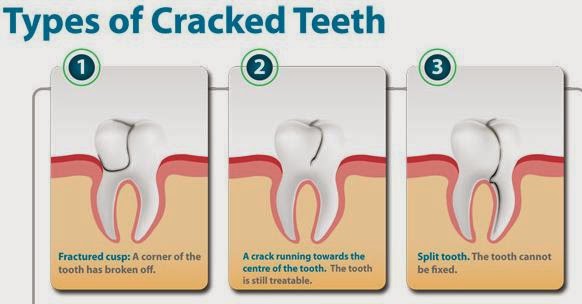
Teeth with large fillings can easily break or fracture. Call us as soon as possible to have the tooth evaluated and restored. If the broken tooth is not treated, more serious problems can develop. Broken teeth may or may not be sensitive to air and temperature changes. Sensitivity and pain are not necessarily an indication of how badly the tooth is damaged.

Tooth Knocked Out
Place the tooth in water or a wet towel or cloth. Do not try to scrub or wash the tooth. Get the tooth and the patient to us immediately. The faster the tooth can be repositioned, the better the odds that the tooth can be saved. Time is crucial.

Object Stuck Between Teeth
Use dental floss to gently remove the object. Do not use sharp or pointed objects to push or pry the object from between your teeth. If the object does not come out easily, come to us for help.

Final or Provisional Crown/Bridge Falls Out
See us as soon as possible to have the crown recemented. If this is not possible, you can use a denture adhesive (Fixodent, for example) that can be purchased without a prescription. Place a small amount in the crown and reseat it. Do not try to force it into place. It should not be difficult to put into place. When you cannot put the crown in correctly, save it, and bring it with you to your appointment. We will do the cementation. The reason the crown came out may make it impossible for the dentist to recement the old crown. That decision will be made during your examination.

Broken Partial or Denture
Bring the partial or denture here for repair. Do not try to glue the plastic yourself. Do not use Crazy Glue or other similar materials.

Orthodontic Problems
If the appliance is loose, take the patient to the orthodontist. If a sharp wire is exposed, cover it with a piece of wax, gum, a small cotton ball - anything to keep the sharp end from poking into the soft tissues.

Swollen Gums
Swollen gums are a sign of an infection. The infection may be caused by a dying nerve inside the tooth or a periodontal (gum) problem. Rinse your mouth with warm salt water. See us as soon as possible. The swelling may or may not be accompanied by pain. Either way, it needs immediate attention.

Contact us to make an appointment
 

Wednesday, August 13, 2014

Drinking Coffee Accelerates Orthodontic Tooth Movement

What is orthodontic tooth movement?
A unique process where a solid object (tooth) is made to move through a solid medium (bone). Orthodontic tooth movement occurs due to the pressure that is transmitted to the clinical crown of the tooth, down to the root, and ultimately to the periodontal ligament (the tissue that attaches the tooth to the bone) and alveolar bone surrounding the root.

On the surface of the tooth in the direction where the tooth is being moved, the periodontal membrane is squeezed, resulting in compression of the periodontal fibers within the membrane. The bone surface contacting the periodontal membrane begins to resorb due to the activation of cells called osteoclasts.

On the surface of the root from which the tooth moves, the periodontal membrane becomes stretched. This activates cells called osteoblasts. These cells regenerate new alveolar bone in the area where the tooth was once located. That is why teeth may be slightly loose during orthodontic treatment. Once the movement has stopped, the ligaments are no longer stretched or squeezed and the bone regenerates and fills in around the periodontal ligament, causing the tooth to be more secure in the bone.

The following article shows that daily coffee consumption enhances orthodontic tooth movement, and consequently can shorten the duration in which patients have to wear braces.

The Study
Caffeine has been shown to affect bone metabolism through regulation of osteoclast, osteoblast, and calcium balance. This study investigated the effects of drinking coffee on orthodontic tooth movement (OTM). Drinking coffee, as a daily habit of many people, can be an effective accelerator of tooth movement with little side effects. Caffeine can break the calcium balance in bone tissue and directly inhibit the development of osteoblasts, leading to temporary decreased bone mineral density and consequently inducing faster orthodontic tooth movement.

Why is it important?
Developing new methods to enhance orthodontic tooth movement and shorten the duration of treatment has always been desired. However, to date, no therapies have been widely used in clinics. Much effect has been made to explore therapies to shorten the orthodontic treatment period with limited success. Daily coffee consumption may be a promising approach to enhance orthodontic tooth movement for its reversible effect on bone mineral density and calcium balance.

The setup
30 male Wistar rats were randomly divided into two groups:
  1. regular OTM = rO
  2. coffee + OTM = cO
At 5 weeks of age, the cO rats began receiving daily intragastric administration of coffee according to body weight.

At 13 weeks of age, the left maxillary first molar of the both groups was moved mesially with a nickel-titanium coil spring

After 3 weeks, the OTM amount was measured. 

How was it measured?
The alveolar bone mineral density (BMD) was analyzed with micro-computed tomography (uCT).
Immunohistochemical staining was done for TRAP and RANKL expression in the periodontium. The periodontal ligament (PDL) tissue model was established through 3D culturing human PDL cells in poly lactic-co-glycolic acid (PLGA) scaffolds.

What did they find?
Compared with rO, the cO rats had significantly larger tooth movement. Meanwhile, the cO had significantly lower alveolar BMD, indicated decreased bone mineralization. Moreover, in the compression periodontium, the cO had significantly more TRAP+ osteoclasts and higher RANKL expression, indicating increased osteoclastogenesis. 

Summary
This study found that drinking coffee accelerates OTM, probably through the effects of caffeine on osteoclastogenesis enhancement via RANKL elevation. This research was supported by the National Nature Science Foundation of China.

Click here to read the study.

Click on this link to read another study about how carbonated soft drinks DECREASES the rate of orthodontic tooth movement. "The role of soft drinks in decreasing tooth movement might be related to its effects on bone metabolism."

Wednesday, August 6, 2014

Crowns: An Overview

Why would I need a crown (cap)?
1. A tooth has been so badly damaged by decay or so heavily restored by fillings that it can only be saved with cast restoration
2. A tooth has been treated endodontically (root canal treatment). These teeth are almost always restored with a cast restoration because they have lost a great deal of tooth structure from fracture, decay, or the drilling process. These teeth are prone to fracture under normal and light chewing forces.
3. The tooth needs to be used as an abutment (anchor) for a bridge to replace missing teeth.
4. Grinding your teeth, an improper bite, age, fillings and tooth decay can all be contributing factors in the wearing down, cracking or breakage of your teeth. 

What are dental crowns?
Dental crowns cover the entire visible surface of your affected tooth and add strength, durability and tooth stability. Click here to learn about the difference between crowns, bridges, and implants.

What kinds of crowns are there?
Expect to pay more for porcelain crowns because they are usually more time-consuming than gold crowns. Porcelain, porcelain over metal and gold crowns average between $600 to $3100 each in total cost. The new reinforced resin or bonded all-porcelain type costs more than other types, require more skill from your dentist and the lab, and may exceed your insurance plan coverage for crowns.
  • Resin and Porcelain Crowns
    • The new reinforced resin or bonded all-porcelain type of crown as the nicest appearance. This crown can be made from pure ceramic or a new reinforced composite resin, and is almost indistinguishable from natural teeth. Thew new bonding technology involved provides an exceptional bond to your tooth. It is metal-free, and thus satisfies the needs of patients with metal sensitivities. When correcting your back teeth with bonding, the cosmetic dentist will perform a tooth colored onlay. This type of procedure is used to correct only those parts of the tooth that are in need. This is a metal-free procedure. 
    • Advantage: Porcelain crowns or new reinforced resin are considered to be the most aesthetically pleasing, as it is so easily matched in color to the surrounding teeth
    • Disadvantage: The thickness of the porcelain required for pleasing aesthetics also requires that more tooth structure needs to be removed. It is more difficult for your cosmetic dentist to get an ideal fit where your gum meets the crown. Gingival inflammation appears to be more common with porcelain crowns that gold crowns. All-porcelain crowns require a higher skill level from your dentist and lab.
  • Crowns Made of Gold
    • Gold crowns are appropriate when appearance is not a priority to you. The gold metal is extremely workable, making gold crowns a more precise fit than any other type. While there exists a slight possibility of chipping with porcelain crowns, gold crowns provide no such possibility.
    • Advantage: The preparation of a tooth for a gold crown is the simplest and least complicated preparation as there is minimal tooth structure removal with as much as possible of the healthy tooth structure remaining untouched. While porcelain is hard by comparison, it may cause wear on opposing teeth over the years where goal is not as likely to do so. Gold is also easier to fit to the area where the tooth and crown meet for a better fit. Gold is also a healthier environment for the gum tissue.
    • Disadvantage: The cosmetic aspect, unless it is being used in the back of your mouth
  • Porcelain and Metal Crowns
    • For a very natural appearance, porcelain fused to metal crowns are the answer. However, they have a metal substructure and require an opaque below the porcelain. This can make the translucency of natural teeth difficult to replicate. Occasionally, a darker line will be visible at the edge of the crown, near to your gum when it recedes with age. 
    • Advantage: Porcelain fused-to-metal crowns have a very natural appearance
    • Disadvantage: They have a metal substructure and require an opaque below the porcelain. This can make the translucency of natural teeth difficult to replicate. Occasionally a darker line will be visible at the edge of the crown, near to your gum when it recedes with age
  • Types of Porcelain
    • There are two types of porcelain - felspathic and pressed ceramic porcelains. The felspathic type is the original method that has been around for 20 years. Ceramist in a dental lab bakes porcelain onto tin foil and then heats it in an oven. The Ceramist is able to create tints and opaques inside the porcelain to give the natural look we seek.
    • Pressed ceramic is created from a single ingot. The single ingot is milled in one piece to create the desired shape. The stains and opaques are applied only to the surface of the porcelain to give a natural look.
How do I choose a color for the dental crowns - how white should it be?
Whiten your natural teeth to either the level of whiteness you want or to the brightest they can be. Your cosmetic dentist will then have the crowns made to that color. Teeth are of course not monochromatic, so typically more than one color is used to used a very natural look. This color variation is critical in avoiding fake or artificial looking teeth. It is the internal contrast of colors that help create vitality. The internal play of light on the porcelain in the restoration helps to create this vitality. Surface texture is also very important, and helps to break up light reflections and make the crown look more natural.

There is no one standard system in the dental field to measure and determine tooth color. The most often heard about, however, is the Vita shade guide. This guide divides tooth color into four basic shade ranges:

A (reddish brown)
B (reddish yellow)
C (gray)
D (reddish gray)

In the A range, there are five level of darkness. Ranges B, C, and D, each have four levels.

Not all of your teeth are the same natural color. Usually your eye teeth tend to be darker than the others, your front teeth are typically the whitest, and molars tend to be a shade between the two. The goal for everyone is to achieve their individual optimum whiteness while still looking natural.

Most dentists will show you a shade chart for your to pick from. Keep in mind, with a good cosmetic dentist, this is merely a starting point. Other considerations when determining the color of crowns for each patient are your complexion, hair color, the color of your natural teeth and even your eye color.

What is the procedure?
- Preparing (drilling) the tooth in an appropriate fashion for the type of crown chosen
- Making impressions of the prepared tooth, opposing teeth, and the occlusal (bite) relationships
- Selecting a shade for tooth-colored crowns
- Fabricating a provisional restoration that will remain in place while the crown is being constructed
- Cementing or bonding the completed crown into position. If the work to be done is extensive, there may also be several appointments needed for preliminary seating (try-in) of the crowns or castings

What do I need to do BEFORE I get the crown?
It is important for the ultimate success of the crown(s) that you understand and can perform thorough plaque removal. You should immediately begin following the oral self-care instructions that you have been given. It will make the procedure more comfortable and efficient, and the resulting restorations will look better. Final impressions cannot be taken until the gum tissue is healthy. Crown lengthening is an oral surgery treatment that involves removing excess gum tissue around the upper teeth to make them look longer. Your cooperation is appreciated and necessary.

What do I need to do AFTER I get the crown?
As is true with your natural teeth and especially with teeth that have been restored with any dental material, you should avoid chewing on excessively hard or sticky foods after the crowns have been cemented. It is especially important not to bite down on hard foods with just one tooth. The porcelain material can fracture from the metal substructure under extreme forces. Anything you chew that could break a natural tooth could break a crown!

Be sure to brush and floss daily as instructed. We also advise using a fluoride mouthrinse as part of your daily routine. Please be sure to return for your regular examinations and prophylaxis (cleaning) appointments at the time intervals we suggest.

After observing these types of procedures for many years, we note that the gingiva (gums) can recede from the crown margins and the surrounding tooth structure may become visible. This recession usually takes place over a period of several years and may require restoration replacements or a periodontal plastic surgery procedure to correct it.

We expect that you will receive many years of service from the cast restoration.

If you have any questions about crowns and bridges, call our office and ask or set up an appointment. We have 3 convenient locations around Austin.


Tuesday, August 5, 2014

Splinting Teeth

Healthy Teeth Are Strong and Steady
In their normal state, teeth surrounded by healthy supporting structures exhibit very little mobility. Mobility can be defined in this case as movement of the teeth. Pushing on the teeth with dental instruments may cause the tooth to be deflected slightly from the "at rest" position, but this movement will be very, very slight.

Why Teeth May Need To Be Splinted
When the supporting bone is compromised and affected by periodontal disease, the teeth will show more mobility. If the tooth or teeth are subjected to trauma, they can be loosened in their sockets. Bruxing and grinding habits can also loosen teeth.

Teeth that are not too severely damaged by trauma will return to their former stability. Temporary splinting of the loosened teeth to each other or to other undamaged teeth may be required.

If the mobility is caused by clenching or grinding of the teeth, adjustment of the bite (occlusion) and the fabrication of a protective antigrinding/bruxing appliance may be indicated. In this case, no splinting of the teeth would be required.

The most common reason for splinting teeth is mobility cause by periodontal disease. The teeth show more movement as the bone support for the teeth diminishes. Multi-rooted teeth (molars) often show less mobility than single-rooted teeth with the same amount of bone loss. But the need for treatment is just as important. The more mobile the teeth, the more damage has been done, and the more splinting will be necessary.


The Splinting Procedure
Fixing periodontal disease
The first step in elimination of tooth mobility is to begin to correct the periodontal problem. If the teeth are mobile, the periodontal problem is probably advanced and the corrective measures could be both involved and time-consuming. Splinting may be started immediately. It involves attaching the mobile and perhaps non-mobile teeth together with a wire, acrylic, or a combination of the two. Attaching the teeth together gives them all more strength. Splinting has a limited life expectancy and must be repaired or replaced periodically. There is often a fee separate from the initial splinting fee associated with these procedures. You will be informed as to what your particular condition requires for short- and long-term therapy.

A more extensive form involves splinting the teeth together with cast and cemented restorations - crowns, bridges, bonded metal retainers, etc. This type of splinting will last much longer and is more expensive. The purpose is the same as that of external splinting - to attach the mobile teeth together so that they derive more strength and move less.

Teeth that are splinted will also require different and more involved brushing and flossing on your part. We will demonstrate these procedures for you.

Fees
Costs for splinting procedures vary greatly. It will depend on the number of teeth to be splinted, severity of the mobility, prognosis of the teeth, and the type of splinting selected.

If you have any questions about splinting teeth, please feel free to ask us.