Showing posts with label artificial tooth root. Show all posts

Wednesday, January 25, 2017

Implants, Crowns, and Bridges vs. Natural Teeth

Nothing can replace the natural teeth you were born with for chewing and function. However, very few people go through life without having teeth filled, crowns (caps) placed, or bridges and implants used to replace missing teeth. Crowns, bridges, and implants are the best answer and closest to your natural teeth, but they are not the same as healthy, natural teeth.

Crowns

Crowns are used to reconstruct a single tooth broken down by dental decay. Crowns are made of ceramic, resin, porcelain, porcelain plus metal, or resin plus metal materials. They are bonded or cemented onto the prepared tooth and cannot easily be removed from the tooth once placed. If the tooth was in good alignment before the crown was prepared, the crown will be in good alignment. If the tooth was misaligned before the crown, sometimes the crown may be made to obtain a more ideal shape and position. It is cleaned and flossed just like a natural tooth and is most like real teeth.

Bridges

Bridges are crowns that are attached together, suspending the crown portion of a false tooth in or over the space left by the missing tooth. A bridge can be used to replace one or several teeth. Sometimes a bridge is used to splint loose teeth together in order to make the teeth more stable. Bridges are usually made of metal covered with either porcelain or resin. Some of the newer bridges are made of all resin or all ceramic materials. They are cemented or bonded onto the existing prepared teeth and are not easily removed once placed. The bridge teeth can be brushed the same as natural teeth, but since they are attached together, must be flossed differently by using a floss threader or other device.
The teeth are generally the same shape as natural teeth. However, if the existing teeth (abutments) that are used to anchor the bridge have moved from their original position because a tooth or teeth have been missing for years, the added tooth (pontic) may be longer or shorter than the tooth that it is replacing. With a bridge, the false tooth will most often butt up against the soft tissue ridge where the removed tooth was.
The shape of the tongue side of the false tooth varies. It is usually smaller on the tongue side and completely fills the space. Food will have more of a tendency to collect in this area, so you must be prepared to clean it. If the missing tooth has been gone a long time, the ridge may have shrunk considerably, and the pontic tooth will be longer that the teeth on either side. If this is the case, there are several periodontal procedures that can be done prior to the construction of the bridge. These procedures will build up the tissue to its former height. The more your mouth has changed from its normal state, the harder it is to make new teeth look and feel natural.

Implant Crowns

Implant crowns are used to replace single or multiple missing teeth. They are either cemented or screwed-retained onto an implant fixture. The crowns are made of porcelain or resin and metal. But they have some significant differences from the natural teeth they replace. Teeth are supported by a root or roots that are irregular in shape. Implants are round. The cross-sectional of the implant will never match that of the tooth it is replacing. A multirooted tooth may be replaced by a single implant, so the manner in which an implant crown comes out of the soft tissue ridge will appear different from a natural tooth. There will be more space between the implant root and the adjacent teeth. Implant crowns are often cemented with temporary cement. This allows the dentist to easily take off the crown and evaluate how the implant is doing. Crowns on teeth are usually cemented with a final cement. Implant-supported crowns are wonderful, but not the same as natural teeth with crowns. Be prepared for some differences. Expect more maintenance on your part and in the dental office with crowns, bridges, and implants.


Smokers take note: There is a heightened risk of dental implant failures among smokers—as much as 20% greater failure rate!

Wednesday, October 12, 2016

Nine Things You Should Know About Looking After Your Own Oral Health

The Dental Helpline takes more than 10,000 calls every year from those who have questions or concerns about their mouth and oral health.  The free-to-call helpline, run by the British Dental Health Foundation, has seen a steady upsurge in calls over the last two years and answers questions on a wealth of oral health related issues.
 
In a new three-part series, the charity has taken a look at some of the most frequently asked questions to the Dental Helpline, so that we can learn what it takes to keep our mouth healthy.
In the first part of the series the British Dental Health Foundation address some of the most common questions they get asked about what you can do to look after your own oral health.
There are many aspects to looking after our oral health and it can often be confusing what advice we should listen to and what to ignore. Looking after our mouth doesn't have to be difficult, expensive or time-consuming, in fact it can be very easy.
So to make things a little clearer here is some advice to help you keep your smile healthy:

1) How often should I visit the dentist?

How often you need to visit the dentist depends on your own oral health. You may need to visit at different intervals depending on aspects such as if you have any existing oral health problems, your age and other health issues.
As a rule of thumb you should visit the dentist as often as they recommend so discuss this with your dentist.

2) When is the best time to brush my teeth?

Did you know that there are times when you shouldn't brush your teeth? For example, you should not brush your tooth within an hour of eating or drinking anything acidic.
You should brush your teeth before you go to bed and at least one other time each day with a fluoride toothpaste.

3) What toothbrush should I be using?

Choosing the best toothbrush for you can be a potential minefield, everybody will have their own requirements. Adults should look to use a small to medium-sized brush head with soft to rounded nylon bristles and there are bushes which are specifically designed for children and the elderly.
Electric toothbrushes, those with the oscillating and rotating heads, can also be very effective and are helpful for people with mobility problems.
Your dentist will know exactly what you need and be able to help you make the right decision.

4) Which toothpaste is best for me?

There are many types of toothpaste on the market, choosing the best one for you can sometimes be confusing.
The most important thing is that your toothpaste contains the correct amount of fluoride, 1350 parts per million for children over three and adults,1000 parts per million under three. But you may have other specific needs due to tooth sensitivity, gum health or your age. Your dentist will be able to advise what is best for you based on your individual requirements.

5) How does my diet affect my oral health?

What you eat and drink can have a huge impact upon your oral health.
Sugary and acidic food can cause damage including tooth decay and dental erosion if you don't look after your oral health properly. Try to keep sugary foods or drinks just to mealtimes, limiting the amount of time your mouth is at risk. Each time you have sugar it takes your teeth an hour to recover from the acid attack caused.
A diet that is rich in vitamins, minerals and fresh fruit and vegetables can help to prevent gum disease so make sure you keep an eye on what you are eating.

6) How often should I clean between my teeth?

Ideally you should clean between your teeth at least once a day, only brushing your teeth cleans just two thirds of the tooth surface so you need to do a little extra to make sure you are reaching all of the tooth. Cleaning in between your teeth removes plaque and bits of food from areas a toothbrush simply can't reach.
You can clean between your teeth with an ‘interdental' brush or dental floss. You can also use dental tape which is thicker than floss and many people find easier to use. Your dental team can show you proper interdental cleaning techniques and products to ensure you're doing it effectively.

7) Should I use mouthwash?

Mouthwash offers many benefits to your oral health if used properly; some contain anti-bacterial ingredients which help reduce plaque and prevent gum disease. Some mouthwashes contain fluoride which is important in the helping to prevent tooth decay.
Do not use mouthwash too close to brushing your teeth as it can wash away the fluoride from brushing.
If you find that you have to keep using mouthwash to hide bad breath you should see your dentist. Persistent bad breath can be a sign of unhealthy teeth and gums or of poor general health.

8) How bad is smoking for my oral health?

Most people are very aware that smoking is bad for their health. It can cause huge medical problems and, in some cases, fatal diseases.
However, many people don't realize the full extent to which smoking damages their mouth, gums and teeth.
Smoking can lead to tooth staining, gum disease, tooth loss, and in more severe cases mouth cancer. Smokers lose more teeth than non smokers.
If you are a smoker it is likely that you will have to visit your dentist and hygienists more often to keep a close check on the health of your mouth.

9) Where can I find information about how to look after my oral health?

Your oral health does not stop the moment you step out of the dentist, be sure you understand what you can do every day to make sure you keep your oral health in tip top condition. Your dental team can offer guidance and support from many other services and can refer you if you need extra help.
 
 
If you have questions or would like to schedule an appointment, please contact Omni Dental Group at one of our three office locations listed below:

North Austin on Hymeadow Drive: (512) 250-5012
Central Austin on Jollyville Road: (512) 346-8424
South Austin on William Cannon: (512) 445-5811

Monday, September 26, 2016

Will dentist help you to grow new teeth?


If you don’t like going to the dentist, you’re not alone. Most people have some anxiety about visiting the dentist, with one study in the Netherlands indicating that 24% of adults feared the dentist. Moreover, significant amounts of people who fear the dentist avoid visiting until they really need to. That could help explain why 92% of American adults have tooth decay in their permanent teeth.
But there is good news on the horizon as well—recent research also suggests that we might soon be able to refill the holes in our teeth with healthy, living tissue, giving our permanent teeth a second chance.
Compared to other species, you may think we humans are extraordinarily unlucky to have to depend on the same set of adult teeth for the majority of our life. Shark enthusiasts are familiar with the fact that sharks have unlimited sets of teeth during their lifetimes. Galeophobes in particular might be terrified to learn that sharks have rows of baby teeth underneath the skin waiting to replace the functional ones, and shed and replace teeth as often as every three weeks, causing experts to believe that the sea floor is littered with the teeth of sharks.
So if sharks, and most reptiles and amphibians can replace their teeth over a lifetime, why do humans and most mammals only get two sets of teeth?
Abigail Tucker, a professor of development and evolution at King’s College London says that there is a trade-off between the complexity of the teeth and the amount of sets the species gets. Since mammals have the ability to chew, meaning they can grind their teeth sideways (think of the movement a cow or horse makes) we have developed complex sets of teeth with multiple cusps, the bumps and mounds that define the shape of our teeth. While our pointy canine teeth (cuspids) each have only one cusp, our premolars (bicuspids) each have two cusps and our molars each have four or five cusps.
“The complexity is linked to diet, with bamboo eaters having the most complex teeth,” she says. “Something like a giant panda or a bamboo eating lemur have complex back teeth with lots of cusps so they can really chew and grind the hard tissue. So their teeth look similar even though they’re completely unrelated to [other] mammals.”
There are other fascinating examples of animals with unique dental abilities. Piranhas have teeth that are fused together to make large teeth that resemble a type of sharp knife. When they shed teeth, they lose an entire quadrant all at once, and rely on the other three quadrants to survive while the new teeth come in.
While mammals are typically restricted to two sets of teeth – a set of deciduous teeth and a set of permanent teeth – some mammals have retained the ability to create more teeth or have evolved to have the ability again. Manatees for example keep forming new teeth in the back their mouths over the course of their entire lives.
Other animals only get one set of teeth, but they continuously grow, including the aye aye lemur and rodents like rats and mice. “Rodents and rabbits typically have a stem cell population at the base of the tooth that keeps growing dentin and enamel. It’s an adaptation to the hard foods that they’re eating,” says Tucker.
Other approaches use the cells that are in our teeth to heal cavities that have already penetrated  the enamel, by stimulating the creation of dentin, the calcified tissue that makes up the inner portion of our teeth. Recent research published in the journal Science Translational Medicine for example, found that treating exposed tooth pulp in rats with low-power laser light before filling the cavity could induce stem cells to create dentin in the tooth.
In another approach, researchers from the University of Nottingham and Harvard University are developing a therapeutic biomaterial that can work to heal a cavity, and intervene before a root canal is necessary. The material can stimulate a particular type of stem cells in the pulp tissue to interact with other material that forms a new kind of dentin-producing cell.
“This material can be injected in contact with pulp tissue and hardened with UV light to form a plastic,” says Adam Celiz, a postdoctoral fellow that is working on its development. “The native cells interact with the plastic and differentiate into a different kind of cell that produces dentin. So we’re hoping to restore that dentin layer to return vitality to the tooth, which means the pulp tissue wouldn’t have to be removed by a root canal.”
Prevention is key
Of course, dentists will tell you that preventing cavities from forming in the first place is the key to your dental longevity, starting with good oral hygiene—brushing twice a day with fluoridated toothpaste, flossing once a day and making regular trips to the dentist – and eating the right kind of foods.
“The most important food and thing for us to keep in mind in terms of prevention is water – especially fluoridated water,” says Sahota. “Not only does the fluoride help mineralise and regenerate tooth structures that may have become infected by a cavity, the physical motion of drinking water helps to flush away food, bacteria and any debris that may be stuck in your teeth as well.” She adds that dairy is also great because it’s high in calcium and that lean protein helps strengthen and rebuild enamel.
Even if we can rebuild this material in our mouths, we still have to fend off a modern menace in our industrialised diets – refined sugar.  That’s because bacteria secrete acid when it breaks sugar down, and that acid can cause decay in our teeth.
So what type of candy is best avoided? Sahota says hard candies like lollipops are especially bad since they give you a constant exposure to sugar, while sticky candies get stuck in your teeth for long periods of time.
At least she has good news for the chocoholics among us. “Chocolate after lunch or dinner is a better choice than a lot of other candy because it can get flushed out more easily. So go ahead and enjoy a bite after your meal."


By: Tifannie Wen
http://www.bbc.com/future/story/20160922-will-dentists-help-you-to-grow-new-teeth

If you have questions or would like to schedule an appointment, please contact Omni Dental Group at one of our three office locations listed below:

North Austin on Hymeadow Drive: (512) 250-5012
Central Austin on Jollyville Road: (512) 346-8424
South Austin on William Cannon: (512) 445-5811

Monday, June 30, 2014

What Are Implants?

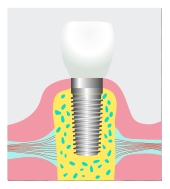
Have you lost your teeth due to: severe tooth decay, gum disease, trauma, or even a failed root canal? You may qualify for implant treatment. Dental implants are used to replace one or more missing teeth in your mouth. Implants are made of titanium or similar materials that are well suited to the human body. Implants are artificial replacements for teeth roots that support a restoration or a dental appliance. 


Twenty-five years ago, if someone described how missing teeth could be replaced with implants, it might have been called a miracle. Ten years ago, the use of dental implants to replace missing teeth might have been called astounding. Today, implant procedures are called routine. We would like you to have a basic understanding of what implants are, what can be expected from them, and what limitations they might have in your specific area of need.

dental implant Austin
A dental implant is a synthetic metallic root substitute that is placed or implanted in the jaw bone. It can be used to replace a single missing tooth, provide an abutment (anchor or retainer), replace several missing teeth, or provide added retention to a removable dental appliance such as a full denture. In fact, if you are missing all of your natural teeth, it is possible to have maxillary (upper) and mandibular (lower) fixed replacements. The replacements do not come out and you cannot remove them yourself.

Two separate events are needed when replacing a missing tooth with an implant. First is the surgical phase in which the implant is placed. In the second phase, the replacement teeth are constructed and fixed into proper position.

The implant placement procedure involves making a small incision in the gum area where the implant is to be placed, preparing a site in the underlying bone, inserting the implant into the prepared site, and closing the tissue over the implant with several sutures. This area is left undisturbed, usually for 4 to 6 months. More healing time may vary due to the density of your bone. The lower jaw is composed of bone that is more dense than that of the upper jaw. This healing time allows for the slow integration of the implant within your jaw. The implant is held in place by the bone.
http://paulkorb.com/wp-content/uploads/dental_implant_01.jpg 
After the healing and integration of the implant, the placement site is exposed by reopening the gum. A post will then be fastened to the implant by cement or with internal threads. The crown, bridge, or other type of replacement will be attached to this post. Some dentists prefer to do all phases of the implant procedure themselves, but many choose to perform either the surgical or prosthetic (the actual construction of the replacement device) only. If this is the case, a periodontist or oral surgeon will perform the surgical portion of the implant placement.

Implants are very successful. Maxillary and mandibular implants are more than 90% successful. Lower implants have a somewhat higher success rate than upper implants. Occasionally, implants fail, but it is not common. Chances of an implant failure, many times, can be determined during or after the surgical phase before the replacement tooth or teeth are constructed.

Smokers take note: There is a heightened risk of dental implant failure among smokers - as much as a 20% greater failure rate!

We will discuss with you the requirements and options for your particular situation. There are usually several possibilities for effectively replacing missing teeth. It is important to decide on the design of the implant-retained replacement prior to the actual implant surgical procedure. Position and alignment of the replacement teeth need to be carefully considered before determining the location of the implant.

If you have any questions about implants, please feel free to ask us.