Showing posts with label cavities. Show all posts

Wednesday, February 8, 2017

Sedative Restorations


Sedative restorations are placed for several different reasons. The most common reason is tooth pain. The pain may be constant, intermittent, or a reaction to sweets or a cold or hot stimulus. If the sensitivity is due to decay and it is very deep and close to the nerve, there is the possibility of exposure of the pulp (nerve) once all the decay is removed. If the cavity is especially deep, as much of the decay as possible will be removed, and a medicated, sedative filling will be placed in the tooth. This will serve to calm the nerve and give it a chance to heal. The sedative restoration, if done for this reason, should stay in your mouth for a number of weeks. Then the sedative restoration will be removed and the tooth will be examined to determine the need for further treatment. It may be able to be restored with a filling or cast restoration. However, if the decay was quite deep and the nerve does not heal, endodontic treatment (root canal therapy) will be required to alleviate pain and save the tooth.

If you have multiple large cavities and/or other serious dental problems, we may choose to first restore all the teeth with sedative restorations. This will quickly stabilize all the teeth so that they do not continue to deteriorate from the decay. Then the other, perhaps more serious dental problems, can be addressed and treated. Once you are out of an emergency situation, we will have the time to thoroughly plan the best methods to restore the teeth.

A third use of sedative restoration is an aid in diagnosing sensitive teeth. You may have a problem with a single tooth, or perhaps you are unable to specifically pinpoint the exact tooth. If the tooth (or teeth) already has a restoration in it, we may need to remove the restoration and directly look at the prepared portions of the tooth. If we do not feel that it is appropriate to place a final restoration at that time, we will place a sedative restoration to be in place for a few weeks. Occasionally, the tooth feels better as soon as the sedative restoration is placed. However, it will still be necessary to observe the tooth for a few weeks before placing a final restoration.

Infrequently, the placement of the sedative restoration offers no apparent relief. In this case other possibilities must be explored. Most often the tooth will require endodontic treatment. Other times, it just takes several days to get a positive result. If possible, give the sedative restoration time to work. But under no circumstances must you live in constant pain. Do not be afraid to call and ask to be seen if the sedative restoration does not appear to be effective.


If you have any questions about sedative restorations, please feel free to contact us at any of our three office locations:
Hymeadow: (512) 250-5012
Jollyville: (512) 346-8424
West William Cannon: (512) 445-5721

Monday, January 30, 2017

Prevention of Decay

Dental Decay
Dental caries (decay) is a bacterial infection, first of the enamel, then of the dentin of the tooth. The tradition in dentistry has been to surgically remove the diseased portion of the tooth by “drilling” out the decay and then filling the resulting hole in the tooth with some inert material. As most adults know, this procedure will be performed over and over again when new decay begins or when the filling (often silver) breaks or the tooth fractures.

Would it not be better to eliminate the cause of the infection and thus not be forced to have big holes drilled in the teeth? We believe the bacterial cause of the infection should be addressed.

Preventing the Risk of Dental Decay
There are several positive steps that you can take to reduce your risk of dental decay. First, all of the active decay in your mouth should be treated immediately. Next, all the teeth that would benefit from sealants should be treated. This will prevent bacteria from reaching into the pits, fissures, and grooves that normally exist on the occlusal (biting) surface of teeth. Any stray bacteria that may still be in the sealed area are effectively cut off from their food source and become inactive. Although sealants are most effective on teeth that have not been previously restored, they can be successfully placed on teeth filled with bonded fillings.

The infection can be treated with antimicrobials. We believe that the use of a fluoridated mouthrise twice daily or use of a prescription fluoridated dentifrice as directed provides great advantage. Not only is fluoride effective against bacteria but it also creates an environment that promotes remineralization of slightly damaged enamel. The decay process is reversed and the tooth may not have to be drilled. We may also prescribe a chlorhexidine mouthrinse, an antimicrobial oral rinse that has a great effect on Streptococcus mutans.

Your diet and oral self-care are important in dental decay prevention. When you eat junk food and drink sugary liquids, your teeth are more prone to decay. The more frequently you snack, the more prone your teeth will be to decay. If your brushing and flossing are not effective, your teeth will be more prone to decay. When you can’t brush after a meal, at least rinse your mouth with water within 15 minutes to dilute the acids forming from the ingested food or drink. If you have a diminished salivary flow, take frequent sips of water during the day to help dilute the acids produced by the bacteria.

If you have a continuing problem with active decay, we recommend more frequent preventative recare appointments. It has been repeatedly shown that patients who have good oral self-care and maintain a recare interval of 3 to 4 months have many fewer dentally related (cavities or gum disease) problems.

The routine 6-month recare interval is no longer our recommended schedule. That interval was based on a 50-year-old philosophy that never had any scientific basis! Times have changed. Present dental practice is based on proven scientific information. You might need to have your teeth cleaned by the hygienist twice each year or you may need to be seen more frequently.

For certain individuals, we also suggest testing the oral bacterial levels to determine the magnitude and presence of a Streptococcus mutans infection and to determine your risk level for future dental disease.

Wednesday, January 25, 2017

Implants, Crowns, and Bridges vs. Natural Teeth

Nothing can replace the natural teeth you were born with for chewing and function. However, very few people go through life without having teeth filled, crowns (caps) placed, or bridges and implants used to replace missing teeth. Crowns, bridges, and implants are the best answer and closest to your natural teeth, but they are not the same as healthy, natural teeth.

Crowns

Crowns are used to reconstruct a single tooth broken down by dental decay. Crowns are made of ceramic, resin, porcelain, porcelain plus metal, or resin plus metal materials. They are bonded or cemented onto the prepared tooth and cannot easily be removed from the tooth once placed. If the tooth was in good alignment before the crown was prepared, the crown will be in good alignment. If the tooth was misaligned before the crown, sometimes the crown may be made to obtain a more ideal shape and position. It is cleaned and flossed just like a natural tooth and is most like real teeth.

Bridges

Bridges are crowns that are attached together, suspending the crown portion of a false tooth in or over the space left by the missing tooth. A bridge can be used to replace one or several teeth. Sometimes a bridge is used to splint loose teeth together in order to make the teeth more stable. Bridges are usually made of metal covered with either porcelain or resin. Some of the newer bridges are made of all resin or all ceramic materials. They are cemented or bonded onto the existing prepared teeth and are not easily removed once placed. The bridge teeth can be brushed the same as natural teeth, but since they are attached together, must be flossed differently by using a floss threader or other device.
The teeth are generally the same shape as natural teeth. However, if the existing teeth (abutments) that are used to anchor the bridge have moved from their original position because a tooth or teeth have been missing for years, the added tooth (pontic) may be longer or shorter than the tooth that it is replacing. With a bridge, the false tooth will most often butt up against the soft tissue ridge where the removed tooth was.
The shape of the tongue side of the false tooth varies. It is usually smaller on the tongue side and completely fills the space. Food will have more of a tendency to collect in this area, so you must be prepared to clean it. If the missing tooth has been gone a long time, the ridge may have shrunk considerably, and the pontic tooth will be longer that the teeth on either side. If this is the case, there are several periodontal procedures that can be done prior to the construction of the bridge. These procedures will build up the tissue to its former height. The more your mouth has changed from its normal state, the harder it is to make new teeth look and feel natural.

Implant Crowns

Implant crowns are used to replace single or multiple missing teeth. They are either cemented or screwed-retained onto an implant fixture. The crowns are made of porcelain or resin and metal. But they have some significant differences from the natural teeth they replace. Teeth are supported by a root or roots that are irregular in shape. Implants are round. The cross-sectional of the implant will never match that of the tooth it is replacing. A multirooted tooth may be replaced by a single implant, so the manner in which an implant crown comes out of the soft tissue ridge will appear different from a natural tooth. There will be more space between the implant root and the adjacent teeth. Implant crowns are often cemented with temporary cement. This allows the dentist to easily take off the crown and evaluate how the implant is doing. Crowns on teeth are usually cemented with a final cement. Implant-supported crowns are wonderful, but not the same as natural teeth with crowns. Be prepared for some differences. Expect more maintenance on your part and in the dental office with crowns, bridges, and implants.


Smokers take note: There is a heightened risk of dental implant failures among smokers—as much as 20% greater failure rate!

Friday, November 11, 2016

10 Holiday Foods and Drinks Dentists Won't Touch

 
The holiday season, which unofficially starts with Halloween and ends on New Year’s Day, is the time when everyone likes to cut loose, put inhibitions aside, and eat and drink, well, whatever looks good. The reckless consumption of cakes, candies, pies, beverages (alcoholic and otherwise), meats, and sides carries with it a number of potential health risks — and some of these are dental, because many of these sweet and savory delights can do some serious damage to our teeth. The mixture of sticky candies, sugary sweets, and acidic alcohols and sodas is something out of a dentist’s nightmare. By knowing which foods to eat in moderation, which to chew carefully, and which to simply stay away from, you can avoid that emergency crown replacement and protect yourself from cavities.
The Daily Meal asked nine dentists and dental professionals to give us their lists of holiday foods and beverages they won’t touch. Our experts include: Fountain of Youth Dental in San Antonio led by Chris Cappetta, D.D.S.; Bill Crutchfield, D.D.S. from OBC in Chantilly, Virginia Ira Handschuh, D.D.S. from The Dental Design Center in White Plains, New York; Brandi Dupont, D.M.D., chief dental officer at Community Health Alliance in Reno, Nevada; Victoria Veytsman, D.D.S. in New York City; Hugh Flax D.D.S. in Atlanta; Samantha Sacchetti, D.M.D. in Chicago; Kami Hoss, D.D.S. in Chula Vista, California; Melissa Thompson, D.D.S. in Woburn, Massachusetts; and Harold Katz, D.D.S, founder of The California Breath Clinics and developer of the TheraBreath line of premium oral care products.
There was a general consensus among all of these dental professionals that sugar, acids, alcohol, and sticky foods can do the most damage to your teeth and gums. Acidic foods like citrus, sour candies, or tea can wear away tooth enamel and lead to greater tooth sensitivity and a higher risk of fracture; beverages like eggnog contain the “triple threat” of sugar, alcohol, and dairy. Also worth noting is that some foods affect certain age groups differently. Adults need to worry about fracturing a crown or a bridge, but they are less likely to suffer from tooth decay than someone under the age of 18.

Here are the holiday foods and drinks dentists won’t touch. 


Bourbon and Other Spirits

Bourbon might be a tasty addition to eggnog, but it can wreak havoc on your mouth. Dr. Harold Katz says alcohol such as bourbon “makes the mouth very dry, which then creates an environment prime for gum disease, tooth decay, and bad breath.”

Candy Canes

These iconic holiday treats are better left as a Christmas tree decoration. Candy canes and other hard candies are notoriously bad for teeth because they are packed with sugar and can also cause chipped or broken teeth, Dr. Bill Crutchfield warns.

Citrus Fruits

Citrus fruits are associated with numerous health benefits, but, sadly, many of those don’t apply to dental health. “Acidic foods such as limes, oranges and other citruses can erode enamel over time, causing sensitive and weak teeth,” Dr. Kami Hoss notes.

Coffee

“High caffeine drinks cause reduced salivary flow. Saliva assists in removing food particles and unwanted sugars from the mouth. If salivary flow decreases, then sugar and food remain on the teeth and gums leading to an increased risk of problems,” notes Dr. Ira Handschuh says.

Corn on the Cob

Corn is nutritious, but eating it off the cob can be tricky. “This is a difficult food to eat because biting into it can cause you to crack a filling or loosen sealant you may have in your mouth. Not to mention it's terrible to get out of braces or retainers, and can damage orthodontic wires. A better way to eat corn is off the cob, since you'll have a better chance of avoiding gum disease,” Fountain of Youth Dental points out.

Dots and Jujubes

“These are great for decorating gingerbread houses, awful for your teeth,” Dr. Samantha Sacchetti explains. “Similar to the hard, sticky candy that you have option to suck on, you have really no option but to chew them. The excessive chewing it takes for these things (longer if they're from a stale gingerbread house) also can lead to some temporomandibular joint (TMJ) pain. For a candy that doesn't even taste that good, it's just not worth it to me.”

Dried fruit

Dried fruit is a plentiful source of fiber and nutrients, but these common holiday munchies might increase your risk of getting a cavity. “Although dried fruit may be a better option to snack on than a cookie, dried fruit is still full of sugar that will get in your teeth and cause decay,” notes Fountain of Youth Dental.

EggNog

Eggnog is one of the worst holiday beverages for your dental health because it contains sugar, alcohol (sometimes), and dairy. “Dairy proteins are easily converted to odorous sulfur compounds by oral bacteria. Sugar feeds the bacteria and alcohol creates a dry mouth, which is an ideal environment for the bugs to multiply. Eggnog is terrible,” Katz says.

Fruitcake

If you’re looking for an excuse to avoid eating fruitcake this Christmas, here it is. The sticky and sweet nature of fruitcakes “can cause tooth decay and if you have weak teeth or crowns these foods can actually cause them to dislodge,” Dr. Hugh Flax warns.

Hot Chocolate

There’s nothing more appropriate for a cold winter morning than a steaming cup of hot cocoa with a plump marshmallow floating right in the middle. Unfortunately, “hot cocoa’s high sugar content can lead to tooth decay, and the high dairy content may lead to bad breath,” Katz notes.

By: Michael Serrur, The Daily Meal
http://www.foxnews.com/health/2016/11/10/10-holiday-foods-and-drinks-dentists-wont-touch.html

If you have questions or would like to schedule an appointment, please contact Omni Dental Group at one of our three office locations listed below:

North Austin on Hymeadow Drive: (512) 250-5012
Central Austin on Jollyville Road: (512) 346-8424
South Austin on William Cannon: (512) 445-5811

Wednesday, October 5, 2016

5 Sneaky Dental Issues That Might Mean Big Trouble

You know all about the importance of brushing your teeth, as well as your kids' teeth. But the benefits aren't limited to your pearly whites. "Many physicians and dentists consider the mouth to be a window into the general health of the patient," says Scott Froum, D.D.S., a board-certified periodontist based in New York City. Our experts Dr. Froum and Sally Cram, D.D.S., a dentist and spokesperson for the American Dental Association, broke down five tooth-, gum- and tongue-related issues that could mean you've got a much bigger problem on your hands:

1. Consistent bad breath

Aside from scaring away friends and family, your not-so-minty-fresh breath could be an early sign of gum disease, says Dr. Cram. Gum disease is particularly sneaky because it doesn't cause pain in its early stages, so most people who have it may not realize it until lots o' damage has already been done. Luckily, it doesn't involve some torturous procedure to reverse. Just put a little more time and effort into brushing and flossing daily.

2. Red, swollen or bleeding gums

If your gums continue to swell or bleed despite your best brushing and flossing efforts, our experts say there's a possibility you could be dealing with diabetes. So, if your pesky gum problems persist and you're noticing other diabetes symptoms like extreme thirst or hunger, fatigue or blurry vision, go see your doc ASAP.

3. Stubborn tongue pain

Obviously if you down hot soup too fast or bite your tongue it's going to be a little sore, but prolonged pain in the tongue or throat (more than two weeks) is one of the most common early signs of oral cancer, says Dr. Cram. Next steps: Monitor those symptoms and look out for any sores, lumps or lesions that won't disappear. Pass that two week mark and to the doctor you go.

4. Spots or sores out of the blue

If clusters of tiny white spots have started popping up around your lower molars — womp, womp — you might have a viral infection in your near future, Dr. Froum says. Called "Koplik spots," these little sores have developed a reputation as a highly predictive sign of measles. Tack on other symptoms like a fever, cough or runny nose, and you may be a few days away from that itchy measles rash. (Alas, you guessed it, a doctor's visit is required.)

5. Hefty tooth discoloration

As tempted as you might be to blame yellow teeth on your coffee addiction, you might be looking at the wrong culprit: If your teeth have turned a shade of black or brown, it could mean you're dealing with some deep-rooted tooth decay, Dr. Froum says. The solve: You might need to get a cavity filled — or (shudder) undergo a root canal treatment.
 
 
If you have questions or would like to schedule an appointment, please contact Omni Dental Group at one of our three office locations listed below:

North Austin on Hymeadow Drive: (512) 250-5012
Central Austin on Jollyville Road: (512) 346-8424
South Austin on William Cannon: (512) 445-5811

Wednesday, September 28, 2016

How to Overcome Your Smile Insecurities

Everyone deserves to have a smile that expresses self-confidence and inner beauty. Unfortunately, too many people are insecure about their smile when the sources of their unhappiness can easily be fixed. Turns out, with some simple, cost-effective, and painless cosmetic dentistry, you can dazzle the world with your smile.
Three of the biggest smile inhibitors are yellowing or discolored teeth, crooked teeth, and gaps. Each of these issues can be addressed by an American Academy of Cosmetic Dentistry (AACD) member dentist to give you the results you've dreamed of.
Teeth Whitening
There are a number of reasons why teeth become discolored over time from internal causes to external factors. So, it just makes sense that there are a variety of ways to deal with whitening, from simple do-it-yourself products to more extensive in-office treatments. While a prescription is not needed for the over-the-counter home remedies, it is a good idea to discuss them with your AACD dentist. In-office remedies are typically more effective and better for people with sensitivity issues because the rest of the mouth can be protected.
Crooked Teeth
While most people instantly picture teens in braces when they think of straightening crooked teeth, there are options for adults that are much more subtle than the full-metal braces of the past. Short-term orthodontics can include invisible braces that are placed behind the teeth and which can be a faster alternative to traditional braces; clear aligner therapy -- such as Invisalign -- a well-known "nearly invisible" treatment that uses trays to gradually create change; and more. With strict compliance, these solutions can create straighter teeth.
Gaps
Some gaps between teeth (diastema) can be fixed with the traditional metal braces or other short-term options mentioned above. But there are other methods of fixing gaps that can work almost instantly to give you a smile that you'll want to share. Bonding fills in the space by using a resin, and dental veneers use ceramic or porcelain to subtly widen the teeth to diminish the gap. If your gap is due to missing teeth or dental implants, a bridge or partial dentures can restore the healthy appearance you once had.
Talk to an AACD member dentist to find out which treatment(s) are best suited to tackling your smile-inhibitors and take your smile from blah to brilliant.  


By: NewsUSA for NewsUSA
http://www.mcdonoughvoice.com/news/20160928/how-to-overcome-your-smile-insecurities


If you have questions or would like to schedule an appointment, please contact Omni Dental Group at one of our three office locations listed below:

North Austin on Hymeadow Drive: (512) 250-5012
Central Austin on Jollyville Road: (512) 346-8424
South Austin on William Cannon: (512) 445-5811

Monday, September 19, 2016

How often should you brush your teeth? Oral hygiene 'dos and don'ts' explained by expert


Are we brushing our teeth frequently and for long enough? The British Dental Association has outlined the routine we should all get in to.

It's a habit which has been drummed into us from an early age, but the recent news flossing your teeth could be a waste of time has put the spotlight on oral hygiene.
When it comes to looking after our teeth, there are certain pieces of wisdom which we've incorporated into our routines.
But in the wake of the news about flossing, when it comes to oral hygiene, how much does your average person know about what we should be doing - and which habits do we need to ditch?
For example, how many of us know how long we SHOULD brush or teeth for and how often? And what are we doing wrong?
MirrorOnline spoke to the British Dental Association’s scientific adviser, Professor Damien Walmsley, who kindly put together this definitive list of "dos and don'ts."

How often?

"The best way to prevent tooth decay is to brush teeth twice daily with a fluoride toothpaste to remove plaque, limit the frequency, and amount of sugary food and drinks consumed in your diet, and see the dentist regularly.


Don'ts'

  • Brush for long enough – research indicates that people only brush for 45 seconds
  • Rinse the mouth after brushing – fluoride helps to prevent, control and even stop tooth decay – but rinsing the mouth out dilutes the concentration of fluoride, so SPIT, don’t rinse.
  • Brush too soon after eating – as enamel on teeth is softened after eating especially with sugary foods – it’s best to wait an hour before brushing which allows the tooth to harden up more.
  • Use a hard bristle toothbrush as this can damage the soft tissues in the gums.
  • Don't brush too hard – the bristles should lightly sweep the tooth.


'Dos'

  • Brush for at least two minutes, twice daily, with a fluoridated toothpaste
  • Brush last thing at night and at least on one other occasion
  • Use a small headed toothbrush with medium bristles.
  • Put a pea-sized blob of fluoride toothpaste on your toothbrush.
  • Brush along the gum line as well as the teeth themselves
  • Brush all surfaces of the teeth, including the outer, inner and chewing surfaces as well as the hard-to-reach back teeth and areas around fillings, crowns or other restorations.

If you have spaces between teeth, it is best to clean these with an interdental or single-tufted brush. Where the spaces between teeth are too tight to fit such a brush, use dental floss or tape
If you are unsure about the effectiveness of brushing, use disclosing tablets after brushing to highlight any areas you may have missed.
There is good evidence that a small-headed counter oscillating electric toothbrush helps in removing dental plaque but they must be used correctly and your dentist or hygienist will advise.

Plaque

Plaque is a sticky film of bacteria that covers your teeth and gums. It develops constantly and you clean it off every day when you brush your teeth. Certain harmful oral bacteria feed on the sugars you eat to create acids that destroy the tooth enamel.
Cavities are a bacterial infection created by acids, that cause your teeth to experience a hole in them.
The more sugar you eat, the more acid you will create in your mouth, and the more acidic attacks your teeth are exposed to, the higher the risk of developing tooth decay.

By: Zahra Mulroy, Mirror
http://www.mirror.co.uk/lifestyle/health/how-often-should-you-brush-8637066

If you have questions or would like to schedule an appointment, please contact Omni Dental Group at one of our three office locations listed below:

North Austin on Hymeadow Drive: (512) 250-5012
Central Austin on Jollyville Road: (512) 346-8424
South Austin on William Cannon: (512) 445-5811

Wednesday, September 7, 2016

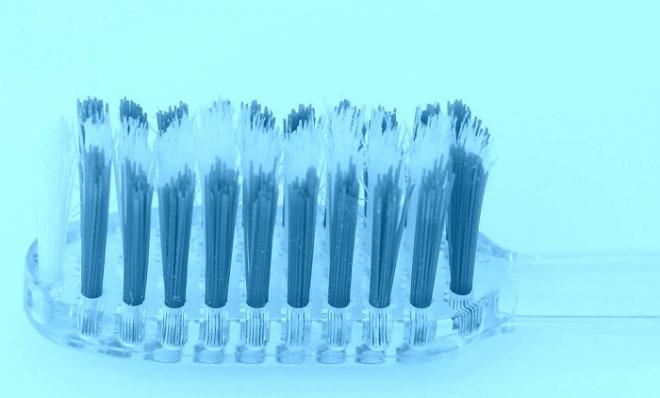
How Often Should You Change Your Toothbrush?


Every time we pass them along our teeth, we trust that our toothbrushes are handling business and getting rid of disease-causing plaque, which is full of bacteria. But if you're using an old toothbrush you’re not doing your mouth any favors. You see, while many of us know how important it is to take care of our teeth, we aren’t as diligent when it comes to taking care of our toothbrushes.

Toothbrushing plays an essential role in personal oral hygiene. However, if you’re brushing your teeth as often as you’re supposed to — twice a day, in the morning and right before bed — then the bristles on your toothbrush are becoming frayed and worn with each use faster than you realize. This isn’t a good thing since worn-out brushes won’t efficiently clean teeth and become less effective at fighting off decay.

“As your bristles start to fray, they are not actually getting in between your teeth. You may not be as efficient at brushing your teeth,” Dr. Jonathan Abenaim, dentist and clinical instructor at New York University, told Medical Daily. “There may be bacteria or a few particles left behind if you don’t have the right toothbrush.”

A frayed toothbrush can be an inconvenience, but the solution is simple: replace it. The American Dental Association recommends that consumers replace toothbrushes approximately every three to four months, or possibly sooner if you’ve been sick. It’s also important to note that you’re not just throwing away your toothbrush, but millions of bacteria.

One study from the University of Manchester in England found that the average toothbrush contains at least 10 million bacteria — including E. coli and Staph. When you think about it, this makes sense since at any given time there are about 100 to 200 oral bacteria species living in your mouth, most of which end up on a toothbrush after a single brushing. In fact, a new toothbrush can become contaminated with bacteria, viruses, and fungi (living in the mouth or from the external environment) after just 30 seconds of use. What’s more, these germs don’t just stay on the toothbrush, they can also be transmitted to other toothbrushes in the household, increasing the risk of infection with each use.

In other words, swapping out your toothbrush every three to four months is just as important as brushing twice a day and flossing when it comes to maintaining your oral health.


By: Jaleesa Baulkman
http://www.medicaldaily.com/how-often-should-you-change-your-toothbrush-bacteria-dental-care-385771

If you have questions or would like to schedule an appointment, please contact Omni Dental Group at one of our three office locations listed below:
North Austin on Hymeadow Drive: (512) 250-5012
Central Austin on Jollyville Road: (512) 346-8424
South Austin on William Cannon: (512) 445-5811

Wednesday, August 24, 2016

Tips For Oral Hygiene


A better, more confident you begins every morning and ends every evening if you stick with a consistent oral hygiene routine. This, in addition to regular dentist office visits, helps develop not only strong teeth and gums, but also overall good health. You'll feel good, look great, avoid unnecessary bills, and experience an improvement in many of your day-to-day social interactions. It's easy once you understand the basic routines required to maintain good dental hygiene. Get started with some basic dental education and a thorough awareness of the steps that should and should not be taken toward great, long-term oral health.

Oral hygiene benefits

Daily cleaning of your teeth, gums, and tongue, combined with annual check-ups helps ward off harmful bacteria and microbes that may cause tooth decay, bleeding gums, and oral infections. Proper oral hygiene is also important in helping you stay healthy, especially if you have risk factors such as diabetes and heart problems. Plus, oral hygiene elevates your sense of self-esteem. This is especially true for teenagers and adults who frequently interact with others at work or in social situations. Maintaining proper oral hygiene ensures that you won’t experience embarrassing conditions, such as plaque, tartar, and bad breath. It also lowers the need to treat dental problems that could otherwise be inexpensively prevented. For example, according to Kaiser Health News reports, dental costs make up approximately 20 percent of a child’s total health care expenses, and the costs are escalating rapidly.

Oral hygiene for kids

Enforcing good oral hygiene habits early in a child’s life is essential for his overall well-being. According to a 2007 Centers for Disease Control and Prevention (CDC), the number of cavities in children between the ages of two and five has escalated by 15 percent. Proper oral hygiene habits must start as early as the child begins to bottle feed. This is when babies are prone to tooth decay if they are given a bottle filled with sugary liquids, like milk or juice, when put to bed. While baby teeth should be cleaned using a washcloth, young babies should eventually have their teeth and tongues brushed using soft brushes. It is important for parents to teach children the proper way to brush their teeth with fluoride toothpaste, to take them for regular dental check-ups, and to serve foods that will help strengthen teeth. These include milk, cheese, and vegetables.

Oral hygiene for adults

Many adults experience significant dental problems that could be prevented through basic oral hygiene practices, like regular dentist appointments. For example, in 2009 alone, CDC data indicated that only 62 percent of adults surveyed had visited the dentist. To maintain optimal oral health, adults should brush their teeth at least twice a day, preferably after each meal and before going to bed. Flossing is also an essential part of an adult’s daily oral hygiene regimen. Regular brushing and flossing can prevent unpleasant conditions, such as plaque and bad odor. However, over-brushing or flossing may result in mouth bruises and bleeding, which can lead to infections. Adults should visit their dentist regularly for routine check-ups and before using over-the-counter medication.

Oral hygiene facts

Poor oral hygiene can increase your chances of developing heart disease. Professional teeth cleanings will reduce the bacteria that cause inflammation and eventually lead to heart disease (Veterans General Hospital in Taipei).
According to the American Dental Hygienists Association:
  • A major cause of tooth loss in children is cavities; while periodontal (gum) disease is the leading cause of tooth loss in adults.
  • Eating healthy snacks such as celery, carrots, or apples help clear away food loosely trapped in-between teeth.
  • The leading oral health problem for infants is baby bottle tooth decay, which can be caused when babies are given a bottle filled with sugary liquids, like milk or juice, when put to bed.

Oral hygiene statistics

According to the Centers for Disease Control and Prevention:
  • Roughly 78 percent of Americans have had at least one cavity by age 17.
  • 80 percent of the U.S. population has some form of periodontal (gum) disease.
  • In 2007, Americans made about 500 million visits to dentists and spent an estimated $98.6 billion on dental services.
  • Between 2005-2008, 16 percent of children ages 6-19 and 23 percent of adults 20-64 had untreated cavities.
  • Dental fluorosis (overexposure to fluoride) is higher in adolescents than in adults and highest among those aged 12–15.
  • Most adults show signs of periodontal or gingival diseases. Severe periodontal disease affects approximately 14 percent of adults aged 45-54.
  • 23 percent of 65-74 year olds have severe periodontal disease
  • Men are more likely than women to have more severe dental diseases.
  • Oral cancer occurs twice as frequently in men as women.
  • Three out of four patients don’t change their toothbrush as often as is recommended. Toothbrushes should be changed every two to three months and after illnesses.
Oral hygiene greatly affects overall long-term health, and promotes a more confident you. When it comes to dental care, prevention through daily cleaning and regular visits to the dentist’s office is better not only for your health, but for your budget. That's why it's important for parents to play a key role in reinforcing smart oral hygiene habits. Kids are likely to follow in the footsteps of those who set positive examples and will carry those healthy habits through their own adult lives. Remember, whatever your age, it’s never too late to take a serious stand in keeping your teeth healthy and your smile confident.

Source: Humana
https://www.humana.com/learning-center/health-and-wellbeing/healthy-living/tips-for-oral-hygiene
_________________________________________________________________________________
If you have questions or would like to schedule an appointment, please contact Omni Dental Group at one of our three office locations listed below:

North Austin on Hymeadow Drive:  (512) 250-5012
Central Austin on Jollyville Road:  (512) 346-8424
South Austin on William Cannon:  (512) 445-5811

Tuesday, August 19, 2014

Remineralization Device Could Soon Come to Market

A new device being developed by dental researchers at King's College London could soon bring to market an electronic tool that would encourage teeth to remineralize. 

Demineralization and remineralization have a crucial impact on the hardness and strength of tooth enamel.

What is demineralization?
Poor hygiene, bad brushing techniques, as well an inappropriate diet can lead to tooth decay due to changed acid levels in the oral cavity. Demineralization occurs at a low pH (acidic) when the oral environment is UNDERsaturated with mineral ions. Acids demineralize the tooth structure by dissolving calcium, phosphorus, etc. The enamel is dissolved by these organic acids (lactic and acetic acids) that are produced by the cellular action of plaque bacteria in the presence of dietary carbohydrates. This enamel erosion leads to dental cavities. 

Demineralized surfaces are porous and adherent, thus becoming favorable to bacteria growth that causes dental cavities and decay. In other words, enamel demineralization equals the beginning of cavity formation. Often, as a result of smoothness reduction, the tooth surface may suffer from superficial pigmentation, which can be visually unpleasant and impossible to remove with the toothbrush. 

Demineralized teeth are very sensitive to diverse stimuli: sensitive to hot and cold foods and drinks, as well as sensitive to the touch; brushing can be uncomfortable, even painful, and the patient can be tempted to skip brushing or cut it short, which is usually fatal for his or her teeth. When demineralized hypersensitive teeth are not properly cleaned, severe dental cavities affect the entire dental structure. Treatment becomes difficult. Patients need to understand that this condition appears as a result of an infection that can easily get out of control if hygiene is neglected.

What is remineralization?
Remineralization allows the loss of calcium, phosphate, and fluoride ions to be replaced. 

How do dentists fix cavities now?
With 2.3 billion affected annually, dental caries is one of the most common preventable diseases globally. Tooth decay normally develops in several stages, starting as a microscopic defect where minerals leach out of tooth. Dentists normally treat established caries in a tooth by drilling to remove the decay and filling the tooth with a material such as amalgam or composite resin. 

What can this tool do?
Reminova Ltd, a company that emerged from King's College London Dental Innovation and Translation Centre, takes a different approach - one that rebuilds the tooth and heals it without the need for drills, needles, or amalgam. By accelerating the natural process by which calcium and phosphate minerals re-enter the tooth to repair a defect, the device boosts the tooth's natural repair process.

How would the tool work?
Electric currents already used to check pulp/nerve of a tooth
The two-step method developed by Reminova first prepares the damaged part of the enamel outer layer of the tooth and then uses a tiny electric current to "push" minerals into the tooth to repair the damaged site. The defect is remineralized in a painless process that requires no drills, no injections, and no filling materials. Electric currents are already used by dentists to check the pulp or nerve of a tooth; the new device uses a far smaller current than that currently used on patients and cannot be felt by the patient. The technique, known as Electrically Accelerated and Enhanced Remineralization (EAER), could be brought to market within 3 years.

What is the company?
Reminova Ltd will be based in Perth, Scotland, to benefit from the strong life sciences and dentistry base. It will commercialize the work of Professor Nigel Pitts and Dr. Chris Longbottom, based in the Dental Institute at King's College London. With a combined 80 years' experience in dentistry, they have previously brought dental devices to market to detect tooth decay. The company, formed in collaboration with Innova Partnerships, is currently seeking private investment to develop their remineralization device. 

Who are the designers?
Kit Malthouse, chair of MedCity and London's deputy mayor for business and enterprise, commented, "It's brilliant to see the really creative research taking place at King's making its way out of the lab so quickly and being turned into a new device that has the potential to make a real difference to the dental health and patient experience of people with tooth decay."

Sources:
https://wwww.dentalaegis.com/news.php?id=15411
http://www.dentfix.ro/en/2011/10/demineralization/ 
http://www.dentistryiq.com/articles/wdj/print/volume-4/issue-9/focus-on-orthodontics/demineralization-and-remineralization-the-battle-to-keep-teeth-strong-and-healthy.html

Monday, August 4, 2014

Dentin Decay

Detect decay by inspecting the color and hardness
Usually, dental decay is fairly easy to detect. When a cavity is just beginning, it is typically identified by a brown or white color or a change in the translucency of the enamel of the tooth. The dentist or dental hygienist uses a special dental instrument called an explorer to feel the suspect area and check its hardness. If the area is hard, in other words, if no break in the enamel layer is detected, we feel there is not a cavity present. If, however, the surface feels soft and the explorer "sticks" in the suspect site, we feel a cavity is present.

Fluoride makes our enamel stronger, but dentin decay is harder to detect Because of the widespread use and availability of fluoride in our drinking water, foods, and oral care products, we are seeing a different decay pattern. The appearance is different from the typical pattern of decay and more difficult to detect. As the outer surface of the enamel absorbs fluoride (from toothpaste, for example), the enamel becomes very resistant to demineralization and eventual decay. If there is a small break in the integrity of the enamel, a pit or groove where decay-causing bacteria can live, the bacteria can dissolve the enamel in such a way that the hole in the enamel cannot be detected. Once the decay-causing bacteria reach the underlying dentin, the acids eat away at that substance and quickly make a large cavity - but one that still cannot be easily seen or detected. In this way the enamel becomes undermined. A dentist looking at such a small cavity would think it very easy to restore. However, once the decayed portion of the enamel is removed and the dentin becomes visible, the true extent of the damage becomes obvious. The small cavity becomes a big cavity.

One of the major problems with decay that appears to occur only in the dentin is in the detection. If a radiograph is taken a part of the periodic examination process, we may be able to see dentin decay if it is moderate to extensive. Decay seen on radiographs is typically two to seven times greater in the tooth. Modern high-speed radiographic film and reduced x-ray exposure makes it more difficult to detect early decay on radiographs.

You can prevent decay by using fluoride
The conscientious application of a source of topical fluoride, through either an over-the-counter dentifrice or a prescription fluoride product, and thorough plaque removal are essential. Bonded sealants are also an effective protection against dentin decay. We strongly advice these procedures. Periodic examinations at intervals recommended by the dentist catch decay at the earliest possible time. This is the only way to keep small problems from developing into larger problems.

Click here to check out our blog post on foods that cause decay. 
Click here for our post on how to prevent decay.

If you have any questions about dentin decay, please feel free to ask us. 

Tuesday, July 29, 2014

Seal the Deal: Everything You Need To Know About Sealants

What are dental sealants?  

Dental sealants represent one of the greatest advances in modern dentistry. Unfortunately, too many children do not receive the protective benefits of dental sealants. Dental sealants are clear protective coatings that are easily applied; they cover the tooth surface, preventing bacteria and food particles from settling into the pits and fissures (grooves) of the teeth. It is a thin coat of plastic that is painted on the surface of teeth, usually the premolars and molars in order to prevent caries.

Decay on back teeth, premolars, and molars usually begins in the grooves and fissures that normally exist on the biting surfaces of the back teeth.  Dental sealants, available since the 1960s, are clear plastic coatings that can be placed on the biting and grinding surfaces of posterior teeth.  These sealants prevent the formation of decay on the treated surfaces.  Sealants can even be placed of teeth with small areas of decay known as incipient carious lesions.  The sealants will stop the customary progress of tooth destruction.  

Effectiveness
It can remain on the tooth from 3 to more than 20 years, depending on the tooth, type of sealant used, and the eating habits of the patient.  It can only be placed on teeth that have not been previously restored.
It is well known that the use of fluoride increases the resistance of enamel to decay. Unfortunately, the pits and fissures of the teeth do not benefit from the effects of fluoride as greatly as smooth enamel surfaces do. Scientific studies have proved that properly placed dental sealants are 100% effective in protecting development of cavities in sealed tooth surfaces. 

Why sealants are necessary
The narrow width and uneven depth of pits and fissures make them ideal places for the accumulation of food and acid-producing bacteria. Saliva, which helps to remove food particles from other areas of the mouth, cannot clean deep pits and fissures. Pits and fissures on the teeth are so tiny that even a single toothbrush bristle is too large to enter for cleaning purposes. Another difficulty associated with deep pits and fissures is that the enamel that lies at the base of the fissures is thinner than the enamel around the rest of the tooth. This means that not only can deep narrow fissures make it more likely that tooth decay will occur, but any decay that does form will penetrate through the thin enamel and progress more quickly into the pulp.

We, at this office, are dedicated to the prevention of oral disease.  It is clear that if the initial decay is prevented from beginning or is small enough to use a sealant, there is a great savings in time, money, discomfort, and tooth structure.  Decayed teeth must have the decay removed by drilling, then they must be filled.  This drill and fill may have to be done several times over the patient's lifetime as the filling ages and needs replacement.  We strongly suggest that patients who have teeth that can be successfully protected with a sealant material consider having this procedure performed as soon as possible.


How sealants work
The sealant acts as a physical barrier that prevents decay. Small food particles and plaque (bacteria) cannot penetrate through or around a sealant. As long as the sealant remains intact, the tooth is protected. However, if part of the sealant or bond is broken, the sealant protection is lost. 

A study completed in 1991 found that one application of sealant reduced biting surface decay 52% over a 15-year period.  Another study, completed in 1990, showed that decay on biting surfaces could be reduced 95% over 10 years if 2% to 4% of the sealants were routinely repaired each year.  We expect sealants to last many years. After a sealant is applied it can last up to ten years, however regular check-ups are recommended since they can chip or wear off. Replacing or repairing sealants, as needed, on an ongoing basis will give the best protection. 

A sealant is not meant as a substitute for proper brushing and flossing habits. The effectiveness of the sealant is reduced if oral self-care is neglected. Also, cavities can still form on untreated surfaces. Therefore, a topical fluoride treatment remains an essential and necessary preventative aid.

Application of sealants
The sealant is placed on the tooth through a chemical/mechanical bonding procedure.  There is not drilling or local anesthesia required for the sealant application procedure.  It is entirely painless.

Problems with sealants
On occasion, teeth with very small initial carious lesions may be inadvertently sealed, or some bacteria may remain beneath the sealant. It was one believed that if this were to occur, decay would develop under the sealant. However, numerous studies have shown that this does not occur. Bacteria cannot survive beneath a properly placed sealant because the carbohydrates that they need to survive cannot reach them. Studies have shown that the number of bacteria in small, existing carious lesions that had been sealed actually decreased dramatically over time. The most important factor is that the sealant must be properly placed.

When sealants are used
Sealants are used primarily on children, but in certain circumstances, adults also can benefit from their use. Children and teenagers are the best candidates for sealants. Children are prone to caries from age 6-14 and applying a sealant as soon as a child’s permanent molars and premolars erupt can be a great way to protect your child from tooth decay. Some maxillary central and lateral incisors may have deep pits that could be protected by sealants. Sealants are indicated for teeth with deep pits and fissures, preferably in recently erupted teeth (i.e., within previous 4 years). Sealants should be used as part of a prevention program that includes the use of fluorides, dietary considerations, plaque control, and regular dental examinations.

We especially advise that children have the sealant applied to their teeth as soon as the teeth break through the gum and the biting surfaces of the teeth are no longer covered with gum tissue.  If the teeth cannot be totally isolated from the moisture in the mouth during the bonding process, it is likely that the sealant will not remain on the tooth for as long a period of time as expected.  The sealant is most often applied to permanent teeth, but sometimes a situation arises in which it would be beneficial to have the sealant applied to a primary tooth.

In both 1984 and 1994, sealants have been recommended by the U.S. Public Health Services and Surgeon General of the United States, among others. We know that sealants are one of the most important treatments available for prevention of dental decay.

If you have any questions about sealants, please feel free to ask us.