Showing posts with label gum disease. Show all posts

Monday, January 30, 2017

Prevention of Decay

Dental Decay
Dental caries (decay) is a bacterial infection, first of the enamel, then of the dentin of the tooth. The tradition in dentistry has been to surgically remove the diseased portion of the tooth by “drilling” out the decay and then filling the resulting hole in the tooth with some inert material. As most adults know, this procedure will be performed over and over again when new decay begins or when the filling (often silver) breaks or the tooth fractures.

Would it not be better to eliminate the cause of the infection and thus not be forced to have big holes drilled in the teeth? We believe the bacterial cause of the infection should be addressed.

Preventing the Risk of Dental Decay
There are several positive steps that you can take to reduce your risk of dental decay. First, all of the active decay in your mouth should be treated immediately. Next, all the teeth that would benefit from sealants should be treated. This will prevent bacteria from reaching into the pits, fissures, and grooves that normally exist on the occlusal (biting) surface of teeth. Any stray bacteria that may still be in the sealed area are effectively cut off from their food source and become inactive. Although sealants are most effective on teeth that have not been previously restored, they can be successfully placed on teeth filled with bonded fillings.

The infection can be treated with antimicrobials. We believe that the use of a fluoridated mouthrise twice daily or use of a prescription fluoridated dentifrice as directed provides great advantage. Not only is fluoride effective against bacteria but it also creates an environment that promotes remineralization of slightly damaged enamel. The decay process is reversed and the tooth may not have to be drilled. We may also prescribe a chlorhexidine mouthrinse, an antimicrobial oral rinse that has a great effect on Streptococcus mutans.

Your diet and oral self-care are important in dental decay prevention. When you eat junk food and drink sugary liquids, your teeth are more prone to decay. The more frequently you snack, the more prone your teeth will be to decay. If your brushing and flossing are not effective, your teeth will be more prone to decay. When you can’t brush after a meal, at least rinse your mouth with water within 15 minutes to dilute the acids forming from the ingested food or drink. If you have a diminished salivary flow, take frequent sips of water during the day to help dilute the acids produced by the bacteria.

If you have a continuing problem with active decay, we recommend more frequent preventative recare appointments. It has been repeatedly shown that patients who have good oral self-care and maintain a recare interval of 3 to 4 months have many fewer dentally related (cavities or gum disease) problems.

The routine 6-month recare interval is no longer our recommended schedule. That interval was based on a 50-year-old philosophy that never had any scientific basis! Times have changed. Present dental practice is based on proven scientific information. You might need to have your teeth cleaned by the hygienist twice each year or you may need to be seen more frequently.

For certain individuals, we also suggest testing the oral bacterial levels to determine the magnitude and presence of a Streptococcus mutans infection and to determine your risk level for future dental disease.

Friday, January 27, 2017

Periodontal Disease

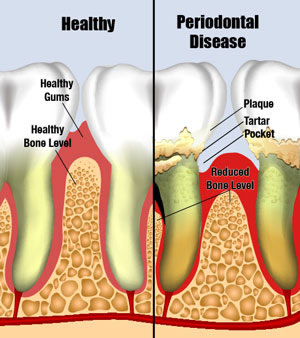
Periodontal disease is an infectious process classified according to how much damage has been done to the structures surrounding the teeth, namely the gingiva (gums) and bone. It is an infection in your mouth. It can happen anytime, around your teeth, affecting some or many of your teeth to varying degrees. There are genetic predisposing factors to periodontal disease, and our immune systems play a role in gum health, but it is usually related to how well you are able to keep your teeth clean through proper oral self-care. The better you clean your teeth to remove all the plaque bacteria, the less likely you will be to develop periodontal disease.

Progress of the Disease
The bacteria that cause this disease first cause the gum tissue to become inflamed and pull away from the teeth. As the problem becomes more serious, the bone that supports the teeth also becomes infected and begins to break down and dissolve. The teeth then become loose. Once the bone disappears, it is extremely hard, if not impossible, for new bone to be rebuilt. The damage is permanent and your teeth, the surrounding bone, and your general health will be compromised.
Periodontal disease is classified into several types. The mildest form of this infection will show up in red and swollen gum tissue that bleeds easily. There is seldom any pain involved at this stage. You may also notice that your breath becomes offensive and you feel the need to use mouthwash. Our sense of smell does become immune to the same odor, so we can lose our ability to detect our own offensive, diseased breath. As the disease progresses, the gum tissue becomes more red and swollen, more bleeding can be seen, and the teeth begin to become loose. This tooth mobility is a sign that there is a severe problem. There may still be no pain at this advanced stage. As more and more bone is lost and more teeth become involved in the infection, it becomes harder to treat. At this point, many times, the management of your problem will involve periodontal surgical procedures. If this is the case, you may be referred to a periodontist (gum specialist) for further treatment. Most of the time, periodontal disease starts and continues because of neglect. Brushing and flossing of teeth are not being done effectively on a daily basis. You may have been neglectful in getting your teeth checked and cleaned within the time frame intervals you need. Once we have diagnosed the disease, we will inform you of the problem and suggest treatment. If treatment is not completed, however, the disease will continue to progress. Unfortunately, the disease is quite invisible to most people until severe and possible irreversible damage has occurred.

Solution
If it has been diagnosed in the early stages and has not progressed to bone loss, a proper cleaning (prophylaxis) will solve the problem. Scaling and root planing over multiple appointments may be needed for more advanced cases. In the most advanced cases, periodontal surgery and tooth loss are inevitable. You will receive an estimate of fees for the recommended treatment.
Periodontal disease is a condition that must be treated quickly. We believe that if the infection is aggressively treated in its early stages, conservative periodontal treatment may be possible and effective. Although we do not automatically rule out periodontal surgical intervention, we hope you can either avoid it or reduce the amount you will need.

Successful treatment of your periodontal problem will depend on several factors. But the most important of these is your ability to perform excellent oral self-care—brushing, flossing, and the use of periodontal aids—on a routine, daily basis. Without this, periodontal treatment will fail, and the disease will return. 

Monday, October 10, 2016

12 Things Your Dentist Knows About You Just By Looking In Your Mouth


While cavities and plaque build-up may be what's on your mind before a teeth cleaning, your dentist is looking for a whole lot more. "The mouth is the window to the body," says David Silverstrom, DDS, of The Silverstone Group in Livingston, NJ. "Often, diseases like cancer, anemia and diabetes will first be identified by the dentist in a regular examination, and this saves lives." And it's not just diseases- dentist can discover everything from your bad habits to your favorite beverages simply by asking you to say, "Ahh!"


1. You flossed right before your appointment—and that's the only time.
Sorry, but you can't fool your dentist into thinking you floss daily by doing so the night before or morning of your visit. "The gums of people who only floss right before a visit are bleeding or look damaged," says Timothy Stirneman, DDS, of All Smiles Dental in Algonquin, IL, "whereas, healthy gums are nice and tight and pink," he says. Kenneth Wong, DDS, of Santa Monica adds, "When patients floss right before coming for a cleaning, I can see the slices where the floss cut at the gum because they were overzealous."
2. You're pregnant.
"Nearly 40% of women will develop gingivitis during their pregnancy," says Glen Stephenson, DMD, of Prevention Dental in Boise, ID. "This is caused by increased progesterone, which facilitates the growth of bacteria, causing gingivitis. Some women will develop a deep red lump on their gums called a pregnancy tumor or pyogenic granuloma." (This type of tumor is completely benign and will go away after the pregnancy is over.) Stirneman adds that most women are typically pretty far along before their gums start bleeding, so it's not as though a dentist will magically "discover" that a patient is pregnant.


3. You bite your nails.
Without looking at your hands, a dentist may be able to detect this habit. "Signs include chips and cracking of the teeth, plus wear and tear on the teeth from the constant stress on them," says Keith Arbeitman, DDS, of Arbeitman & Shein in New York City. "This can cause your teeth to become uneven and lead to jaw pain and discomfort." Kyle Stanley, DDS, of Helm, Nejad, Stanley in Beverly Hills adds, "Patients that bite their nails using their front teeth usually have leveled off, flat front teeth. The nails themselves are not what cause the damage, but rather the contact that occurs between the top and bottom teeth," he says.
4. You used to suck your thumb.
"Most children that suck their thumbs or a finger have no long-term effects from the habit," says Stephenson. "However, those who did so past the age of seven or eight may show significant changes to their bite or the position of their teeth. Much of that can be corrected through orthodontic treatment, but some telltale signs can remain." Alice Lee, DDS, of Montefiore Medical Center in Bronx, NY, adds, "We can sometimes see protruding front teeth, and this can impact how kids' jaws are coming together and growing and can also impact their speech."
5. Your bad breath may mean something.
"General bad breath can be categorized as halitosis," says Arbeitman. But dentists are also trained to identify "fruity" smells and "fishy" smells, which can mean numerous things. " 'Fruity' breath could indicate uncontrolled diabetes or a dietary fast that has gone too far, while 'fishy' breath could be a sign of kidney or liver failure," he explains. If the smell is "very foul," says Arbeitman, it could be anything from gastroesophageal reflux (GERD) to an underlying lung abscess and bronchitis to a tonsil stone. Timothy Chase, DMD, of SmilesNY in New York City, adds, "The first thing the dentist should do is rule out the odor coming from the teeth and gums. After that, he should recommend that the patient see an ENT to rule out sinus issues, and a GI doc to rule out reflux issues."
6. You may have an eating disorder.
"Many patients are surprised that their dentist is the first one to ask about eating disorders," says Chase, "but bulimia exhibits a very distinct pattern of tooth wear that your dentist can easily identify." Stephenson notes that, "This erosion happens almost exclusively on the tongue-side of the front teeth and can contribute to increased cavities." But Silverstrom is quick to point out that acid erosion on the back of a patient's teeth does not always indicate an eating disorder. He says other possibilities include acid reflux and the use of antidepressants or mood-elevating drugs, both of which reduce the amount of saliva in the mouth, thereby upping the odds of acid damage.
7. You have a sinus infection.
"Often patients will call saying that they need a root canal," explains Ira Handschuh, DDS, of The Dental Design Center in NY, "when in fact it's actually a sinus infection and not a tooth problem at all." The reason, he explains, is because the roots of the top teeth are positioned in the same area as the floor of the sinuses. And both sinus infections and toothaches can show symptoms of pressure. "A simple home test is to have a patient bend over to touch their toes. If the pressure or pain increases just by doing this, the pain is most likely not tooth-related and he should see his ENT or primary care physician before coming to the dentist," he advises.

8. You have a vitamin deficiency. "A deficiency of vitamins and minerals can cause many oral conditions, like burning tongue syndrome, tissue sloughing off, increased infections, delayed healing, bone infections, and easy-to-bleed gums," explains John P. Dougherty, DDS, MAGD, of Artistic Dental at the Biltmore in Phoenix, AZ. Stephenson adds, "Surprisingly, iron deficiencies show up in many ways in your mouth. It can give some patients severe sores in the corners of their mouth while others have changes in their tongues. Some may experience a painful burning sensation, or all the small papillae fall off their tongue leaving it glossy and smooth. Getting more iron will solve these problems.
9. You have diabetes. "Many times, imbalances in sugar will show a rapid change in the health of your gums, including increased swelling, bleeding, and sensitivity," says Handschuh. "In conjunction, the consistency of saliva may change, and there may be increased decay. These may all be signs of sugar levels that are out of control, so dentists can alert patients to see their doctor to check for diabetes."
10. You have a drinking problem. "Alcoholic patients are cavity-prone because alcohol tends to dry the mouth out," says David Tarica, DMD, of 34th Street Dental in New York City. "A dry mouth will lead to cavities, because saliva neutralizes the damage-causing acid in our mouths. In addition, alcoholics have 'chipmunk red cheeks,' and the smell alone is usually a giveaway."
11. You have oral cancer. "The first signs of oral cancer can be seen from the following: unexplained bleeding in the mouth, white, red, or speckled patches in the mouth, a change in the way your teeth fit together, swellings, thickenings, lumps or bumps or eroded areas on the lips, gums, or other areas inside the mouth," explains Michael Apa, DDS, of Rosenthal Apa Group in New York City. "An oral surgeon should be consulted for a biopsy of any suspicious tissue."
12. You love Gatorade. You may know why you chipped your tooth, but Hugh Flax, DDS, of Flax Dental in Atlanta says that even though the cause may be apparent, "there could be underlying factors that weakened the tooth and made it susceptible to being chipped in the first place." He explains that teeth can be softened by sodas and other sugary beverages over time, which may make a tooth more susceptible to chipping. Energy drinks, which tend to be even more acidic than soft drinks, may cause even more damage to tooth enamel, he says.


By: Elizabeth Jenkins, Prevention
http://www.prevention.com/health/what-your-dentist-knows-about-your-health
 
If you have questions or would like to schedule an appointment, please contact Omni Dental Group at one of our three office locations listed below:

North Austin on Hymeadow Drive: (512) 250-5012
Central Austin on Jollyville Road: (512) 346-8424
South Austin on William Cannon: (512) 445-5811

Friday, October 7, 2016

Make Eyes at Your Dentist- It's Normal!

Few people come as close to the average face as a dentist does. Ophthalmologists hide behind those steampunk-y binocular machines; makeup artists have long-handled brushes; and dermatologists get to worry about other parts of the body for hours at a time. But dentists and dental hygienists have no way around it: They spend most of their days inside the faces of people who aren’t their sexual or romantic partners. Lying helpless in a reclining chair, the best a patient can do to make the too-intimate experience less awkward is close her eyes until it’s over. Shutting your lids until the rinse-and-spit command is the normal thing to do.
Or is it? Some dentists make active small talk, and it seems rude to zone out or avoid eye contact when you’re meant to grunt in assent or smize at a joke. Dentists who install iPads or TVs overhead seem to invite an open-eyed approach to their open-mouthed examinations. Then again, unprotected eyes may get flecked with water, spit, and whatever particles the dentist’s tools dislodge. How are we supposed to know which way our eyelids should go?
An unscientific anonymous poll of 114 of my friends and acquaintances suggests that nobody knows. “It literally never occurred to me to close my eyes,” one person responded. “It's weird to look into the dentist's eyes! It feels like I'm seeking intimacy, when really I just want my teeth cleaned,” wrote another. There were many strong opinions in the responses, but no clear consensus on right and wrong. When it comes to eyes at the mouth office, it’s “I feel awkward AF looking into my dentist’s face” versus “Closed feels weird, right? I feel like closed is the weird one here.”
I’d never thought to be concerned about my behavior in the dentist’s chair until my last dental cleaning. Halfway through the appointment, I realized that my eyes weren’t just closed—they were clenched shut, with quivering eyelashes and a furrowed brow to boot. I relaxed my face, not wanting my dentist to think I was in pain or stressed out about a simple cleaning. Then, a horrifying thought entered my mind: What if my eyes aren’t supposed to be closed at all? I’ve never seen anyone else get their teeth cleaned—it’s totally possible that everyone else watches the entire procedure, and my dentist thinks I either have an intense phobia of flossing assistance (I don’t) or an intense fetish for latex gloves, closing my eyes to fully savor the experience of her hands in my mouth (not true).
So it gives me great pleasure and relief to report that there seems to be no weird way to get your teeth cleaned. My poll responses show a healthy split: About 56 percent keep their eyes open, 37 percent close them, and 7 percent do a little of both.
But what do the professionals think? Eileen Danaher, a Rhode Island dentist who’s been practicing for three years, says about 60 percent of her patients keep their eyes open for cleanings, though she attributes that majority in part to her talkative chairside manner. Pennsylvania-based dentist Gulia Omene thinks most of her patients keep them open, especially during cleanings—that’s when they’re looking for “feedback on their gum tissue” and are more receptive to chatter, she says—though her assistant thinks it’s closer to 50-50. For more involved procedures, the ratio flips. Danaher estimates that 95 of her patients shut their eyes for an injection in their mouths; about 53 percent of my poll participants said they close their eyes for anything more complex than a simple cleaning.
Advertisement
Danaher believes her patients decide what to do with their eyes based on their least favorite part of the dental experience: Those most bothered by the sight of sharp instruments or the bright light overhead close their eyes, and those unnerved by the sounds of drills and whirring brushes keep them open to have some sensory distraction. Meditators and deep breathers close their eyes; people who distrust dental professionals—like my survey participant who prefers an open-eyed exam “to make sure no funny business is going down while a stranger's hands are in my mouth”—watch the whole procedure as it happens.
Dental workers have come up with all sorts of visual stimuli to make the time go by for open-eyed patients. I used to visit a dental office with comic strips taped to the ceiling; a colleague’s dentist has decorative panel that look like calm, puffy clouds on the fluorescent overhead lights. Bougier locales have mounted televisions or iPads within view of the chair, and some offer dark glasses to shield a patient’s eyes from flying debris and the exam light. Danaher’s dream is to get a giant “Where’s Waldo?” panel for her ceiling if she ever opens her own practice.
If so many dentists provide so many forms of in-chair entertainment, open eyes must be the norm—right? For some, taking the hint still feels inconsiderate. “I feel [like closing my eyes is] polite to the dentist/technician. If I were in their shoes, I'd be able to focus better if I didn't have a pair of scared eyes in my face,” wrote one poll participant. Another guessed that open eyes would seem “creepy-like” to a dentist at work. The dentists I spoke with roundly dismissed that fear. “It’s never awkward if your eyes are open,” Danaher told me. “You’d think being in that close proximity to somebody, it would be—but we’re two feet away from people all day long, so that doesn’t bother me. Now, if somebody was staring me dead in the eyes and not blinking, that might be a different story.” Danaher’s father, Gerald, a Syracuse-based dentist who’s been in the field for 30 years, says about 70 percent of his patients keep their eyes open, which helps him keep tabs on their experience. “Usually the eyes will tell me how they’re doing,” Gerald told me. “The look in their eye—if they’re darting back and forth, I’ll ask, ‘Are you feeling something?’”
Usually, dental patients in pain or the throes of anxiety will close their eyes. That’s not a problem, dentists say, unless they’re tensing up the rest of their faces, too. Jack Greenspan, a Connecticut dentist (and my partner’s dad) who’s had his hands in people’s mouths for 49 years and counting, says the only strict command he ever gave as a captain and dentist in the Air Force was to a terrified lieutenant who’d scrunched up his eyes and cheeks too tight to accommodate dental instruments. “This is a direct order, lieutenant,” Greenspan said. “Relax your face now.”
But for a lucky few, closed eyes mean the ultimate form of relaxation: a nap. Yes, reader! Some people—some magical, super-Zen, rubber-jawed people—actually conk out while a stranger takes a drill to their molars. Dentists say they love it when their patients fall asleep in the chair. “People will sometimes walk in and say, ‘Oh my God, I’m so nervous,’” Danaher says. “When those people fall asleep, it’s a giant win. It’s the biggest compliment you can give your dentist.” This perception can work in a nervous patient’s favor. One of my survey respondents wrote that, at the dentist’s, “I pretend I am taking a nap since it's weird to be in a room with someone for half an hour and not speak to them.
Faking sleep is extreme; most people who close their eyes at the dentist’s are just relaxing or spiriting their minds away from the physical discomfort and forced intimacy of a dental exam. They are also not normal. Open is the favored eye position of a small majority of dental patients, and dentists seem to be molding their exam rooms, with their fancy TVs and elaborate ceiling decorations, to that norm. Keeping your eyes open will put you in the company of the majority of your peers, so dentists will be ever so slightly less likely to consider you abnormal. Whether normalcy is worth the occasional fleck of plaque to the eyeball is your call.


By: Christina Cauterucci
http://www.slate.com/blogs/normal/2016/10/05/at_the_dentist_should_eyes_be_open_or_closed.html


If you have questions or would like to schedule an appointment, please contact Omni Dental Group at one of our three office locations listed below:

North Austin on Hymeadow Drive: (512) 250-5012
Central Austin on Jollyville Road: (512) 346-8424
South Austin on William Cannon: (512) 445-5811

Friday, August 22, 2014

Should You Get A Tongue-Scraper?

A tongue scraper is an oral hygiene product that removes bacteria, food debris, fungi, toxins, and dead cells from the surface of the tongue.

When we sleep, our digestive system remains awake, removing toxins from our body by depositing them onto the surface of our tongue. If we do not scrape away these toxins, they get reabsorbed by the body and can lead to respiratory difficulties, digestive problems, and a compromised immune system.

Dental research has concluded that a tongue scraper is more effective at removing toxins and bacteria from the tongue than a toothbrush. Although brushing and flossing will loosen and move debris around, they do not actually remove the bacteria. Almost half of our oral bacteria live on and in the deep crevices of our tongue; the scraping action of a tongue scraper collects these toxic tongue coatings (which can range in color from clear, white, yellow, or green) and removes them from the body. However, still remain strict on continuing with the rest of your dental care routine, The bacteria that causes tartar to build up still remains your teeth and under your gums. Left untreated, this can lead to gum disease, receding gums, and loose teeth that can ultimately fall out.

What is a tongue scraper?
It is a long, thin, flat piece of metal that is bent in a "U" shape 

How to use a tongue-scraper
You should use a tongue-scraper on a regular basis, in the morning and on an empty stomach. 
1. Stand in front of a mirror
2. Hold the two ends of the scraper in both hands
3. Stick out your tongue
4. Place the scraper as far back on your tongue as possible
5. With firm but gentle pressure, scrape the surface of your tongue in one long stroke
6. Rinse the scraper and repeat until your tongue feels clean and is free of coating (usually 5 to 10 times) 

Why do I need one?
1. Lessen halitosis
Bad breath can have a negative impact on a person's life, relationships, and self-esteem. Given that most bad breath comes from the bacteria at the back of the tongue (an area that's difficult to reach with a toothbrush), clinical studies have shown that tongue scraping significantly reduces and removes oral bacteria from the crevices of all areas on the tongue.

2. Experience the flavors of your food
Proper digestion begins with taste and salivation. If you do not take steps to remove toxic mucus on the tongue, your taste buds can become blocked. This may lead to false cravings or an inability to recognize the taste of food. Removing build-up from the surface of your tongue will open up its pores and better expose your taste buds, allow for greater enjoyment of food flavors, and help your body digest and assimilate food.

3. Boost your immunity
The tongue is part of the first line of defense in your immune system. Scraping your tongue prevents toxins from being reabsorbed into your body and boosts overall immune function.

4. Improve your dental health
This oral hygiene product promotes general tooth and gum health and removes bacteria and toxins responsible for periodontal problems, plaque build-up, tooth decay, loss of teeth, gum infections, and gum recession.

5. Improve your digestive health
Given that digestion begins with taste, it is important to remove any toxins that may obstruct optimal functioning. Scraping also activates saliva production and promotes agni (the body's digestive fire) to help with digestion throughout the day.

Where do I buy one?
Tongue scrapers and inexpensive and can be found at most health food stores as well as online. Choose a stainless steel scraper because they are easier to clean. Another dental tip, the side of a metal spoon can also be effective.

http://www.mindbodygreen.com/0-12028/5-reasons-why-everyone-needs-a-tongue-scraper.html


Friday, August 15, 2014

Prophylaxis

There is nothing more important to your dental health than maintaining a clean mouth. Prevention or absence of infection optimizes our general health. A clean mouth will be disease-, infection-, and trouble-free. A clean mouth will not be predisposed to developing either decay or periodontal (gum) disease. One of our very important functions in dentistry is to teach you how to properly maintain your teeth and gums, and to regularly remove anything that you are unable to remove yourself.

The theory and practice of preventive dentistry have undergone revolutionary changes in recent years. We now know that the preventive needs of every individual differ. The adage of "see you dentist regularly; get your teeth cleaned twice a year" has changed too.

What Is Prophylaxis?
Oral prophylaxis is a simple dental procedure by which your dentist or hygienist will clean your teeth using hand instruments or ultrasonic scaler. No matter how good you are at cleaning your teeth, there is always plaque left between your teeth and at the gum line. As time advances and cleaning is neglected, the early stage soft plaque will change into hard tartar (calculus). This plaque and calculus gives rise to periodontitis and gingivitis.

How Oral Prophylaxis Is Done
1. Sit back and relax on the dental chair while your dentist evaluates your medical history
2. Dentist will examine your mouth and look for signs of periodontal pockets and gum infections
3. An ultrasonic scaler will be used to clean your teeth. The scaler is a hand-held device with a hand piece and a pointy tip. It ejects pressurized water and the tip vibrates in order to remove the plaque and calculus from the teeth surface
4. Hand instruments are used to clean tricky spots and difficult to reach areas
5. If you have any cavities or gum problems, you will be notified
6. In the end, a prophylaxis paste will be used for polishing the tooth surface. A miniature rubber cup is fitted over a hand piece and small amount of prophy paste will be applied on the cup and your teeth will be polished 

How Often Should You Schedule Cleanings?
The recare and examination interval that we have recommended for you is designed for your unique situation. And it, too, can change. The interval between regular prophylaxis (cleaning) appointments that is established for you is a function of many things.
These include:
  • general health
  • dexterity and hand/eye coordination
  • age
  • diet
  • stress levels
  • oral habits
  • position and alignment of the teeth
  • number, type, size, and location of restorations
  • restorative materials used
  • periodontal history
  • location of bone and periodontal tissues
Simply stated, the more complex your dental situation and the more your tooth position and alignment deviate from the normal, the harder you will find it to keep your teeth clean and your gums healthy.

Recent studies have identified many of the microorganisms that cause gum disease and decay. They can be controlled with your help and with ours. These studies also show that a "cleaning" every 6 months may not be adequate for some patients. In order to prevent destructive oral disease, prophylaxis appointments in intervals of anywhere from 2 months to a year may be recommended. Periodontal (gum) disease can happen anywhere in your mouth at any time.

You don't have to let it happen to you! We are here to be your guide to good health.

If you have any questions about your oral care maintenance intervals, please feel free to call our office at 512-250-5012.

Tuesday, August 12, 2014

Scaling and Root Planing

What is scaling?
Scaling is a periodontal dental procedure in which plaque and calculus are removed from the tooth both above (supragingival) and below (subgingival) the gum (gingiva)

What is root planing?
Root planing is a procedure in which diseased or altered portions of the root surface, the cementum, and dentin are removed and the resulting new surface is made smooth and clean. The more altered and damaged the root surface has been from calculus (tartar) accumulation, the more the need for root planing.

Why is it necessary?
The purpose of scaling and root planing is to remove all debris from the teeth. Any item that can cause inflammation of the gum tissue must be eliminated. The root surface must be made as smooth as possible. Irregularities in the root surface can contribute to gum inflammation. Irregularities are sites for bacteria and plaque buildup. The bacteria and the toxins they produce in the plaque are held against the tooth by the calculus. In this way, plaque and calculus on the teeth have been positively linked to gum disease.

What is the procedure like?
Depending on the severity of your particular periodontal problem, scaling and root planing may be the definitive treatment and no further procedures will be required. In many cases scaling and root planing are only a necessary part of the overall therapy. It is a demanding procedure. It requires much more time than the familiar adult prophylaxis (cleaning). It is usually done in multiple appointments, treating a quarter, half mouth, or your full mouth at each appointment. In this office we find that most patients are most comfortable if the area to be treated during the root planing procedure is anesthetized with a local anesthetic.

Recare
The scaling and root planing may have to be repeated in the future. It is customary to place the patient on a 3- to 4-month hygiene recare schedule. Scientific evidence clearly shows that for individuals who have demonstrated a predisposition to periodontal disease, an interval of 6 months is too long. We will determine the appropriate interval for you. As your situation changes, there may be changes in the length of these intervals as well.

What happens after treatment?
Other than the teeth being somewhat sensitive after the scaling and root planing procedure, there is little postoperative discomfort. The sensitivity will diminish with time. If you have been diagnosed as having severe periodontal infection, the sensitivity may remain for quite some time and further procedures may be needed to eliminate sensitivity. Although many procedures in dentistry can be considered elective, we consider scaling and root planing to be a necessity for your dental health.

Post-procedure Tips:
  • If therapeutic prophylaxis has been completed because your gingival (gum) tissue showed signs of infection and inflammation, and if you had significant calculus (tartar) buildup:
    • You may notice that your teeth feel different where the calculus was removed. The soft tissues may be sensitive or sore for approximately one day as they begin to heal. You may find that taking an over-the-counter pain reliever (aspirin, ibuprofen, etc.) will help during this 24-hour period. You may also rinse your mouth every few hours with warm salt water. Make sure that you brush and floss your teeth during this time period as you have been instructed. be gentle, because the brushed areas may be sore, but be thorough! You do not want to have the periodontal infection begin again.
  • If scaling and root planing, or other more involved periodontal procedures has been completed:
    • You can expected your gingival (gum) tissues to be quite sore. This is normal when the gum tissues have been infected and inflamed for some time. The more severely they have been affected, the more discomfort you can expect. This soreness should go away very quickly. You may rinse with warm salt water every few hours until the soreness is gone.
  • If scaling and root planing has been completed:
    • You may also notice that the teeth have become sensitive to temperature changes after the scaling and root planing. This sensation frequently occurs when the surfaces of the roots of your teeth have been cleaned. Removal of the debris covering the roots and attached to the roots leaves the roots open to temperature stimulus. If the problem persists, please let us know.
  • When you examine your gums closely in a mirror, you will also observe that the color, texture, and position of your periodontal tissues will undergo a change as the healing takes place. The swollen, reddened gum tissue will shrink, become more firm, and return to a healthy pink color. Watch for these welcome signs of improvement and be encouraged by the healing process.
  • Please do not forget to brush, floss, and use other periodontal cleaning aids as you have been taught. It is important that you begin establishing proper oral self-care habits immediately. If you find that the recently treated areas are sensitive to the brushing and flossing, be gentle - but be thorough! With proper technique you cannot damage the teeth or gingival tissues.
  • Brush after ever meal with a fluoride-containing toothpaste. Rinse with a fluoride-containing mouthrinse once each day.
Preventing Recurrence
Once scaling and root planing has been completed, it is most important for you to practice the brushing and flossing techniques in which you will be instructed. If we have recommended any additional periodontal aids, you must use them, too. Your cooperation is vital if the procedures are to be successful. To remain disease-free, you will need to remain constant in your oral self-care regimen.

If you have any questions about scaling and root planing, please feel free schedule a comprehensive dental exam with our office at 512-250-5012.

Monday, August 11, 2014

Does Oil Pulling Work?

Starting the day off at the beach with your skin smelling of tropical-scented sunscreen can be one of life's greatest pleasures. Smelling coconut oil as you swish it around in your mouth before work -- well, that's another story. 

What is Oil Pulling?
Oil pulling, or placing oil in the mouth to kill harmful bacteria, seems to have caught on recently. It's a controversial practice that takes dedication and time, though fortunately not the 10 or 20 minutes of marathon swishing some sources suggest. Oil pulling, an ancient Ayurvedic folk practice, dates back 3,000 to 5,000 years to traditional Indian medical remedies. Advocates claim swishing any type of oil in your mouth every day will whiten your teeth, reduce bacteria, strengthen your gums and jaw, improve your skin, clear your sinuses, prevent ​bad breath and even protect against heart disease and Alzheimer’s disease

Two sessions of four minutes, as recommended by Dr. Amala Guha, assistant professor of immunology and medicine at the University of Connecticut Health Center and the founding president of The International Society for Ayurveda and Health, were sufficient for my first attempt at oil pulling. The taste itself isn't so bad on the surface, but putting chunky coconut oil in your mouth before being fully awake can trigger a gag reflex.

"People are saying that their breath is better, their gums don’t bleed anymore and their teeth look a little whiter," says Jeffrey Dalin​, a dentist based in St. Louis. "I haven’t had the guts to do it, but I think it’s something at least worth looking into." 

What does research say?
But what's the scope (and scoop) on this mouth rinse practice? Does it work?
"It's not given proper credit," said Guha, who was trained in Ayurveda, a traditional form of medicine that relies on natural healing, in India. She explains that using liquids in the mouth for health purposes is mentioned in two ancient Indian Ayurvedic texts (one written in 800 B.C. and the other in 700 B.C.), and the practice is part of one of the oldest health systems in the world.

Oil pulling for oral hygiene is common. But before you go racing out to the store for oil, the American Dental Association cautions that because of a lack of evidence, they do not recommend oil pulling as a replacement for standard oral health care such as flossing and teeth brushing.

The texts also claim that about 30 systemic diseases, including headaches and diabetes, can be cured. Yet there is a lack of knowledge on the science and side effects behind the practice, according to Guha.

A small study published in 2009 involving sesame oil and 20 adolescent boys with plaque-induced gingivitis found that oil pulling reduced plaque and the bacterium Streptococcus mutans. This bacterium is cited as being a major cause of tooth decay and overgrowth of bacteria in mouth can also lead to gum disease.

A larger study published in 2013, also using sesame oil, found similar results, summarizing that oil pulling had a significant effect on plaque and gingivitis.
For coconut oil users, lauric acid found in the oil can be a benefit. It is known for its antimicrobial properties, such as the ability to fight off viruses, bacteria and yeasts.

Another study from 2011 says, "Oil pulling therapy has been equally effective like chlorhexidine [mouthwash] on halitosis and organisms."

How it works
Guha says there are two oil pulling techniques: kavala and gandusa.

Kavala: fill your mouth with liquid and hold it there for a couple of minutes before swirling it around the mouth and spitting it out. The process shouldn't exceed more than three or four minutes; it's repeated at least two or three times.

Gandusa: the technique of holding the liquid still in the mouth for three to five minutes. The liquid is then spit out and the process is repeated.

In Ayurveda, many different liquids can be used depending on the condition being treated and the physiology of the person. Milk, honey and hot water containing herbs are just some of the other mediums, explains Guha.

For daily oral hygiene, she recommends using coconut or sesame oil, which she says have mild abrasive powers and more healing benefits than other oils (and are less harmful).

Where to dispose the oil?
Jennifer Beckinsale, who tried oil pulling for 10 days, spit hers into a disposable cup and threw it away, but didn't like how wasteful that felt. Still, she says she would try oil pulling again. Remember, your sink is out, because the oil may harden and clog your pipes.

When to expect results?
Results can be expected in a few months with benefits such as reduced plaque, cavity prevention and stronger gums for individuals who already have a healthy mouth. For the person with plaque buildup, we recommend a teeth cleaning first for faster results.

How it doesn't work
Mark Wolff, professor and chair at the New York University College of Dentistry, expresses skepticism about oil pulling's effects on oral health. "I am not sure there is any harm, but I have never seen it have any positive effect on my patients who have been using oil pulling or in clinical research that has been published."

Limited research, mostly dating back to 2008 and 2009, suggests oil pulling – particularly with coconut oil – can stop plaque from forming. But evidence is lacking, and experts caution that you shouldn’t expect any greater benefits. "There’s absolutely no data whatsoever that shows diabetes can be treated or prevented, or that heart disease can be," says Lyla Blake-Gumbs, a physician with the Cleveland Clinic’s Center for Integrative Medicine. "It’s not a new practice – it’s been done thousands of years – but there were no real records kept​. So I can’t go to any objective, well-run clinical trials to look into the other claims." 

There is also little research available on the effectiveness of these treatments to cure other diseases.

Negative Side Effects
Guha warns that there can be negative side effects if improper technique is used, including dry mouth, excessive thirst, muscular stiffness, exhaustion and loss of sensation or taste in the mouth. Oil pulling likely won’t cause any adverse effects – so long as you don’t swallow the oil. Doing so could cause diarrhea or an upset stomach, Blake-Gumbs says. And the swooshing itself isn’t going to taste good. Oil, be it olive, sesame or coconut, is often difficult to tolerate – and some types are solid at room temperature, until they begin to melt in your mouth. "I had one patient tell me she did it with sesame oil first, and she couldn’t hold it in her mouth because it was too strong a flavor," Blake-Gumbs says. "Then she tried olive oil, and that was more agreeable to her."

Are You Interested?
Individuals who are interested in trying kavala or gandusa to treat health conditions need to review all credentials of Ayruvedic practitioners before starting any treatment. Guha says that there are very few trained professionals in the United States as none of the Ayurveda schools here are accredited; only schools in India provide the proper certifications.

Bottom line? 
Oil pulling is relatively simple and inexpensive – coconut oil runs around $10 ​or less​ ​​​​– and it’s not invasive. But there’s still no solid evidence that it actually works, and experts agree that if you’re concerned about your teeth, it’s best to brush at least twice a day for two minutes each time.

If you're just looking for a natural way to boost your oral health, you can oil away without supervision and get about the same benefits as commercial mouthwash.

Just don't forget to floss.

Wednesday, July 9, 2014

Foods That Cause Tooth Decay

Cariogenic: causing tooth decay.
Foods (such as candy and sweets) that contain sugar and other carbohydrates that can be metabolized by bacteria in plaque are described as cariogenic

How long food remains in mouth:
  • Sugary liquids, such as soft drinks, leave the mouth quickly and are not as cariogenic
  • Sticky foods, such as raisins or caramels, adhere to the teeth and stay in the mouth longer and are more cariogenic
Frequency vs. Amount:
  • Someone who snacks all day on small amounts of cariogenic food is far more likely to develop decay
  • Someone who eats a larger amount of cariogenic food, but only once a day, is less likely to develop decay 
Refined carbohydrates vs. Complex carbohydrates:
  • Foods such as crackers, although not sweet, are cariogenic because they contain refined carbohydrates that stick to the teeth. They remain in the mouth long enough to be broken down into sugars that can be used by the bacteria in plaque.
  • Complex carbohydrates, such as fruits and vegetables, are less cariogenic because they clear the mouth before they are converted into simple sugars that can be used by bacteria.  
Flow of saliva to speed clearance of food from mouth and provide a source of dietary fluoride to strengthen the tooth and assist in remineralization
  • Sugarless gum or hard candy, as well as sipping water frequently, will increase the saliva flow
  • Various medicines can cause a dry mouth, and try to avoid spicy or salty foods

Tuesday, July 8, 2014

Give Yourself A 60-Second Dental Check-Up

Regular visits to your dentists are absolutely essential to prevent serious dental problems. But it is also important to give yourself an oral check-up from time to time. This simple process just takes a minute, but it can yield valuable clues to the health of your mouth, teeth, and gums.

Stand before a well-lit mirror and open your mouth wide.
1. Check your gum line and the lines between your teeth
Good: There should be no brown lines here
Bad: If you see brown lines, that is a sign of tartar build-up
What to do: Time to go to the dentist. Once the brown lines are cleaned up at the clinic, regular flossing will keep tartar away.

2. Stick out your tongue. What does the surface look like? 
Good: A healthy tongue should be pink
Bad: If it is coated with white, it can be an indication of poor digestion. This coating also results in bad breath.
What to do: Use a stainless steel scraper to clean your tongue every morning. 

3. Are there ridges along your tongue? 
Bad: This is often a sign of tooth grinding. People may not be aware they grind their teeth, but it can happen when they are stressed. 
What to do: If you wake up with an aching jaw, you should see a dentist.

4. Take a look at the inside of your cheeks. 
Bad: Do you see white patches? These can occur if you chew the inside of your mouth when you bite and chew your food. 
What to do: These should be checked by your dentist because a wound inside the cheek can not only get infected, but may also be a sign of pre-cancerous changes, especially in smokers. An ulcer that does not heal within three weeks should also be investigated.

5. How do your gums look?
Good: If they are pink and rosy, your gums are in good health. 
Bad: But if they are red, it is a signal that gingivitis or gum inflammation has turned into gum disease. Another clue: gums that bleed when you brush your teeth. 
What to do: Your dentist can help you with a course of antibiotics and dental hygiene guidance on how to rebuild gum health. 

Bad: Pale gums can indicate iron deficiency - a warning sign of anemia. 
What to do: Up your intake of green vegetables, tofu, chickpeas, lentils, and dried fruits such as raisins and prunes.

Wednesday, July 2, 2014

Classification of Periodontal Disease

Any periodontal disease is undesirable and, if left untreated or ignored, can lead to a number of serious dental problems. If you wish to maintain your teeth and gums (gingiva) in a healthy and disease-free state, it is important that you brush properly and use dental floss daily. Do these procedures as we have instructed. Return for continuing dental hygiene care at the time intervals that we have recommended. These time intervals for your cleaning appointments have been established specifically for your existing dental condition. The intervals can and will fluctuate according to your ability to take care of your teeth and gums. A periodontal infection is site-specific and episodic in its nature. Any delay in your office-related routine dental hygiene recare appointments could prove detrimental to your oral health. 

What is periodontal disease? Periodontal disease is an infectious process classified according to how much damage has been done to the structures surrounding the teeth, namely the gingiva (gums) and bone. It is an infection in your mouth. The better you clean your teeth to remove all the plaque bacteria, the less likely you will be to develop periodontal disease. A previous blog post details how the disease progresses and how to solve it.

The following is a brief overview of the American Academy of Periodontology's classification of the types of periodontal disease.

Type 1 - Gingival Disease: An inflammation or lesion of the gum characterized by changes of color, gingival form, position, surface appearance, and presence of bleeding and/or pus.


Type 2 - Chronic Periodontitis: An inflammation of the supporting structures of the teeth associated with plaque and calculus; the rate of progression is affected by local, systemic, or environmental factors. It can be further classified as localized or generalized.


Type 3 - Aggressive Periodontitis: Characterized by a rapid rate of periodontal disease progression in an otherwise healthy individual in the absence of large accumulations of plaque and/or calculus. It can be further classified as localized or generalized.


Type 4 - Periodontitis as a Manifestation of Systemic Disease: Periodontitis associated with blood or genetic disorders.


Type 5 - Necrotizing Periodontal Disease: Ulcerated and necrotic gums between the teeth and at the tooth margins. It can be further classified as necrotizing ulcerative gingivitis or necrotizing ulcerative periodontitis.


Type 6 - Abscesses of the Periodontium: A localized pus-forming infection of the periodontal tissue.


Type 7 - Periodontitis Associated with Endodontic Lesions: Localized deep periodontal pocket extending to the tip of the root of the tooth involving pulp death.

Type 8 - Developmental or Acquired Deformities and Conditions: Gingival disease or periodontitis started by localized tooth-related factors that modify or predispose to plaque accumulation or prevention of effective oral hygiene measures.

Due to the nature of the disease, most classifications will involve both a generalized and a localized diagnosis. 

See this previous blog post for early detection signs of periodontal disease.

If you have any questions about the classification of your periodontal disease, please feel free to ask us.