Showing posts with label periodontist. Show all posts

Friday, February 17, 2017

Cosmetic Tissue Recontouring

It is not uncommon for us to suggest to a patient who has absolutely no sign of periodontal (gum) disease to seriously consider having elective periodontal procedures performed. In these cases, the procedures are almost always needed to improve appearance. Sometimes they are suggested to promote future periodontal health or to attend to a potential problem that might develop.

When you smile or talk, your teeth are framed by your lips and the visible gum tissue. People looking at you notice your teeth. People notice missing teeth, tooth alignment, gum color, discolored fillings, silver fillings, toot color, and how much of your teeth actually show. If everything is integrated well and looks natural, people say you have a nice smile. If something does not look natural, it may be easy to define, such as crooked, stained or yellow teeth; periodontal disease shown by red-colored gum tissue; or discolored fillings. Or it may be something not as readily to determine. It’s just something that does not look right.

That “something” may be related to the teeth and gum architecture. The position of the gums where they meet the teeth is esthetically important. If your teeth look too short, there may be more gum tissue covering them than is considered attractive. You may show too much gum tissue when you smile. There may be a difference in height of the gum of one tooth versus an adjacent tooth or its partner on the other side of the mouth. This could be caused by recession from brushing too hard; gum disease; poor or defective restorations, especially crowns; or just a problem with the way the tooth erupted into place. All of these things can detract from your appearance.

Several different periodontal procedures, simple to accomplish, can correct most of these routine problems. Some involve removal of unwanted tissue; some involve grafting of tissue. Orthodontics might be helpful in some cases. The more expensive procedures will require referral to our specialists.
In one common type of cosmetic periodontal plastic surgery, the gum tissue is reshaped and recontoured without the use of sutures (stitches). This procedure is done in the office. One tooth or several teeth may benefit from treatment. Postoperative discomfort is usually minor. There may be tooth sensitivity when gum tissue is removed, but this usually disappears. The improvement generated by this type of procedure can be startling.


We will show you and describe in detail how you can benefit from cosmetic periodontal procedures. In many cases, the cosmetic periodontal surgery will complete the treatment you need. In some cases, it will be part of a larger treatment plan including crowns, veneers, or bonded restorations. 

If you have any questions about cosmetic tissue recontouring, please feel free to ask us!  
Hymeadow: (512) 250-5012
Jollyville: (512) 346-8424
West William Cannon: (512) 445-5721

Friday, January 27, 2017

Periodontal Disease

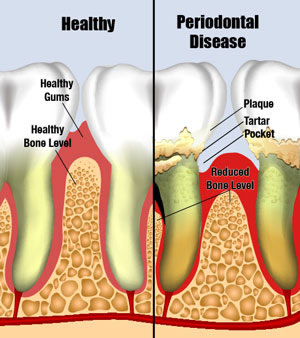
Periodontal disease is an infectious process classified according to how much damage has been done to the structures surrounding the teeth, namely the gingiva (gums) and bone. It is an infection in your mouth. It can happen anytime, around your teeth, affecting some or many of your teeth to varying degrees. There are genetic predisposing factors to periodontal disease, and our immune systems play a role in gum health, but it is usually related to how well you are able to keep your teeth clean through proper oral self-care. The better you clean your teeth to remove all the plaque bacteria, the less likely you will be to develop periodontal disease.

Progress of the Disease
The bacteria that cause this disease first cause the gum tissue to become inflamed and pull away from the teeth. As the problem becomes more serious, the bone that supports the teeth also becomes infected and begins to break down and dissolve. The teeth then become loose. Once the bone disappears, it is extremely hard, if not impossible, for new bone to be rebuilt. The damage is permanent and your teeth, the surrounding bone, and your general health will be compromised.
Periodontal disease is classified into several types. The mildest form of this infection will show up in red and swollen gum tissue that bleeds easily. There is seldom any pain involved at this stage. You may also notice that your breath becomes offensive and you feel the need to use mouthwash. Our sense of smell does become immune to the same odor, so we can lose our ability to detect our own offensive, diseased breath. As the disease progresses, the gum tissue becomes more red and swollen, more bleeding can be seen, and the teeth begin to become loose. This tooth mobility is a sign that there is a severe problem. There may still be no pain at this advanced stage. As more and more bone is lost and more teeth become involved in the infection, it becomes harder to treat. At this point, many times, the management of your problem will involve periodontal surgical procedures. If this is the case, you may be referred to a periodontist (gum specialist) for further treatment. Most of the time, periodontal disease starts and continues because of neglect. Brushing and flossing of teeth are not being done effectively on a daily basis. You may have been neglectful in getting your teeth checked and cleaned within the time frame intervals you need. Once we have diagnosed the disease, we will inform you of the problem and suggest treatment. If treatment is not completed, however, the disease will continue to progress. Unfortunately, the disease is quite invisible to most people until severe and possible irreversible damage has occurred.

Solution
If it has been diagnosed in the early stages and has not progressed to bone loss, a proper cleaning (prophylaxis) will solve the problem. Scaling and root planing over multiple appointments may be needed for more advanced cases. In the most advanced cases, periodontal surgery and tooth loss are inevitable. You will receive an estimate of fees for the recommended treatment.
Periodontal disease is a condition that must be treated quickly. We believe that if the infection is aggressively treated in its early stages, conservative periodontal treatment may be possible and effective. Although we do not automatically rule out periodontal surgical intervention, we hope you can either avoid it or reduce the amount you will need.

Successful treatment of your periodontal problem will depend on several factors. But the most important of these is your ability to perform excellent oral self-care—brushing, flossing, and the use of periodontal aids—on a routine, daily basis. Without this, periodontal treatment will fail, and the disease will return. 

Wednesday, February 17, 2016

8 Tips for a Brighter Smile

Want a brighter smile? Try these tips!


1. Avoid foods that stain
Avoid foods and beverages that are filled with sugar or are too acidic. If you're not careful, consuming these kinds of foods can damage and stain your teeth. It can be helpful to drink beverages that stain through a straw as well. This helps you circumvent those smile dulling liquids altogether! Brushing your teeth immediately after eating sugary foods may also help prevent staining. Be careful though, if a food is too acidic, you will want to wait at least thirty minutes before brushing your teeth in order to prevent enamel erosion. If you cannot brush your teeth for some reason, opt for swishing water in your mouth which is naturally filled with fluoride. (Water is not a substitution for your daily dental routine).


2. Use dental cleaners
Between brushing, use dental cleaners to minimize the food build-up between your teeth. These brushes are disposable and very handy if you find yourself away from home without a toothbrush. You can also use them to clean the areas between teeth and brace wires if you have braces. They're sold at most grocery stores and can even be found online


3. Try toothpaste for sensitive teeth
If your teeth are especially sensitive, try using a toothpaste created specifically for people with sensitive teeth. If you're wondering whether or not you have sensitive teeth, here's a simple way to tell: Do your teeth feel uncomfortable when they are exposed to extreme hot and cold temperatures? If so, be sure to ask your dentist for help and additional information. 

4. Regular dental checkups
This one might seem obvious, but it is so important! Be sure to visit your dentist regularly to have your teeth inspected and cleaned. Without regular dental checkups, you run the risk of facing disease and other problems in the future. Routine dental visits help prevent the advancement of such diseases and are always a good idea


5. Avoid chewing on hard foods
Ice cubes pose a particular threat to the safety of teeth. Never chew on ice. You could crack or chip your teeth! Be cautious when eating popcorn, nuts or any other tough to chew food. If you believe that your teeth are chipped or cracked, see a dentist immediately to prevent pain or even bacteria growth in the cracked tooth. 


6. Brush your teeth properly
Brush your teeth from the gum line moving towards the center of your mouth. This will help get rid of food bits that hide under your gums. Scrubbing side to side is always good, but don't forget to brush with an up and down motion as well. If your gums or mouth bleed while brushing, be sure to meet with a dentist or periodontist. Bleeding gums are often a sign of gum disease, which is a major issue when left untreated. 


7. Swirl that Mouthwash
One common misunderstanding regarding oral health is that brushing is all you need for a healthy mouth. Mouthwash is often neglected in daily dental practice, but it's an essential step towards your brighter smile. Mouth wash cleans, disinfects, and reaches places your toothbrush simply cannot. Rinse twice per day when you brush those pearly whites.


8. Drink your Milk! 
In addition to providing a good source of calcium, dairy has shown to help your teeth fight cavities. If you're lactose intolerant or simply dislike dairy products, don't worry! Dark leafy greens like kale or collards, broccoli, tofu, and even almonds are all excellent natural sources of calcium.


If you have any questions regarding the health of your teeth or simply want to see a doctor, call one of our three convenient locations to set up an appointment. We are here to provide excellent service in a friendly environment.  

North location on Hymeadow Drive: (512) 250-5012
Central location on Jollyville Road: (512) 346-8424
South location on William Cannon Drive: (512) 445-5811

Wednesday, February 10, 2016

X-Rays and the Dentist


If you've been to the dentist recently, then you have most likely had an X-ray done. While they aren't taken during every visit, they are very helpful for establishing a patient's oral health as well as predicting which areas need to be focused on. Today we are going to give a brief overview of what exactly they are and why they are necessary. 


1.  What are X-rays? 
In 1895, Wilhelm Conrad Roentgen was working in his lab conducting research when he accidentally discovered X-rays. Since then, science and technology have evolved to use X-rays in a beneficial manner. During an exam, a patient is exposed to short bursts of radiation. This allows the doctor to view teeth in a more thorough manner than an examination. Some people are nervous about getting X-rays, however, it is important to note that the doses of radiation are too minute to cause adverse effects. In fact, during a dental X-ray, patients are only exposed to the same amount of radiation as a short airplane flight

2. Do I have to get X-rays?
Whether you need to look for fractures in bone or simply to check in on teeth, X-rays are the best way to do it. Dentists rely on this technology because it allows them to perceive problems before the naked eye is able see them. Some examples include, but are not limited to: periodontal disease, bone infections, hard to see tooth decay, and even some tumors. X-rays are an important part of preventative care and are nothing to be afraid of.

3. What if I'm pregnant?
This is always a great question to ask! It is best to consult your physician before exposing yourself to small quantities of radiation. Informing your dentist of this is an absolute necessity, but there is no need to forgo X-rays altogether. With pregnant patients, a thyroid collar and a leaded apron are used to prevent radiation exposure.

Source: Mouth Healthy by the American Dental Association

If you have questions concerning X-rays and the health of your teeth, feel free to call one of our three offices to schedule a consult. We are here to address any of your concerns and to provide you with a stress-free dental experience.

North location on Hymeadow Drive: (512) 250-5012  
Central location on Jollyville Road: (512) 346-8424  
South location on William Cannon Drive: (512) 445-5811

Friday, February 5, 2016

Happy Valentine's Day!


Roses are red

Violets are blue

Watch out for gummy bears

and jaw breakers, too


Valentine's Day will be here in nearly a week! Whether you're spending the day with a loved one, having a fun party with your friends, or simply relaxing before the work week, you are sure to encounter a few yummy desserts and candies. While everyone enjoys something sweet once and again, it is always good to consider how they impact your health. Here are a few tips for keeping your mouth in good shape during Valentine's Day.

1. Not all candy is created equal. 

  • Some candies are worse than others. Tough candy that stays in your mouth for a prolonged period of time such a jawbreakers and suckers can lead to cavities or even chipped teeth. The best option for this type of sweet is to opt for a sugar-free alternative. This way, you are satisfying your sweet tooth without the risk of tooth decay. 
  • Also, be on the lookout for chewy candies like gummy bears, taffy, and caramel. Even though these treats are sure to satisfy, they are stubborn and tend to stick to your teeth. This makes these chewy confections more difficult to break down with saliva.  


2. Select your beverages with care.

  • While they might be packed full of vitamin C, it is best to avoid drinks that have too much citrus like orange grapefruit juice. The acid from these beverages can erode away your enamel and weaken your teeth.  
  • If you are wanting a soda with your meal, keep in mind that its carbonation and sugar can also damage your enamel. Sugar-free sodas are a better alternative, but water is always the best option. 
  • Even though most people enjoy a nice cup of coffee in the morning, the caffeine coupled with its dark color can dry out your mouth and stain your teeth. Consume it in moderation and try drinking with a straw to avoid some of those stains. 
  • If you find yourself wanting to a cold drink, try refrigerating it instead of adding ice. Chewing ice can lead to dental emergencies and isn't the safest way to go. 

3. Look out for your pearly whites.   

The best way to prevent cavities and other dental health diseases is to take care of your teeth. Remember to brush your teeth twice per day and floss once. If you decide to eat or drink anything too acidic, try waiting at least thirty minutes before brushing your teeth.


Source: Mouth Healthy by the American Dentist Association

Our aim is to treat all patients with respect and provide a stress-free experience for the whole family. If you would like to schedule a cleaning after eating Valentine's Day sweets or have any questions, feel free to call one of our three convenient locations.

North location on Hymeadow Drive: (512) 250-5012  
Central location on Jollyville Road: (512) 346-8424  
South location on William Cannon Drive: (512) 445-5811


Friday, July 18, 2014

Implants: Procedural Overview

Compared to a routine dental filling or crown (cap), replacement of a missing tooth or teeth with implants is a more complicated and lengthy process. It will take several phases. A periodontist or an oral surgeon will place the implant surgically. Then we will place the tooth or visible portion.

Phase One
The specialist evaluates the position, suitability, and strength of the bone that will surround the implant. This information determines the length and width of the implants and how many implants will be necessary to replace the missing teeth. Impressions of all your teeth will be taken for study models in order to design the shape of the tooth or teeth to be implanted. A surgical guide will be made to indicate to the surgeon where the implants should be placed.  

Phase Two
Surgical procedure is done to place the implant in the bone. A local anesthetic is given, and the gum tissue is lifted to expose the implant site. The implant is placed into the bone and the gum is closed over it. You will not see the implant while integration with the bone takes place. The integration takes 4 to 6 months. After this time, the site is opened again and a healing collar will be threaded into the implant. This will guide the tissue into a shape that is needed for the future crown(s). The time that the healing collar needs to be in place will vary from person to person, but will be at least several weeks.

Phase Three
Once the tissue shape is sufficient, specific attachments and components will be fitted to the implant. The implant components are similar in function to the wall or plaster anchors used to hang pictures on drywall. The healing collar is removed. Implants transfer copings, analogs, and other items are used to take an impression of the site. The healing collar is then put back on. The impressions and implant components are sent to the laboratory for fabrication of implant posts and temporary acrylic crowns.

When the temporary crown or bridge is returned from the laboratory, the healing collar is removed and the implant attachments are fasted to the implant. The temporary crowns are then seated and adjusted. They will be held in place by temporary cement or with screws, depending on your certain situation. We will explain the advantages and disadvantages of each in your particular case at the time you decide to have the implant

Temporary crowns are placed because the bone that supports and surrounds the implant must be given the opportunity to be put into function gradually. Implant techniques dictate that the implants be slowly brought into biting function. This means you will be returning several times to have more acrylic added to the temporary crown. After the implant and temporary crown have been in biting function for a few months, the final crown(s) will be fabricated and cemented or screwed into place.

Maintaining All Your Teeth
To keep your implants and your natural teeth healthy and functional for the longest time possible, clean the implant and your other teeth daily, as instructed. You will also need to come in for dental hygiene recare appointments at a 3- to 4-month interval. You have invested time and money in these state-of-the-art tooth replacements. Maintaining them as instructed will give you the best chance of success.

We feel that the benefits of replacing teeth with implant-supported crowns and bridges far outweigh the inconvenience of the long start to finish time. This is especially true when the teeth on either side of the implant are sound, unfilled teeth that would not otherwise require dental treatment. Implants help you preserve your nature tooth structure.

If you have any questions about dental implants, please feel free to ask us.

Wednesday, July 2, 2014

Classification of Periodontal Disease

Any periodontal disease is undesirable and, if left untreated or ignored, can lead to a number of serious dental problems. If you wish to maintain your teeth and gums (gingiva) in a healthy and disease-free state, it is important that you brush properly and use dental floss daily. Do these procedures as we have instructed. Return for continuing dental hygiene care at the time intervals that we have recommended. These time intervals for your cleaning appointments have been established specifically for your existing dental condition. The intervals can and will fluctuate according to your ability to take care of your teeth and gums. A periodontal infection is site-specific and episodic in its nature. Any delay in your office-related routine dental hygiene recare appointments could prove detrimental to your oral health. 

What is periodontal disease? Periodontal disease is an infectious process classified according to how much damage has been done to the structures surrounding the teeth, namely the gingiva (gums) and bone. It is an infection in your mouth. The better you clean your teeth to remove all the plaque bacteria, the less likely you will be to develop periodontal disease. A previous blog post details how the disease progresses and how to solve it.

The following is a brief overview of the American Academy of Periodontology's classification of the types of periodontal disease.

Type 1 - Gingival Disease: An inflammation or lesion of the gum characterized by changes of color, gingival form, position, surface appearance, and presence of bleeding and/or pus.


Type 2 - Chronic Periodontitis: An inflammation of the supporting structures of the teeth associated with plaque and calculus; the rate of progression is affected by local, systemic, or environmental factors. It can be further classified as localized or generalized.


Type 3 - Aggressive Periodontitis: Characterized by a rapid rate of periodontal disease progression in an otherwise healthy individual in the absence of large accumulations of plaque and/or calculus. It can be further classified as localized or generalized.


Type 4 - Periodontitis as a Manifestation of Systemic Disease: Periodontitis associated with blood or genetic disorders.


Type 5 - Necrotizing Periodontal Disease: Ulcerated and necrotic gums between the teeth and at the tooth margins. It can be further classified as necrotizing ulcerative gingivitis or necrotizing ulcerative periodontitis.


Type 6 - Abscesses of the Periodontium: A localized pus-forming infection of the periodontal tissue.


Type 7 - Periodontitis Associated with Endodontic Lesions: Localized deep periodontal pocket extending to the tip of the root of the tooth involving pulp death.

Type 8 - Developmental or Acquired Deformities and Conditions: Gingival disease or periodontitis started by localized tooth-related factors that modify or predispose to plaque accumulation or prevention of effective oral hygiene measures.

Due to the nature of the disease, most classifications will involve both a generalized and a localized diagnosis. 

See this previous blog post for early detection signs of periodontal disease.

If you have any questions about the classification of your periodontal disease, please feel free to ask us.