Showing posts with label cavity. Show all posts

Wednesday, February 8, 2017

Sedative Restorations


Sedative restorations are placed for several different reasons. The most common reason is tooth pain. The pain may be constant, intermittent, or a reaction to sweets or a cold or hot stimulus. If the sensitivity is due to decay and it is very deep and close to the nerve, there is the possibility of exposure of the pulp (nerve) once all the decay is removed. If the cavity is especially deep, as much of the decay as possible will be removed, and a medicated, sedative filling will be placed in the tooth. This will serve to calm the nerve and give it a chance to heal. The sedative restoration, if done for this reason, should stay in your mouth for a number of weeks. Then the sedative restoration will be removed and the tooth will be examined to determine the need for further treatment. It may be able to be restored with a filling or cast restoration. However, if the decay was quite deep and the nerve does not heal, endodontic treatment (root canal therapy) will be required to alleviate pain and save the tooth.

If you have multiple large cavities and/or other serious dental problems, we may choose to first restore all the teeth with sedative restorations. This will quickly stabilize all the teeth so that they do not continue to deteriorate from the decay. Then the other, perhaps more serious dental problems, can be addressed and treated. Once you are out of an emergency situation, we will have the time to thoroughly plan the best methods to restore the teeth.

A third use of sedative restoration is an aid in diagnosing sensitive teeth. You may have a problem with a single tooth, or perhaps you are unable to specifically pinpoint the exact tooth. If the tooth (or teeth) already has a restoration in it, we may need to remove the restoration and directly look at the prepared portions of the tooth. If we do not feel that it is appropriate to place a final restoration at that time, we will place a sedative restoration to be in place for a few weeks. Occasionally, the tooth feels better as soon as the sedative restoration is placed. However, it will still be necessary to observe the tooth for a few weeks before placing a final restoration.

Infrequently, the placement of the sedative restoration offers no apparent relief. In this case other possibilities must be explored. Most often the tooth will require endodontic treatment. Other times, it just takes several days to get a positive result. If possible, give the sedative restoration time to work. But under no circumstances must you live in constant pain. Do not be afraid to call and ask to be seen if the sedative restoration does not appear to be effective.


If you have any questions about sedative restorations, please feel free to contact us at any of our three office locations:
Hymeadow: (512) 250-5012
Jollyville: (512) 346-8424
West William Cannon: (512) 445-5721

Monday, January 30, 2017

Prevention of Decay

Dental Decay
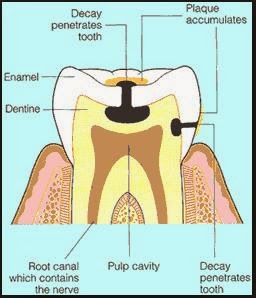
Dental caries (decay) is a bacterial infection, first of the enamel, then of the dentin of the tooth. The tradition in dentistry has been to surgically remove the diseased portion of the tooth by “drilling” out the decay and then filling the resulting hole in the tooth with some inert material. As most adults know, this procedure will be performed over and over again when new decay begins or when the filling (often silver) breaks or the tooth fractures.

Would it not be better to eliminate the cause of the infection and thus not be forced to have big holes drilled in the teeth? We believe the bacterial cause of the infection should be addressed.

Preventing the Risk of Dental Decay
There are several positive steps that you can take to reduce your risk of dental decay. First, all of the active decay in your mouth should be treated immediately. Next, all the teeth that would benefit from sealants should be treated. This will prevent bacteria from reaching into the pits, fissures, and grooves that normally exist on the occlusal (biting) surface of teeth. Any stray bacteria that may still be in the sealed area are effectively cut off from their food source and become inactive. Although sealants are most effective on teeth that have not been previously restored, they can be successfully placed on teeth filled with bonded fillings.

The infection can be treated with antimicrobials. We believe that the use of a fluoridated mouthrise twice daily or use of a prescription fluoridated dentifrice as directed provides great advantage. Not only is fluoride effective against bacteria but it also creates an environment that promotes remineralization of slightly damaged enamel. The decay process is reversed and the tooth may not have to be drilled. We may also prescribe a chlorhexidine mouthrinse, an antimicrobial oral rinse that has a great effect on Streptococcus mutans.

Your diet and oral self-care are important in dental decay prevention. When you eat junk food and drink sugary liquids, your teeth are more prone to decay. The more frequently you snack, the more prone your teeth will be to decay. If your brushing and flossing are not effective, your teeth will be more prone to decay. When you can’t brush after a meal, at least rinse your mouth with water within 15 minutes to dilute the acids forming from the ingested food or drink. If you have a diminished salivary flow, take frequent sips of water during the day to help dilute the acids produced by the bacteria.

If you have a continuing problem with active decay, we recommend more frequent preventative recare appointments. It has been repeatedly shown that patients who have good oral self-care and maintain a recare interval of 3 to 4 months have many fewer dentally related (cavities or gum disease) problems.

The routine 6-month recare interval is no longer our recommended schedule. That interval was based on a 50-year-old philosophy that never had any scientific basis! Times have changed. Present dental practice is based on proven scientific information. You might need to have your teeth cleaned by the hygienist twice each year or you may need to be seen more frequently.

For certain individuals, we also suggest testing the oral bacterial levels to determine the magnitude and presence of a Streptococcus mutans infection and to determine your risk level for future dental disease.

Wednesday, August 24, 2016

Tips For Oral Hygiene


A better, more confident you begins every morning and ends every evening if you stick with a consistent oral hygiene routine. This, in addition to regular dentist office visits, helps develop not only strong teeth and gums, but also overall good health. You'll feel good, look great, avoid unnecessary bills, and experience an improvement in many of your day-to-day social interactions. It's easy once you understand the basic routines required to maintain good dental hygiene. Get started with some basic dental education and a thorough awareness of the steps that should and should not be taken toward great, long-term oral health.

Oral hygiene benefits

Daily cleaning of your teeth, gums, and tongue, combined with annual check-ups helps ward off harmful bacteria and microbes that may cause tooth decay, bleeding gums, and oral infections. Proper oral hygiene is also important in helping you stay healthy, especially if you have risk factors such as diabetes and heart problems. Plus, oral hygiene elevates your sense of self-esteem. This is especially true for teenagers and adults who frequently interact with others at work or in social situations. Maintaining proper oral hygiene ensures that you won’t experience embarrassing conditions, such as plaque, tartar, and bad breath. It also lowers the need to treat dental problems that could otherwise be inexpensively prevented. For example, according to Kaiser Health News reports, dental costs make up approximately 20 percent of a child’s total health care expenses, and the costs are escalating rapidly.

Oral hygiene for kids

Enforcing good oral hygiene habits early in a child’s life is essential for his overall well-being. According to a 2007 Centers for Disease Control and Prevention (CDC), the number of cavities in children between the ages of two and five has escalated by 15 percent. Proper oral hygiene habits must start as early as the child begins to bottle feed. This is when babies are prone to tooth decay if they are given a bottle filled with sugary liquids, like milk or juice, when put to bed. While baby teeth should be cleaned using a washcloth, young babies should eventually have their teeth and tongues brushed using soft brushes. It is important for parents to teach children the proper way to brush their teeth with fluoride toothpaste, to take them for regular dental check-ups, and to serve foods that will help strengthen teeth. These include milk, cheese, and vegetables.

Oral hygiene for adults

Many adults experience significant dental problems that could be prevented through basic oral hygiene practices, like regular dentist appointments. For example, in 2009 alone, CDC data indicated that only 62 percent of adults surveyed had visited the dentist. To maintain optimal oral health, adults should brush their teeth at least twice a day, preferably after each meal and before going to bed. Flossing is also an essential part of an adult’s daily oral hygiene regimen. Regular brushing and flossing can prevent unpleasant conditions, such as plaque and bad odor. However, over-brushing or flossing may result in mouth bruises and bleeding, which can lead to infections. Adults should visit their dentist regularly for routine check-ups and before using over-the-counter medication.

Oral hygiene facts

Poor oral hygiene can increase your chances of developing heart disease. Professional teeth cleanings will reduce the bacteria that cause inflammation and eventually lead to heart disease (Veterans General Hospital in Taipei).
According to the American Dental Hygienists Association:
  • A major cause of tooth loss in children is cavities; while periodontal (gum) disease is the leading cause of tooth loss in adults.
  • Eating healthy snacks such as celery, carrots, or apples help clear away food loosely trapped in-between teeth.
  • The leading oral health problem for infants is baby bottle tooth decay, which can be caused when babies are given a bottle filled with sugary liquids, like milk or juice, when put to bed.

Oral hygiene statistics

According to the Centers for Disease Control and Prevention:
  • Roughly 78 percent of Americans have had at least one cavity by age 17.
  • 80 percent of the U.S. population has some form of periodontal (gum) disease.
  • In 2007, Americans made about 500 million visits to dentists and spent an estimated $98.6 billion on dental services.
  • Between 2005-2008, 16 percent of children ages 6-19 and 23 percent of adults 20-64 had untreated cavities.
  • Dental fluorosis (overexposure to fluoride) is higher in adolescents than in adults and highest among those aged 12–15.
  • Most adults show signs of periodontal or gingival diseases. Severe periodontal disease affects approximately 14 percent of adults aged 45-54.
  • 23 percent of 65-74 year olds have severe periodontal disease
  • Men are more likely than women to have more severe dental diseases.
  • Oral cancer occurs twice as frequently in men as women.
  • Three out of four patients don’t change their toothbrush as often as is recommended. Toothbrushes should be changed every two to three months and after illnesses.
Oral hygiene greatly affects overall long-term health, and promotes a more confident you. When it comes to dental care, prevention through daily cleaning and regular visits to the dentist’s office is better not only for your health, but for your budget. That's why it's important for parents to play a key role in reinforcing smart oral hygiene habits. Kids are likely to follow in the footsteps of those who set positive examples and will carry those healthy habits through their own adult lives. Remember, whatever your age, it’s never too late to take a serious stand in keeping your teeth healthy and your smile confident.

Source: Humana
https://www.humana.com/learning-center/health-and-wellbeing/healthy-living/tips-for-oral-hygiene
_________________________________________________________________________________
If you have questions or would like to schedule an appointment, please contact Omni Dental Group at one of our three office locations listed below:

North Austin on Hymeadow Drive:  (512) 250-5012
Central Austin on Jollyville Road:  (512) 346-8424
South Austin on William Cannon:  (512) 445-5811

Monday, August 4, 2014

Dentin Decay

Detect decay by inspecting the color and hardness
Usually, dental decay is fairly easy to detect. When a cavity is just beginning, it is typically identified by a brown or white color or a change in the translucency of the enamel of the tooth. The dentist or dental hygienist uses a special dental instrument called an explorer to feel the suspect area and check its hardness. If the area is hard, in other words, if no break in the enamel layer is detected, we feel there is not a cavity present. If, however, the surface feels soft and the explorer "sticks" in the suspect site, we feel a cavity is present.

Fluoride makes our enamel stronger, but dentin decay is harder to detect Because of the widespread use and availability of fluoride in our drinking water, foods, and oral care products, we are seeing a different decay pattern. The appearance is different from the typical pattern of decay and more difficult to detect. As the outer surface of the enamel absorbs fluoride (from toothpaste, for example), the enamel becomes very resistant to demineralization and eventual decay. If there is a small break in the integrity of the enamel, a pit or groove where decay-causing bacteria can live, the bacteria can dissolve the enamel in such a way that the hole in the enamel cannot be detected. Once the decay-causing bacteria reach the underlying dentin, the acids eat away at that substance and quickly make a large cavity - but one that still cannot be easily seen or detected. In this way the enamel becomes undermined. A dentist looking at such a small cavity would think it very easy to restore. However, once the decayed portion of the enamel is removed and the dentin becomes visible, the true extent of the damage becomes obvious. The small cavity becomes a big cavity.

One of the major problems with decay that appears to occur only in the dentin is in the detection. If a radiograph is taken a part of the periodic examination process, we may be able to see dentin decay if it is moderate to extensive. Decay seen on radiographs is typically two to seven times greater in the tooth. Modern high-speed radiographic film and reduced x-ray exposure makes it more difficult to detect early decay on radiographs.

You can prevent decay by using fluoride
The conscientious application of a source of topical fluoride, through either an over-the-counter dentifrice or a prescription fluoride product, and thorough plaque removal are essential. Bonded sealants are also an effective protection against dentin decay. We strongly advice these procedures. Periodic examinations at intervals recommended by the dentist catch decay at the earliest possible time. This is the only way to keep small problems from developing into larger problems.

Click here to check out our blog post on foods that cause decay. 
Click here for our post on how to prevent decay.

If you have any questions about dentin decay, please feel free to ask us. 

Wednesday, July 30, 2014

Sealants and Fluoride: Benefit to Adult Patients

Dental decay can develop at any time, regardless of a person's age. A change in diet, change in lifestyle, change in oral self-care habits, the use of prescription medications, or a change in systemic health due to the normal aging process can all affect the caries (decay) susceptibility. Few people remain completely free of decay. Proper oral self-care on your part and properly spaced dental hygiene prevention appointments will go a long way to reduce the opportunity to have new decay to begin.

As you age, it is possible that some of your gum tissue will recede, exposing the root surfaces of your teeth. This gum recession can occur from improper brushing (brushing too hard with a hard toothbrush) or as a result of past periodontal problems. The more a tooth and root are exposed, the greater is the surface area you will have to keep clean. Sometimes the teeth with exposed roots are very hard to keep clean. These roots may be sensitive to temperature changes and are often times uncomfortable to brush. Decreased salivary flow (dry mouth) helps to create a breeding ground for bacteria to accumulate on the enamel and especially on the root surface. And root decay usually progresses quite quickly!

Goal of Prevention
Your goal should be to keep the dentist from drilling your teeth. Any reasonable preventive measure that is available should be seriously considered. When the dentist drills, you lose. When the dentist does not drill, you win.
                               
                                                         Dental Sealants
Please see our blog post on sealants. Although sealants are primarily designed for children, adults who have a history of active decay should consider having sealants placed on the posterior (back) teeth where indicated. We will tell you where it is possible to place the sealants. Even if you have not had a cavity for a long time, consider the application of a sealant as an inexpensive insurance policy for your teeth. Perhaps you would never get decay on the unsealed surfaces. But, just as you insure your home against destruction by fire, a sealant insures the tooth surface from decay. Preventive measures may allow you to avoid having your teeth drilled. You win! 

Topical Fluoride
For a similar reason, we advise the use of topical fluoride treatments for adults. The effectiveness of systemic and topical fluoride in preventing decay is well documented. When a cavity first starts, an application of fluoride might (depending on when it is used) reduce or eliminate the need for drilling.
Fluoride Varnish

An alternative to the fluoride treatment we can provide in our office is a daily rinse. If you can rinse with an over-the-counter mouth rinse containing fluoride every night as directed on the rinse label, you do not need the office topical fluoride treatment. If you cannot rinse daily as instructed, you will need the benefit from the strong office-applied topical fluoride treatment. Your oral health will benefit most from small increments of fluoride that are applied daily rather than one larger concentration every 6 months. However, only you know whether you will be faithful in your rinsing routine. When in doubt, let us do it here.

We stress prevention of dental disease above all else. Sealants and topical fluoride treatments are two of the more important preventive dental measures that we believe will significantly enhance your oral health.

Tuesday, July 15, 2014

Prevention of Decay

What is dental decay, and how do dentists fix it?
Dental caries (decay) is a bacterial infection, first of the enamel, then of the dentin of the tooth. The tradition in dentistry has been to surgically remove the diseased portion of the tooth by "drilling" out the decay and then filling the resulting hole in the tooth with some inert material. As most adults know, this procedure will be performed over and over again when new decay begins or when the filling (often silver) breaks or the tooth fractures.

Click here to learn about decay in young children.

Why should I practice prevention?
Would it not be better to eliminate the cause of the infection and thus not be forced to have big holes drilled in the teeth? We believe the bacterial cause of the infection should be addressed.

How do I prevent dental decay?
There are several positive steps that you can take to reduce your risk of dental decay. 

A. At the dentist's office
1. First, all the active decay in your mouth should be treated immediately. 

2. Next, all teeth that would benefit from sealants should be treated. 
  • Why? This will prevent bacteria from reaching into the pits, fissures, and grooves that normally exist on the occlusal (biting) surfaces of teeth. Any stray bacteria that may still be in the sealed area are effectively cut off from their source of food and become inactive. Although sealants are most effective on teeth that have not been previously restored, they can be successfully placed on teeth filled with bonded fillings.
3. The infection can be treated with antimicrobials. 

4. We believe that the use of a fluoridated mouthrinse twice daily or use of a prescription fluoridated dentifrice as directed provides a great advantage. 
5. We may also prescribe a chlorhexidine mouthrinse, an antimicrobial oral rinse that has a great effect on Streptococcus mutans.

B. In your daily life
6. Your diet and oral self-care are important in dental decay prevention. When you eat junk food and drink sugary liquids, your teeth are more prone to decay. The more frequently you snack, the more prone your teeth will be to decay. 

7. If your brushing and flossing are not effective, your teeth will be more prone to decay. When you can't brush after a meal, at least rinse your mouth with water within 15 minutes to dilute the acids forming from the ingested food or drink. 

8. If you have a diminished salivary flow, take frequent sips of water during the day to help dilute the acids produced by the bacteria.

What if decay keeps coming back?
If you have a continuing problem with active decay, we recommend more frequent preventive recare appointments. It has been repeatedly shown that patients who have good oral self-care and maintain a recare interval of 3 to 4 months have many fewer dentally related (cavities or gum disease) problems.

Present-day dental suggestions are based on proven scientific information. You might need to have your teeth cleaned by the hygienist twice each year, or you may need to be seen more frequently. 

For certain individuals, we also suggest testing the oral bacterial levels to determine the magnitude and presence of a Streptococcus mutans infection and to determine your risk level for future dental disease.

If you have any questions about the prevention of dental decay, please feel free to ask us.